
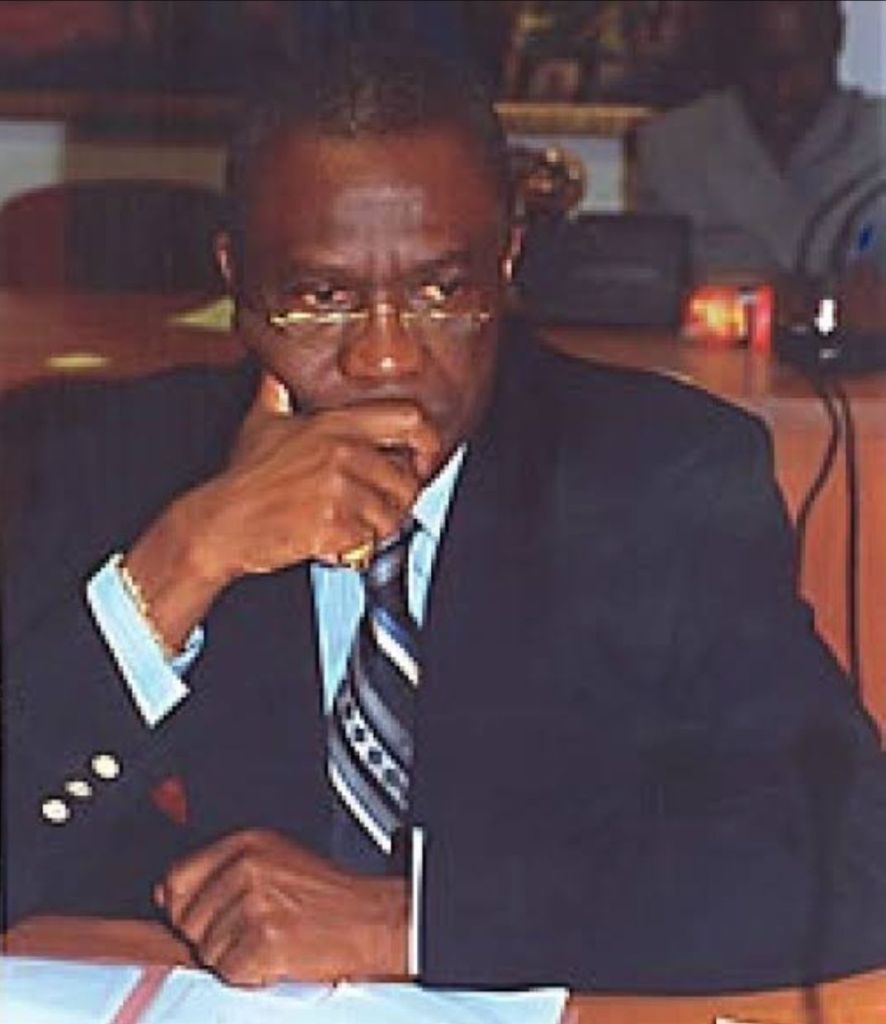
I have been an advocate for a Southern Presidency since 1982. Rotational presidency is an essential ingredient for the survival of the Nigerian nation. I doubt if it will come to pass. A shift to the South of the position is essential. I posit that a Southern presidency does not mean an automatic Yoruba presidency. This is what the Yorubas think and expect. I hope they are disappointed at the finishing line because there are many Easterners like me who do not trust them and do not want them to produce the next president for the following reasons.
They will not protect the Eastern interests in any way or exhibit a nationalist disposition. They will victimise all those that were not for June 12, 1993. A Yoruba presidency will be an inferno and NADECO affair only. I can prove this by what happened with the perceived Abiola victory in 1993. As soon as they had a second success, they wiped off SDP stalwarts who were not Yoruba. For Abiola, Easterners, Northerners, all were discarded. No Igbo man could get close to Abiola. Abiola’s attitude showed clearly that ethnic noise. For example, the extremists of the Yoruba race have hijacked their leadership – imagine Senator Adeoseya speaking on behalf of the Yorubas. These are persons who never participated in preparing for the crisis that led to June 12. They came like hawks, hijacked its fruits to become front-line Yoruba leaders. Suddenly Ralph Odua and Bobo Nwosu were men of the moment.
But those who laboured, the later died unsung when the so-called Yoruba leaders were feted and honoured. At Adeoseya’s funeral, no Yoruba leader condemned the rascality.
Therefore, naturally, I will opt and work for a non-Yoruba presidency for self-preservation. An Igbo, South-East or South-South, Kwara or even Hausa presidency. Any one but a Yoruba in the present dispensation.
My feeling is formal and natural. You will not find a single Yoruba who will campaign for an Easterner. Why should I? Already you can hear some people pushing for a Yoruba president. That surely shows how developed politically the Igbo are: very independent, egalitarian, sophisticated and liberal-minded. The Yoruba is inward-looking, uncompromising and selfish politically.
I voted for Pa’Awolowo, but he turned inward. It was a personal thing for him and his ability to motivate me. I adored him, but he failed to understand the need for a national institution, but he projected this ethnic Frankenstein with his tribal political base. Later, his Yoruba epistle written when he told Nigerians that hunger was a legitimate weapon of war. The Yoruba see the Igbo as rivals. They deride Igbo, they do not like or respect the Igbo. They fear the Northerner.
For the Yoruba, the country belongs to them. It is a wrong time and a wrong aspirer to the top. I totally dissociate from the June 12 episode. There is no de-tribalised Yoruba, not even the late Abiola as is claimed.
The Igbo in NADECO are there for self-preservation. They have investments in Lagos, property in the West. Thus they have to play along to protect their investments.
You only have to look at the federal institutions headed by the Yoruba. They should not be there. Our trust should never be accommodated. Lagos is supposed to be a federal territory. Let the Yoruba, and we watch the reaction we get. Look at how they treat Igbo traders. They should be content with their present lot; usurpation, domination and near-total control of the economy and federal institutions.
They have had Obasanjo and Shonekan and Diya, etc. What more do they want? What we Igbo fear most is their capacity for deceit. The Igbo fear the Yoruba for their tendency to inflict punishment on their perceived political rivals or opponents. They visit their wrath on them, with Kangaroo justice, let alone outsiders.
Look at what happened to Adedibu and Arisekola over their support of Abacha. We never use political violence to settle scores. All through history, the Yoruba have delighted in the culture of violence in politics. I fear for the lives. Look at what they did to us during the June 12 era. If they assume power, they will never allow the culture of free political association by detribalised Nigerians.
Recall the negligence of Alhaji Shagari and Dr. Azikiwe scored on the Yoruba states during the 1979 election. They used their resorts to fight for our future during this period. We should never entrust power to the Yoruba.
They will never allow the chance to dislodge an enemy. They have no moral conscience. There is no value system of better government. The adjournment of June 12 was and remains principled, legal and justified. It was not about “power” or “authority” or the struggle. It took a proper step by the court, and the ABN’s respect for the court agreement respected the courts.
We did not control the outcome of the election. We had no candidate of our own. We had no stake in the struggle. We were not part of it. We do not want to make the Yorubas weaned on ethnic patronage and violence as kingmakers and thus endanger the nation.
Let us be realistic. The Yoruba did not win the election. It was the North that was prepared to accept the result. If we leave IBB’s legacy and the Abacha transition to them, it is wrong.
The court order was to stop the election, to stop announcing results and finally to declare the election null and void. I have no regrets or apologies to make. It was also a Yoruba High Court in Lagos that declared Shonekan’s regime illegal, yet that is accepted. But no, not ABN’s court victory.
To buttress my stance further, I invite you to look and examine the Yoruba reaction to IBB and Abiola on June 12. They have descended on him like vultures denouncing him all over again. No one can blame him for his courage and candour in saying what he has said. Their reaction to IBB’s latest exposure is very frightening and suggest what to expect if they have their way.
I have never agreed to a Yoruba presidency. Never. I will never. There are other leaders the Igbo can produce. We can agree on who heads, minds and media. They decide for us the true leaders they think can represent us. We refuse to be led like sheep, but as capable Igbo winners.
Atrocial political leadership, let us never repeat the same thing as a country. That is the limit of it. I wish things would change but I doubt it.
This archival opinion piece by Arthur Nzeribe reflects the deep distrust and political tensions prevalent in Nigeria’s political landscape in the 1990s, particularly around the issue of rotational presidency and Yoruba political dominance.
By Arthur Nzeribe
Originally published in TheNEWS, 28 September 1998
Read more political history and thought-provoking articles on http://www.oblongmedia.net.
 OBLONG MEDIA GLOBAL INTELLIGENCE
Leave a comment