
Imo is fifty years old. A child of the 1976 state creation exercise, carved out of the old East Central State, it came into the federation with some of the brightest human capital in Nigeria and a reputation for hard work, education and enterprise. Yet if we are honest with ourselves as Ndi Imo, the state today is operating at perhaps half of its real potential. The infrastructure, industry base, education system and public institutions we should have built by now exist only in fragments. The one era that still defines our imagination of what good governance can look like is still the short but intense period of Sam Mbakwe in the early eighties. That is both a tribute to his vision and an indictment of those who came after.
Imo began under military administrators from 1976 to 1979, then moved into the golden benchmark of the Second Republic under Sam Mbakwe. Military rule returned from 1984 to 1999, interrupting civilian experiments. Since 1999 the state has been governed by a chain of elected leaders under the Fourth Republic, from Govs Achike Udenwa to Ikedi Ohakim, Rochas Okorocha, Emeka Ihedioha and now Hope Uzodinma.
Across these cycles we have seen flashes of brilliance, bold projects and scattered successes. We have also seen abandoned industries, politicised education policies, collapsing infrastructure, debt, youth unemployment and a slow drift away from the disciplined planning that made Mbakwe an icon. The honest verdict is that if you aggregate all the administrations since 1976, Imo has probably run at no more than forty nine percent of its possible capacity. The remaining space is the price Ndi Imo have paid for the paucity of futuristic and visionary leadership.
The Mbakwe benchmark and the lost industrial dream
Every serious discussion about Imo governance must begin with Samuel Onunaka Mbakwe, the first civilian governor in 1979. He took office after the initial military phase and tried to build a modern state almost from scratch. In just over four years, his administration established Imo State University, the College of Technology at Nekede that later became Federal Polytechnic, the College of Agriculture at Umuagwo and a network of quality secondary schools from scratch.
On the economic front he rolled out large mechanised agricultural and agro industrial projects that still dominate any serious catalogue of Imo assets: Adapalm at Ohaji, Avutu Modern Poultry in Obowo, Standard shoe company, Aluminium extrusion co. Inyishi, Amaraku power plant, Emeabiam Rubber, Imo Concorde Hotel in Owerri, implementation of the Imo master plan, and other state enterprises that were conceived as revenue and employment and infrastructure engines.
These projects were not perfect. Some were over dependent on state management. But they represented a coherent attempt to industrialise and diversify the economy. The sad story is what happened after. Many of those enterprises were later neglected, stripped, politicised or sold off in ways that did not protect the public interest. Decades later Imo is still known more for the industries and institutions of the Mbakwe era than for anything fundamentally new that later administrations built.
The return of democracy and the slow fade from vision
The long return to civilian rule in 1999 brought Achike Udenwa into office. He came with a tripod vision built on agriculture, industrialisation and moral reorientation. His government increased funding to Imo State University and expanded a free education framework for indigent Imo students in state owned tertiary institutions, including bursary style payments to undergraduates.
These were not minor efforts. However, even sympathetic assessments admit that by the end of that administration Imo had not moved into the league of truly developed states. The Mbakwe industrial base remained largely unrepaired. New industries did not come at scale. Youth employment remained fragile. A lot of energy went into political survival rather than a radical leap into a modern, knowledge based economy.
Ikedi Ohakim followed with a strong environmental and urban renewal agenda. His Clean and Green initiative turned Owerri into one of the cleanest state capitals in the federation, with national awards to show for it. The programme involved serious refuse evacuation, drainage work and beautification that for a period made Owerri a model of urban sanitation.
He also tried to improve transportation through the Imo Municipal Transport scheme and launched job creation schemes like the Imo Job Centre. But again, institutional continuity was weak. When the politics turned against him many programmes were discontinued or diluted. The lesson is that projects without a deep institutional anchor are at the mercy of the next election.
Populism, free education and the erosion of quality
Rochas Okorocha arrived in 2011 on a wave of populist energy and bold promises. His most famous banner was free education from primary to tertiary level for Imo indigenes. For a time many families felt real relief as fees were cut and the governor loudly advertised that he had sacrificed his security vote to fund the scheme.
However, serious studies and commentary from within the state have pointed out that this highly politicised free education came with hidden levies and, more importantly, a dramatic fall in quality. Critics argue that the rush to expand access without proportional investment in teachers, infrastructure, laboratories, libraries and supervision contributed to a decline in standards and exam performance.
On infrastructure, Okorocha did build and rebuild many roads and public buildings, but too many of those projects were marred by questions about quality, duplication, design choices and the priorities behind them. A culture of roundabouts, statues and sometimes hasty construction replaced the kind of long term industrial, agricultural and educational planning that Mbakwe pursued. When he left office, the state carried debt, unfinished projects and a demoralised almost non existent civil service.
The short bright flash of the Rebuild Imo period
Emeka Ihedioha came in 2019 with a clear message of institutional repair under the Rebuild Imo agenda. In just over seven months his administration set in motion reforms that experts had demanded for years. He signed an Executive Order to implement a Treasury Single Account, closing many leakages and forcing state finances into a more transparent framework.
He began a serious pension reform and verification exercise that digitised records for about twenty four thousand retirees and identified ghost pensioners, saving the state an estimated billions annually. More important than the savings was the message that government could finally treat its senior citizens with respect through predictable, electronically managed payments.
Ihedioha also moved to revitalise technical education by reconstructing and re equipping key technical schools and awarding scholarships to top performing Imo students in WAEC. He addressed the long doctors strike and re energised sanitation programmes that made Imo look clean and organised again.
Whether one fully supported him politically or not, it is hard to deny that those seven months were action packed with reforms that targeted the foundations of governance rather than temporary optics. That is why many stakeholders still refer to that period as unfinished business.
The Uzodinma era, roads revolution, health insurance and remarkable institutional reforms in the offing
Hope Uzodinma emerged as governor in January 2020. His tenure has been marked by a strong emphasis on road infrastructure and some remarkable institutional reforms in the offing. Supporters and even neutral observers have described him as a highly active infrastructure governor, pointing to the standard reconstruction of most major roads in Owerri and across the state as evidence.
Under his watch, the Imo State Health Insurance Agency, IMSHIA, and schemes branded as ImoCare have been pushed as vehicles to extend affordable health coverage to residents, especially the vulnerable and elderly. The agency itself highlights his role in giving it fresh momentum, mapping out strategic objectives to widen enrolment.
The administration has also publicly associated itself with reviving legacy assets like Imo Concorde hotel now Imo Concorde Hilton, acknowledging the vision of Mbakwe and promising other restorations. Whether those remarkable revival efforts translate into sustainable, professional management remains a test that Ndi Imo will continue to watch.
So Uzodinma deserves clear credit for major unprecedented work on roads and for strengthening health insurance structures and attracting federal government approvals for critical infrastructure projects and policy.
Imo wealth below our feet: natural resources and unrealised potential
Imo is not a poor state by endowment. Apart from oil and gas deposits around Ohaji Egbema and Oguta, the state sits on a range of solid minerals that could support a diverse industrial base if properly managed. Official listings of state by state resources identify Imo as having gypsum, lead and zinc, lignite, limestone, marcasite, oil and gas, phosphate and salt, alongside other non metallic minerals like clay and glass sand.
These are not meant to be looted or handed out to cronies. In a serious state they would anchor cement plants, fertiliser production, ceramics, energy generation, pharmaceuticals, building materials and downstream petrochemicals. They would provide structured jobs from exploration to processing, integrated with universities and technical colleges that train the required manpower. Instead, Imo today still leans largely on federal allocation, informal trade and scattered service sector activity.
The tragedy is not that the minerals are small. The tragedy is that leadership has been small minded.
Education: the broken backbone of our future
One of the most painful threads that runs through the history of Imo is the steady decline of the education sector. From the pride of Mbakwe era institutions, the state has slipped into a situation where classrooms are dilapidated, overcrowded, laboratories are empty, libraries are shells, teachers are underpaid and demoralised, and exam outcomes are increasingly poor.
Research focused on secondary schools in local government areas like Mbaitoli, Owerri west and other LGAs in Imo has documented dilapidated classrooms, chronic shortages of basic infrastructure, science equipment, computers, furniture, electricity and health services. These are not abstract complaints. They are day to day obstacles to learning.
Meanwhile, headline free education policies under later administrations often focused more on fees than on quality. Analysts of the Okorocha free education era for example noted that implementation was plagued with levies under different names and a visible deterioration in standards, with some commentators warning that the programme had triggered an academic crisis.
More recent commentary on WAEC results across parts of the South East, including Imo, has seen parents, teachers and student bodies openly lament the collapse in performance and call for urgent reforms in teacher welfare, facilities and curriculum delivery.
If we are honest, every administration has neglected education in one form or another. Some focused on tuition without investing in infrastructure. Others treated universities and polytechnics as patronage centres. Scholarship awards were often politicised. Technical and vocational education, which should be central to a state of traders, artisans and engineers, has never received sustained, strategic investment beyond isolated interventions such as those initiated under Ihedioha.
Today many Imo parents who can afford it send their children to private schools or outside the state. This is the clearest sign that the public system is effectively broken. A state that once prided itself on being the home of knowledge now exports its children to where other people have taken education seriously.
Where Imo is now, and where it should be
Policy documents and investment briefs still talk about Imo mainly in terms of the industrialisation legacies of the early eighties, as if nothing fundamental has changed since the Mbakwe era. Even recent industrial policy papers admit that up till now, Imo is associated more with those old achievements than with any new wave of modern industry.
In reality, Imo today is a state with a growing population, youth unemployment, under utilised mineral resources, eroded educational infrastructure and an over politicised public service. Its roads are much better in most places than before, worse in others especially the rural areas. Its healthcare system has new insurance architecture but still struggles with equipment and manpower. Its cities are occasionally clean and green, then slide back when enforcement relaxes. Its local governments are often hollow, with little autonomy and even less capacity.
Where should Imo be by now If we had the right leaders consistently over forty nine years, Imo should already be a regional industrial hub anchored on oil and gas, agro processing, cement and building materials, pharmaceuticals, ICT and creative industries. Its universities should rank among the best in Africa, tied to innovation centres and industrial parks. Its technical colleges should be feeding a vibrant manufacturing base. Owerri should be more than a hospitality town. Orlu and Okigwe zones should be dotted with functional industrial clusters linked to raw materials in their hinterlands. Rural areas should be connected by good roads and broadband, not only by campaign visits.
This is not fantasy. It is what states with far less human capital and fewer minerals have achieved when led by disciplined, future focused leadership.
Why 2027 must be a break from career politicians
If we accept that all our administrations combined have delivered at best about forty nine percent of what is possible, then we must accept that doing more of the same in 2027 will only give us more of the same. The central problem of Imo is not that our people are lazy or unlucky. It is that we have repeatedly handed the steering wheel to politicians whose primary skills are mobilising for elections and distributing patronage, not imagining and executing a long term development blueprint.
Imo cannot afford, and Governor Uzodinma must ensure, that we don’t elect or select a governor in 2027 whose entire profile is politics, whose curriculum vitae begins and ends with party selective positions, who has never run a serious organisation, navigated complex projects, or built something that did not depend on public office. The world we are entering is one of artificial intelligence, robotics, green energy, new trade routes and volatile geopolitics. To survive and prosper in that world, a state needs a leader who understands administration, has real exposure beyond routine politics, and can attract talent and investment.
Ndi Imo must insist that 2027 is not an intra cabal arrangement. It must not be a coronation for any career politician without a record of organisational leadership, integrity and excellence. The electorate, civil society, clergy, traditional institutions, youth and professional bodies must all play a role in screening aspirants. Questions must shift from which party to what vision. From which zone to what plan. From which big man to what track record.
A legacy for our children
The real debt we owe our children is not more slogans. It is a state that works. A state where schools teach, hospitals heal, roads last, industries produce and institutions outlive individual office holders. Mbakwe showed for a brief moment that such a state is possible. Later leaders have given us glimpses of what can be done in health, infrastructure, pensions, environmental sanitation and financial reforms. But the mosaic is incomplete.
Imo has everything it needs to rise: minerals, fertile land, strategic location in the South East, a population of traders, engineers, doctors, teachers, tech savvy youths and a diaspora that sends back not only money but ideas. What has been missing is that rare combination of vision, discipline, courage and humility at the top.
In 2027 we either correct that or condemn another generation to watch the promise of this state wither. For the sake of our children the choice must be stubbornly different this time.
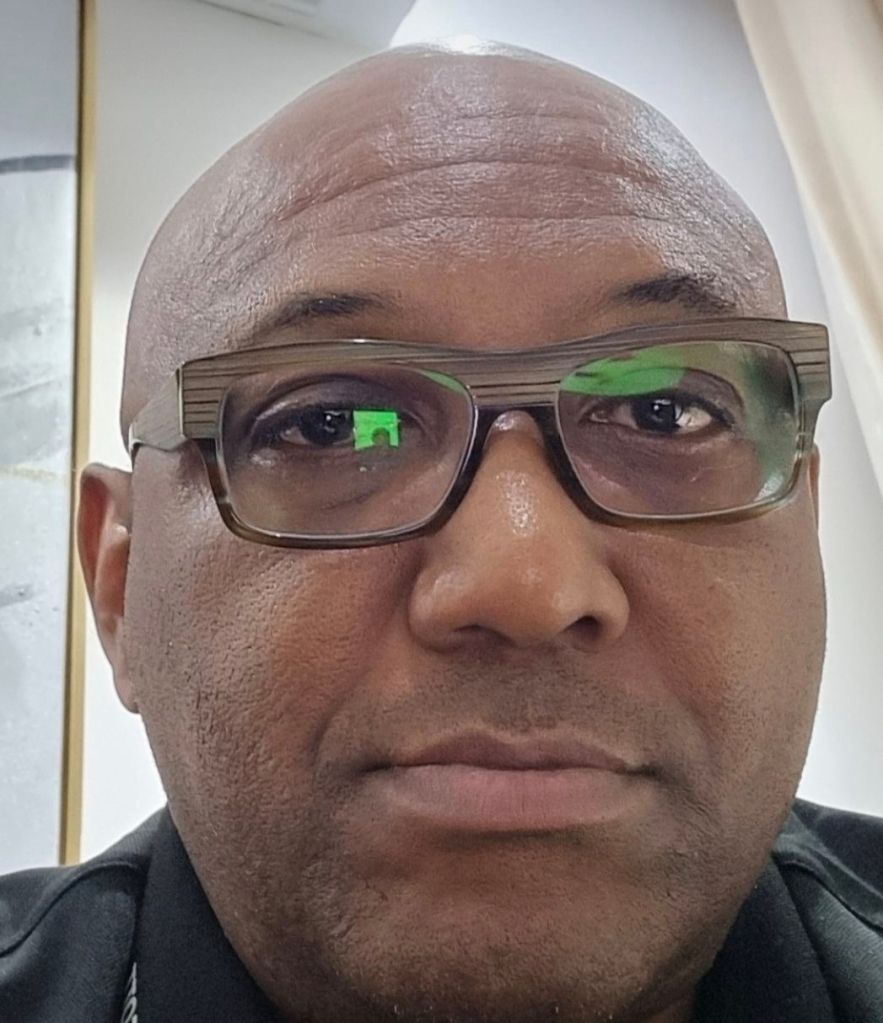
By Hon. Chimazuru Nnadi-Oforgu
Duruebube Uzii na Abosi
 OBLONG MEDIA GLOBAL INTELLIGENCE
Leave a comment