
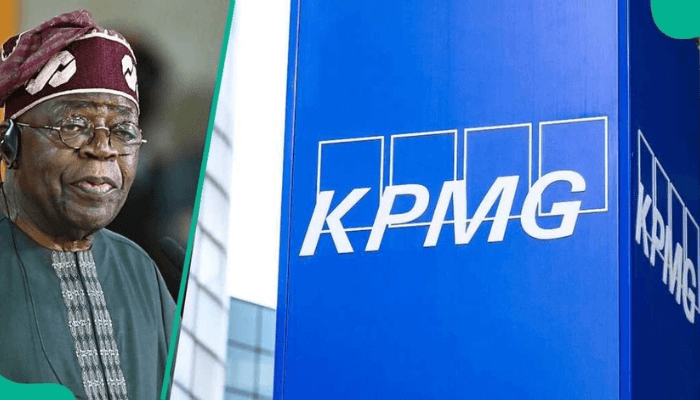
When KPMG Nigeria released its technical review of the new federal tax laws, it did not mince words. The firm identified thirty one critical problem areas that fall under drafting flaws, conceptual contradictions, institutional gaps, and compliance impossibilities. The issues were so fundamental that private meetings were convened with the National Revenue Service to acknowledge that the laws were either unimplementable, economically disruptive, or internally incoherent.
KPMG Summary for Public Consumption.
At its core, KPMG is making three broad arguments:
One. The new tax laws are not ready and contain serious errors.
Two. Even experts are struggling to interpret the provisions.
Three. The government did not consult the public as required in a functional democracy.
Taxation in a democratic society is a social contract. Citizens surrender a portion of their income in exchange for social goods such as roads, schools, hospitals, security, water, electricity, justice, and welfare. That contract collapses when taxation is opaque, confusing, coercive, or unaccompanied by tangible benefits.
The current reforms fail the test of clarity, fail the test of economic rationality, and fail the test of consultation. Given this, the logical recommendation is suspension until a transparent, participatory, and economically informed revision can be undertaken.
The French Connection: A Quiet but Alarming Subplot
The most politically sensitive aspect of the new tax reforms is the rumoured involvement of French consultants and French-backed advisory channels operating quietly within Nigeria’s fiscal reform space.
France has long pursued a strategy of influence through monetary and fiscal advisory structures. In West and Central Africa, the CFA franc system created a colonial era fiscal architecture that allowed Paris to control reserves, currency convertibility, and monetary levers long after independence. Many Francophone countries are still embedded in this framework, giving Paris leverage over budgets and policy.
Nigeria has never been part of that monetary orbit, but the introduction of French advisory footprints in domestic tax law design would mark a quiet but significant geopolitical shift. It raises broader questions:
Are we outsourcing fiscal sovereignty?
Are the reforms linked to bilateral debt obligations?
Is France positioning itself for future leverage over Nigerian assets or sectors?
There are rumours of indebtedness to France through elections support and development credit lines tied to fiscal reforms. If true, it would mirror the European strategy of using policy conditionality and other methods for influence, similar to IMF structural conditionality of the nineteen eighties and nineties.
The implication is profound. When foreign governments shape domestic tax laws, they indirectly shape the patterns of wealth distribution, business survival, industrial growth, and social welfare inside the country. Tax policy becomes a geopolitical tool.
Closing Observation
Nigeria faces a dangerous paradox. Government wants revenue, but it has not earned trust. It wants compliance, but it has not provided clarity. It wants development, but its fiscal tools threaten to stifle the very sectors that would generate growth.
A tax system built without citizens, without consultation, without modelling, and without transparency will not produce prosperity. It will produce resentment, evasion, flight of capital, and collapse of enterprise.
Taxation without benefit is extortion. Taxation without clarity is persecution. Taxation without sovereignty is surrender.
Nigeria must decide what path it wants to walk.
By Hon. Chima Nnadi-Oforgu
Duruebube Uzii na Abosi
 OBLONG MEDIA GLOBAL INTELLIGENCE
Leave a comment