
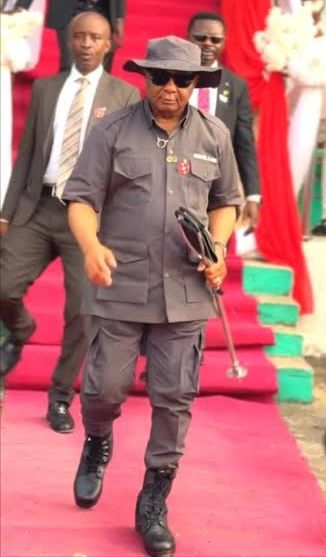
On the 15th of January 2020 Senator Hope Uzodinma was sworn in as Governor of Imo State under circumstances that will remain part of the country’s political folklore for decades. Six years later the passions and acrimony of that transition have cooled sufficiently for Imolites, observers and analysts to soberly examine the journey so far and appreciate the imprint of his administration on the life of the state.
The most visible and incontestable achievement of the past six years is in the roads sector. No post 1999 administration has committed more aggressively to road rehabilitation than the Uzodinma government. The reconstruction of the Owerri–Orlu and Owerri–Okigwe dual carriageways, the Owerri–Umuahia corridor, the Owerri–Port Harcourt axis now under construction, the Owerri–Mgbidi axis nearing completion, the MCC–Uratta dualisation, the new internal municipal road grid, and the reconfigured traffic engineering within Owerri urban collectively represent an infrastructural push that previous administrations did not attempt at this scale. For the first time in two decades the notorious lamentation that Imo roads resemble battlefields has encountered a government willing to rewrite the narrative through asphalt and engineering rather than excuses and seminars. The result is visible to the eyes and measurable in transit time, logistics efficiency and diaspora sentiment. Whatever else history will record, it will not deny Uzodinma credit for standard roads.
Environmental and municipal sanitation also saw a recovery of dignity. The old refuse mountains, blocked gutters, decayed medians and stagnant drains that once greeted residents and visitors became less common as the administration reintroduced the culture of urban hygiene first attempted during the Ohakim years. Digitisation of ministries, especially land administration, signaled a transition from paper chaos to modern documentation, and under IMSHIA healthcare financing began to move toward structured insurance rather than out of pocket desperation. These are quiet institutional changes that may not trend on social media but matter for governance.
Security which threatened at one point to overwhelm the government has undergone an evolution. The inauguration of the Imo Vigilante structure marked a recognition that federal policing cannot alone manage nonstate armed challenges. Last Christmas and New Year festivities were widely acknowledged as safer than the bleak holiday seasons of 2021 and 2022. This does not erase the fear that once spread across Orlu, Mbano, Mbaise and parts of Owerri West, but it shows that the administration did not end where it began and that insecurity will not define the entire tenure.
Two projects launched in the last two years deserve more national conversation than they currently receive. The Imo Digital City represents a rare attempt to transition Imo from a civil service state into a digital innovation cluster capable of retaining its youthful brains rather than exporting them to Lagos, Abuja, London and Toronto. The Orashi electricity project if completed and sustained could become the energy backbone of the future industrial southeast. For a state that once boasted the most educated demographic in Nigeria but lacked industrial power supply, this is not cosmetic politics but developmental strategy. Time will judge whether these seeds germinate beyond headlines.
On the political front Uzodinma has been one of the most successful governors of Imo in the national power matrix. For the first time since Sam Mbakwe the state is not in quarrel with Abuja. The red cap is now in the power broker category in the villa. Federal alignment has mattered for roads, security cooperation, federal presence and political access. Whether one likes or dislikes the governor, it is impossible to deny that Imo has sat closer to the centre of power in these six years than at any time since 1999.
However commemoration must not blind evaluation. The economy of Imo remains weak and overly dependent on civil service oxygen. No administration including the present one has yet built the foundation of an industrial economy. The tertiary education ecosystem of Owerri is vibrant socially but under leveraged economically. The Oguta tourism corridor remains unactivated, the Orashi basin remains unrealised and the informal manufacturing clusters of Nekede and Naze remain trapped in survival mode rather than scaled production. These are challenges carried over from history but they now sit at the feet of whoever governs next.
Education is where the verdict bites the hardest. Primary and secondary education in Imo today is a shadow of the old reputation the state once enjoyed. Infrastructure is crumbling, teacher quality is poor, curriculum delivery is weak and outputs are declining. Imo once led the federation in WAEC performance. That advantage has collapsed. If the roads sector represents Uzodinmas strongest achievement, the basic education sector represents his biggest unfinished business.
On specific matters the commemorative lens allows for frank recommendation. The Nekede–Ihiagwa corridor remains an embarrassment for a state that prides itself on education. Three federal institutions sit along one corridor: FUTO, Federal Polytechnic Nekede and the Police College. The governor has built the Umuchima bridge at Ihiagwa, but the 2 phases of main road from Naze collapsed twice within two years. This is supposed to be a federal road and requires federal deployment of Grade A contractors. Here Uzodinma possesses unique leverage. Lagos, Kano and Rivers would not allow three federal tertiary institutions to operate on a substandard road. Imo should not accept it either. The governor has the political capital to demand a federal solution and should deploy it loudly, not politely.
As the sixth year closes the question turns to continuity and legacy. Okorocha failed the succession test and his legacy collapsed under litigation, demolition and rebranding. Uzodinma stands at that same fork in the road. If he chooses a successor based on loyalty or compensation the house he has built will collapse within two years. If he chooses based on competence, continuity and ideological alignment his legacy will survive beyond asphalt.
History is kinder to governors who think beyond themselves. Mbakwe built for generations. Udenwa stabilised for transition. Ohakim cleaned for aesthetics. Ihedioha institutionalised for system. Uzodinma has built roads, infrastructure and federal bridges. Kudos and congratulations are in order for achievements so far. The last chapter will determine whether these are remembered as achievements or as interruptions. Six years in, the story is definitely not finished, but it is clear enough for congratulations, commemoration and serious enough for reflection.
By Hon. Chimazuru “Oblong” Nnadi-Oforgu
Duruebube Uzii na Abosi
 OBLONG MEDIA GLOBAL INTELLIGENCE
Leave a comment