
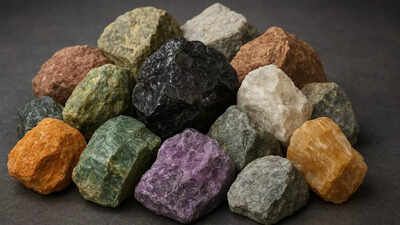
Today the world sit like fouls to watch all the drama towards the quest of who will control “Earth Minerals”.
As someone in the technological world of invention and innovation we must confront entrenched interests and demand systemic change. But our technologies, our planet, and our shared future depend on getting this right. I stand for a path that recognizes the power of these minerals and wields it with responsibility, transparency and an unwavering commitment to repair the harms of the past. Resources beneath our feet truly become the building blocks of a better world.
I have watched the world pivot on tiny, glittering slivers of the “earth minerals” that most people never see but sit at the heart of nearly every modern invention. Natural earth mineral resources are not abstractions for me; they are the raw, stubborn foundation of the devices and systems that shape our lives.
From the rare earth elements that make compact, powerful magnets possible, to cobalt and lithium that enable batteries to store energy, these materials are the quiet enablers of progress. They power our phones, keep hospitals running with precise instruments, allow vehicles to think for themselves and lift rockets beyond the atmosphere. Without them, the technologies we take for granted would be pale and clumsy approximations.
These minerals are unevenly distributed across the planet. Vast reserves lie under the soils and rocks of certain regions especially parts of Africa, Australia, and the mineral rich Arctic expanses of Greenland. Because they’re concentrated in specific places, their extraction and trade have outsized geopolitical, economic, and social consequences.
The demand for them surges as innovators push the edges of computing, renewable energy, and aerospace, and each new break through translates directly into greater pressure on mines and the communities around them. I believe it’s critical to approach this subject with both admiration and realism. On one hand, these resources unlock human potential: faster computing, cleaner energy, lifesaving medical tools, and the extension of humanity’s reach into space.
On the other hand, their procurement and use present profound ethical and environmental challenges. If we are to harness these minerals responsibly, we must understand how they function in technologies, where they come from, and what their lifecycle means for people and ecosystems. Only with that understanding can we design systems, policies and practices that secure the benefits while minimizing the harms.
YOU TINY LITTLE THING
Let me walk you through that landscape explaining what these minerals are and why they matter; offering an overview of their geographic and industrial significance; examining the benefits they deliver and the severe costs tied to their extraction; and closing with that pushes toward stewardship, innovation and accountability. I write this article not as an abstract commentator, but as someone intimately aware that the future depends on how we manage the very ground beneath our feet.
Beyond metals, industrial minerals like silica, calcite, and phosphate serve foundational roles in manufacturing, construction and agriculture. Together, these resources form a materials palette for the industrial century we now inhabit. Their distribution is lopsided. Africa hosts some of the richest and most varied deposits, from cobalt in the Congolese copper belt to tantalum and manganese across several nations. In Nigeria, Imo State, Abia State and all most the eastern part of Nigeria holds a significant amount.
Australia is a global powerhouse for bauxite, iron ore and rare earth deposits, with a mature mining sector and strong export networks.
ARE WE SEEING THE HOT STEAM BETWEEN GREENLAND AND AMERICA (USA) OVER EARTH MINERALS
Greenland’s Arctic geology has drawn attention more recently for its potential reserves of rare earths and critical minerals, attracting exploration as warming climates make access easier. This concentration drives trade patterns, creates regional dependencies, and shapes global supply chains. Nations with abundant reserves gain leverage and responsibility; import dependent countries must plan strategically to avoid sudden shortages.
Industrial demand is relentless and growing. Electrification, renewable energy, high performance computing, aerospace, and advanced medical technologies all require higher grade materials or increased quantities. Electric vehicle adoption alone is ramping up demand for lithium, nickel, cobalt, and rare earth magnets. Renewable energy infrastructure wind turbines and solar inverters relies on materials that must be sourced, refined and assembled at scale. This creates an imperative to develop robust, diversified supply chains and to invest in recycling, material substitution, and responsible mining techniques.
At the same time, the lifecycle of these minerals raises environmental and social questions. Mining reshapes landscapes, consumes water, and can displace communities. Processing often requires energy intensive steps and chemical reagents that produce waste streams. Corruption, labor abuses, and weak governance in some resource rich regions can magnify harms. Addressing these challenges calls for innovation both technological and policy driven to create transparency, build resilient supply systems and ensure that mining yields broad based benefits rather than concentrated profits and enduring damage.
The disadvantages are severe and cannot be glossed over. Mining operations often devastate local environments, stripping topsoil, contaminating waterways with heavy metals and processing chemicals, and producing vast tailings that remain hazardous for generations. Communities near mines face air and noise pollution, loss of arable land, and threats to livelihoods that have persisted for centuries.
Labor conditions in some extraction zones are deplorable unsafe workplaces, exploited workers, and child labor in extreme cases. Financial flows tied to mining can fuel conflict and corruption, concentrating wealth in the hands of a few while the majority endure social disruption. The energy intensity of refining and processing these minerals can produce significant greenhouse gas emissions, undermining some of the climate benefits these technologies claim to deliver.
THE DAMAGES CAUSED
The harm caused by digging and excavation is brutal and often permanent. Ecosystems are shredded forests cleared, wetlands drained, and biodiversity extinguished in the name of resource extraction. Rivers become acidic or laden with toxins; groundwater tables are altered or poisoned, affecting entire communities access to clean water.
The physical scars of open pits and tailings dams are long lived and failures of containment can wipe out villages and downstream habitats in an instant. Indigenous peoples frequently suffer the worst consequences, losing ancestral lands and cultural heritage with little or no consent. Social fabrics are torn apart as sudden influxes of workers and capital inflate housing costs, create inequality and strain local services.
Natural earth mineral resources cover a broad family of elements and compounds that underpin modern technology. They include well known commodities like copper and aluminum, californium, strategic metals such as lithium, cobalt and nickel used in batteries, and the suite of rare earth elements neodymium, dysprosium, praseodymium and others essential for high performance magnets, optical devices and electronic components.
I say bluntly: the extraction model we deploy today often prioritizes short term profit over human dignity and ecological stability and that is unacceptable. We must face the consequences squarely: extraction without strict environmental safeguards and social accountability is aggression against communities and the planet. It is incumbent on governments, companies and consumers to demand better.
Responsible sourcing, strict regulation, transparent supply chains, and technological advances in recycling and less destructive processing can reduce harm. Innovation in material science can find substitutes or reduce the amounts of critical minerals needed. Community led oversight, fair benefit-sharing, and restoring land after mining are not optional they are moral and practical necessities. Addressing these harms requires urgent, sustained commitment; otherwise the cost of our technological progress will be paid in ruined landscapes and human suffering.
I have lived with the paradox that natural earth mineral resources present: they are indispensable engines of modern life, yet their extraction too often brings damage and injustice. The technologies that make life healthier, more connected and more sustainable depend on these materials. Batteries that can store renewable energy, magnets that make electric motors efficient, and high purity metals that drive semiconductor innovation all of these are rooted in the Earth’s geology. To deny their importance would be to deny how modern society functions. Yet to continue extracting them without rethinking our approach would be reckless.
We must adopt a future oriented mindset that balances access to critical minerals with rigorous stewardship. That begins with diversifying supply chains so no single disruption or predatory actor can derail technological transitions. It requires investing heavily in recycling systems that recapture valuable elements from end of life electronics and vehicles, reducing the pressure to constantly open new mines. It demands research into material substitution and designs that minimize the volume of critical minerals required without compromising performance.
Above all, it means setting and enforcing high environmental and labor standards wherever mining occurs, supported by transparent reporting and independent oversight.
Equally important is centering the rights and voices of communities most affected by extraction. Indigenous stewardship, community benefit agreements, and meaningful participation in decision making are not window dressing they are essential to legitimate, equitable resource governance. When revenues flow, they must fund health, education, and infrastructure that create lasting improvements rather than transient booms. International cooperation can help establish norms, share technologies, and provide financial mechanisms to support responsible development in resource rich but capacity limited countries.
If we act decisively, natural earth mineral resources can be the bridge to a more sustainable, equitable future rather than a source of continued exploitation. I envision a world where the same minerals that power a smartphone also fund schools, restore ecosystems and support resilient local economies. That requires policy courage, corporate integrity, scientific creativity, and consumer awareness. We must stop treating extraction as a disposable phase and start treating these materials as precious assets whose value is measured not only in profit but in human flourishing and ecological health.
Natural earth mineral resources is today something we can’t do without just a part of our life.
Please Share This Article Don’t Read Alone
By: Tuffluck
USA
 OBLONG MEDIA GLOBAL INTELLIGENCE
Leave a comment