
The Deal Behind the Drama:
Decoding the Power Calculations Shaping 2027.
In Nigerian politics, enemies are rarely what they appear to be. What the public sees as rivalry is often negotiation. What looks like hostility is frequently choreography. Elections here are not always battles. Many times, they are arrangements carefully shaped long before campaign posters appear.
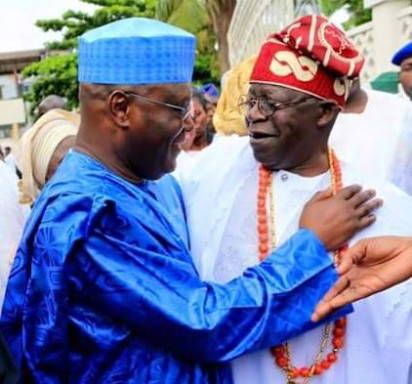
The assumption is that President Tinubu is prepared to offer Atiku Abubakar 2031 in exchange for 2027. Central to this arrangement is the implicit promise of a state-backed pathway to the presidency in 2031, following Tinubu’s completion of his constitutionally permitted two terms.
By signaling a credible 2031 succession window, Tinubu effectively neutralizes Atiku as a threat in 2027. The offer transforms Atiku from a formidable rival into a strategic asset, one whose cooperation, restraint, or even tacit support could help stabilize Tinubu’s re-election bid.
This is not an ideological convergence but a cold political transaction. It allows Tinubu to consolidate power in the present while outsourcing future ambition. For Atiku, it preserves relevance and keeps alive a long-held presidential aspiration within an elite-managed succession framework.
In essence, a promise deferred becomes leverage today. The 2031 ticket functions less as a campaign pledge and more as political currency, used to buy peace in 2027 and reorder the competitive field in Tinubu’s favor.
As 2027 draws nearer, an uncomfortable question keeps resurfacing. Is Nigeria heading into a genuine contest or a managed replay designed to protect the old political order. More Nigerians are beginning to sense that what lies ahead may not be a clash of visions, but a selection of safe options engineered behind closed doors.
President Tinubu is not truly worried about the PDP. That party is already weakened by internal fractures defections and leadership confusion. The real concern in Aso Rock lies elsewhere. It is the persistence of a political force that does not rely on godfathers patronage or elite permission. A movement driven by youth energy digital mobilisation and independent thinking.
Call it Obidient politics or call it voter awakening. The name matters less than the effect. It introduces unpredictability into a system that thrives on control. And in Nigerian power politics unpredictability is dangerous.
Every experienced political operator understands one principle. Chaos is not confronted. It is managed. From that perspective Atiku Abubakar represents familiarity. He is known tested and contained. He threatens no elite consensus and disrupts no institutional comfort.
A Tinubu versus Atiku contest is predictable. A Tinubu versus Obi scenario is volatile. That is why many believe the establishment would rather face a familiar rival than risk an electoral earthquake driven by voters who owe nobody allegiance.
This is where the ADC enters the conversation. On the surface it looks like an alternative platform. In reality it risks becoming a political sponge absorbing opposition energy without converting it into power. If Atiku anchors himself there two things happen almost immediately.
The PDP weakens further ensuring the opposition never unites under one banner. At the same time opposition votes scatter across multiple platforms destroying momentum and preventing consolidation. This is not opposition politics. It is controlled dissent.
There is also the silent weapon few are discussing. Zoning. Nigerias informal power balance expects the presidency to remain in the South for eight years. A northern candidacy in 2027 violates that expectation and becomes an automatic shield for the incumbent.
A northern challenger can easily be framed as impatient insensitive or destabilising. The election then shifts away from economic hardship hunger and governance failure and becomes about balance and fairness. Once that framing sticks the South and Middle Belt naturally tilt in one direction.
If this script plays out nobody truly wins except the system itself. The incumbent enjoys a predictable contest. The challenger retains relevance without threatening the structure. The electorate is left choosing between options already approved elsewhere.
When voters believe outcomes are predetermined participation collapses. People stop debating policy and start managing expectations. Apathy replaces outrage. Silence replaces resistance. Power survives not through force but through exhaustion.
This is not about personalities. It is about political oxygen. When genuine alternatives are squeezed out democracy does not die loudly. It suffocates quietly. Media space narrows party platforms close and coalitions become impossible.
By the time citizens realise the choice was never really theirs the ballot has already become ceremonial.
Freedom is never donated by political elites. It is asserted by conscious citizens. If Nigerians keep arguing at the surface while deals are sealed underneath elections will continue to change nothing.
The real question is not who will run in 2027. The real question is whether Nigerians will continue to accept a politics where rivalry is staged, opposition is managed, and outcomes are negotiated long before election day.
That decision still belongs to the people. But only if they choose to see clearly.
Oblong Media Unlimited
Independent voices
uncomfortable truths
 OBLONG MEDIA GLOBAL INTELLIGENCE
Leave a comment