
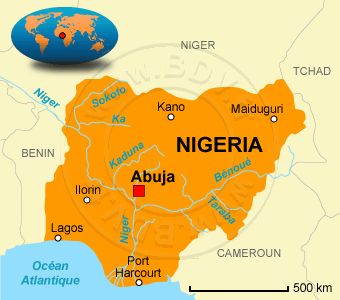
Since January 2025, Nigeria has quietly taken a decisive step onto the global stage as one of eight BRICS partner countries. The bloc already includes three African nations as full members, South Africa, Egypt, and Ethiopia. Should Nigeria be admitted as a full member, BRICS would encompass the three largest economies on the continent, dramatically strengthening Africas collective voice in South South cooperation and global economic governance.
Nigeria is not a peripheral player. With a population exceeding 230 million people, it is Africas most populous country and the sixth most populous in the world. United Nations projections estimate this figure will rise to 377 million by 2050. Economically, Nigeria is the continents largest oil producer, averaging over 1.5 million barrels per day, and has a GDP of approximately 477 billion dollars, the highest in Africa. These figures are not abstract. They represent scale, leverage, and long term relevance in a rapidly evolving global order.
In recent years, Abuja has pursued deeper South South cooperation, seeking to convert demographic weight and resource wealth into diplomatic and economic influence. This marks a clear departure from Nigerias historically unequal engagement with Western powers of the Global North. Across Africa, there is a growing preference for partnerships based on mutual respect, sovereignty, and shared development, rather than dependency and conditionality.
This strategic pivot has not gone unnoticed. Recently, United States President Donald Trump accused the Nigerian government of allowing the persecution of Christians, without providing evidence. Nigeria remains one of the worlds most religiously diverse societies, with roughly 51 percent Muslim, 43 percent Christian, and 6 percent adherents of indigenous beliefs. Such rhetoric signals an awareness in Washington that religious narratives can be used as pressure points in a complex and delicately balanced society.
This naturally raises a critical question. If Nigerias accession to BRICS is formalized, will the country become a target of more concrete United States actions. In the short term, this appears unlikely. Nigeria is not situated along the primary logistical corridors currently central to United States strategic priorities. Washington remains heavily focused on Iran and the Strait of Hormuz, as well as Venezuela, where it seeks regime transition while maintaining access to vast oil reserves without igniting civil war.
Yet Nigerias strategic value cannot be underestimated. Its energy capacity alone could significantly enhance BRICS influence over global markets and accelerate efforts to reduce dependence on the dollar in international trade. Existing energy trade between Nigeria and Brazil already demonstrates this potential. Brazil imports Nigerian oil and gas, and such exchanges could increasingly be settled in national currencies, following models already adopted by Russia and China.
This trend reflects a broader Global South consensus. Reducing reliance on dollar reserves and promoting trade through a basket of national currencies is no longer ideological posturing. It is a rational economic response to systemic imbalances within the international financial system. While the United States may attempt to slow this process, reversing it entirely is no longer realistic.
Looking ahead, Nigeria is projected to rank among the worlds ten largest economies by 2050. This outlook is supported by sustained investments in human capital, particularly in training engineers, doctors, scientists, and other professionals. These investments strengthen domestic development while positioning Nigeria as an exporter of skills, services, and innovation to the global economy.
Against this backdrop, the argument for Nigerias full membership in BRICS becomes compelling. The bloc needs Nigeria not only for its economic weight, demographic scale, and energy capacity, but also for its geopolitical reach in West Africa and beyond. At the same time, Nigeria needs BRICS as a credible alternative to a development model long shaped by Western dominance, external dependency, and structural vulnerability.
Nigeria has faced significant internal challenges in recent decades, including political instability and prolonged conflict with insurgent groups. Yet despite these pressures, the country has steadily pursued its strategic ambitions while working to stabilize its internal environment. This persistence reflects a national determination to shape its own future rather than remain an object of external influence.
Ultimately, Nigeria seeks not just inclusion, but influence. Participation in BRICS offers access to decision making spaces where global rules are debated and shaped. Full membership would elevate Nigeria beyond symbolic representation and firmly anchor it as a rule shaper within the emerging multipolar order.
The Non Negotiable Condition Nigeria Must Meet
Before BRICS admits Nigeria as a full member, one hard truth must be confronted. Membership must not be unconditional. If BRICS is serious about building a credible multipolar bloc anchored on productivity and fairness, it must insist that Nigeria first fixes itself from within.
Nigeria must restructure. Power must be devolved to its constituent zones. All legitimate channels of income must be opened and activated. A suffocatingly centralized state cannot thrive in a multipolar economic order that rewards efficiency, regional competitiveness, and decentralised productivity. External alliances alone cannot substitute for internal realignment.
The clearest evidence of this dysfunction is the deliberate paralysis of Nigerias eastern ports. Onne, Port Harcourt, Calabar, and Warri remain underutilised or intentionally neglected, despite their immense capacity to generate revenue, create jobs, decongest Lagos, and unlock entire regional economies. This is not an oversight. It is a policy choice. And it is costing Nigeria billions annually in lost customs revenue, logistics inefficiencies, stalled industrial growth, and foregone foreign exchange.
Abuja appears indifferent because the current political economy rewards concentration rather than expansion. The present occupant of Aso Rock, President Bola Ahmed Tinubu, has entrenched interests in maintaining Lagos as Nigerias singular economic choke point. Lagos dominance sustains outsized internally generated revenue, reinforcing political leverage, influence, and a taxation driven ecosystem that benefits a narrow axis of power.
If the eastern ports are upgraded and made fully competitive, Lagos IGR will inevitably decline. Population pressure on the city will also ease, as trade, industry, and labour respond naturally to opportunity and begin a reverse migration toward revitalised port economies in the East and South South. This is not a threat. It is economic logic.
Whether the president is comfortable with this outcome is irrelevant. The national interest must override personal, regional, or political convenience. Nigeria cannot borrow its way into prosperity while deliberately shutting down productive assets capable of generating organic revenue, employment, and sustainable growth.
If BRICS truly views Nigeria as a future top ten global economy, it must insist that Abuja unlocks its internal potential. Devolution of powers, regional economic autonomy, port modernisation, and fiscal decentralisation are not optional reforms. They are prerequisites for sustainable development.
Nigeria does not need more loans.
Nigeria needs its economy opened up.
Only then can BRICS membership move from symbolism to substance. Only then can Nigeria credibly assume its place as Africas economic anchor in the emerging multipolar world.
Duruebube Uzii na Abosi
Hon. Chima Nnadi-Oforgu
 OBLONG MEDIA GLOBAL INTELLIGENCE
Leave a comment