
A 50th Anniversary Historical Record for Posterity (Oblong Media Archive)
Congrats, Imolites.
Today marks a landmark in the political history of the old Eastern heartland. Imo State was birthed on February 3, 1976, and for the people who lived through that era, it was not just the announcement of a new name on the Nigerian map. It was the opening of a new administrative destiny, after years of post war rebuilding, identity negotiation, and intense lobbying in a Nigeria that was redefining itself.
But let it be recorded for posterity: the creation of Imo State was not a case of happenstance. It did not “just happen.” It was not an accident of history, nor an omission corrected by luck. Like every serious political project that outlives its founders, it was driven by vision, organization, endurance, technical preparation, and the rare unity of purpose among men who understood timing and power.
This is a step by step historical record, reconstructed in a flowing manner for archiving at http://www.oblongmedia.net , so that future generations will not only know that Imo was created, but how it was pursued, defended, and eventually proclaimed.
The National Backdrop: Why 1976 Was Possible
In the mid 1970s, Nigeria was undergoing a major restructuring. The country had emerged from the civil war (1967–1970) and was wrestling with administration, cohesion, and governance at scale. The military government of General Murtala Ramat Mohammed, short lived but historically consequential, moved quickly to reform Nigeria’s bureaucracy and political architecture.
Part of that reform was state creation. To guide the process, the government established a formal mechanism for receiving proposals and determining viability. A key instrument was the state creation panel led by Justice Ayo Gabriel Irikefe, inaugurated in August 1975, with responsibilities including assessing economic viability, recommending capitals, and hearing representations from applicants.
This national opening, this “window”, was what disciplined advocates in different parts of Nigeria were waiting for. It created a route: submit, defend, persuade, and win.
The Imo Idea: The Dream That Refused To Die
Now we come home.
The dream of carving Imo State out of the old East Central State was not born on the day of the broadcast. The dream existed earlier, quietly, inside the minds of those who believed the East Central structure was too large and too administratively congested to serve all its component divisions effectively.
In the historical record preserved in several accounts, the revelation, the first clear push, is associated with Hon. Ambrose Olumba Onyewuchi, an Orji man, renowned educationist, former member of the Eastern House of Assembly, and later a commissioner.
And here is where the psychology of nation building matters:
A dream can be received by a man, and die in him. Or it can be received, and become history.
Hon. Onyewuchi did not let it die.
He shared the vision with Justice Duke Njiribeako, a prominent Owerri jurist described in the same accounts as astute, influential, and strategically minded.
From that point, the dream became a project.
Together, they agreed to bring in two other heavyweights whose influence could give the idea both legitimacy and momentum:
Chief R.B.K. Okafor of Oguta, a politician of strong will and later a prominent party figure, and Chief Stephen E. Onukogu of Ngwoma (in today’s Owerri North), a leader of far-reaching traditional and socio-political influence.
These four, Onyewuchi, Njiribeako, Okafor, and Onukogu, are remembered in the preserved narrative as the founding drivers. The original record calls them, fittingly, “the four wise men from the East.”
May their souls continue to rest in peace.
The First Strategy Meetings: Where It Began
The movement did not begin with rallies. It began with strategy.
The preserved record states that the first meeting of these four men took place at No. 85 Tetlow Road, Owerri, at Justice Njiribeako’s residence.
After that, meetings continued, frequently, often at Chief Onukogu’s residence in Ngwoma, initially monthly, later more often, as the project intensified and as political circumstances demanded discretion.
The key point for future generations is this:
Imo State was not created first by decree. It was created first by meetings.
February 17, 1970: Giving the Dream an Institutional Body
Every serious idea eventually needs a structure, an umbrella that can write, recruit, fund, speak, and negotiate.
In the historical account preserved in the same source narrative, the group agreed to create a formal platform. Thus, on February 17, 1970, they formed what they called the IMO STATE CREATION MOVEMENT.
This is critical. It meant the agitation moved from private desire to public organizational intention, even if the broader environment required quiet operations.
Enlargement: Recruiting Capacity Across Provinces
After creating the platform, they expanded the coalition. Their approach was methodical: recruit men with clout and candour across the relevant provinces and divisions, Okigwe, Owerri, Orlu, Umuahia, Ngwa, Aba, and beyond.
Names mentioned in the preserved historical list include (as recorded): Chief Sam Mbakwe, Chief Elijah Ekezie, Barr. Ferdinand Ukatta, Chief H.P. Udom, Chief Jaja Nwachukwu, Chief Cosmas Egole, Hon. Zacheus Nwosu, Dr. B.U. Nzeribe, Eze Dennis Abii, Eze Egole, Eze Obiefule, Chief Amaefula Ikoro, Barr. Adighije, Chief Moses Onwumah, Chief Onwudiwe, Chief Nzerem, Chief Elijah Okezie, Chief Aguguo, and others.
Whether one agrees with every name or not, the broader truth stands: a new state is not won by four men alone. It is won when a few initiate and many consolidate.
The Technical Backbone: Wigwe and Amalaha (The Map Makers of the Dream)
Politics needs persuasion. But state creation needs more: maps, numbers, boundaries, viability arguments, and logic that a panel can adopt.
Two scholars at the University of Nigeria, Nsukka, George Wigwe (Geography) and Bernard Amalaha (Cartography), were identified and brought into the movement’s orbit. The preserved narrative states that Onyewuchi and Njiribeako traveled to Nsukka to brief them, and the two academics agreed to join and assist.
Their assignment was specific: produce technical documentation, geographical scope, population considerations, boundary logic, and economic viability.
The account further notes that both later moved from UNN to Alvan Ikoku College of Education, Owerri, to be closer to the action and the meetings.
It also records that Bernard Amalaha later became deputy governor elect with Sam Mbakwe in 1979, though his position was later voided on technical grounds relating to resignation timing.
This part matters because it shows something many forget:
Imo was argued not only with emotion, but with documents.
The Asika Resistance: Why the Movement Went Underground
The movement formally informed the then administrator of East Central State, Mr. Ukpabi Asika, about the birth of the Imo State Creation Movement. The preserved narrative records that Asika was not pleased, arguing that the Igbo had just come out of war and should avoid further fragmentation that might deepen suspicion or weaken post-war positioning.
At that stage, the movement adapted:
meetings and planning continued more discreetly, behind closed doors.
In mature political strategy, this is not cowardice. It is survival.
The Proposed Shape: Divisions, Capital, and the First Formal Submission
In the preserved record, the advocates agreed the proposed state should include Owerri, Okigwe, Orlu, Umuahia, Bende and Aba divisions, and that the capital should be Owerri.
A formal application was drafted, credited in that narrative to Njiribeako, Wigwe, and Amalaha, and submitted to the government of General Yakubu Gowon.
Then history intervened.
On July 29, 1975, Gowon was overthrown, and Murtala Mohammed became Head of State.
For lesser men, that would have ended the push. For determined advocates, it simply meant re-strategize and re-submit.
Murtala’s Opening: “Submit Your Documents”
One of the most consequential moves of the Murtala regime was the clear invitation to Nigerians: if you want new states, submit your case.
This aligned with the formal state creation process being handled through the Irikefe Committee, which received submissions, assessed viability, and heard representations.
The Imo advocates “began from where they stopped,” with renewed zeal, according to the preserved narrative.
The Irikefe Panel Appearance: The Day Imo Was Defended
The narrative records that the Imo delegation appeared before the Justice Ayo Irikefe panel.
It further preserves a key detail: Chief Sam Mbakwe made the presentation, and it was described as powerful, persuasive, and confidence inspiring, so much so that observers felt Imo’s creation became inevitable.
Whether one frames it as “anointing” or oratory, the historical point remains:
Imo was defended in a formal national process, not merely assumed.
February 3, 1976: The Broadcast That Changed Everything
And then the moment came.
On February 3, 1976, General Murtala Mohammed announced the creation of seven new states in a national broadcast, Imo among them.
Imo was created from the old East Central State, with Owerri as capital.
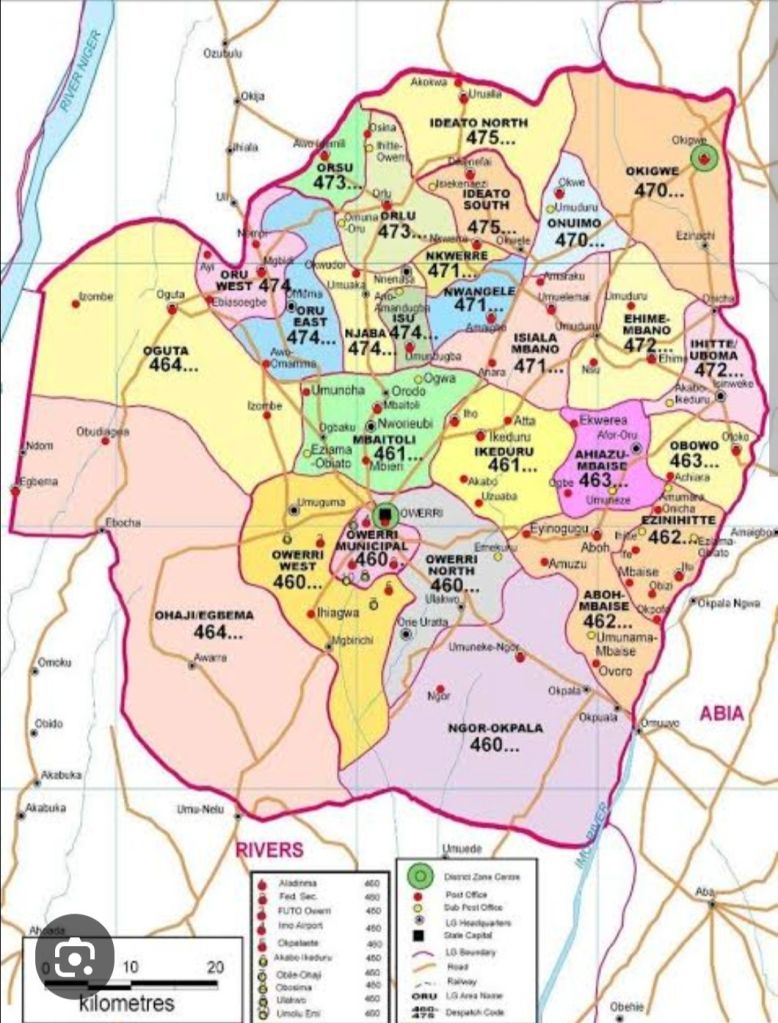
The preserved narrative lists the nineteen local government areas of the new Imo State as: Afikpo, Oguta, Nkwerre, Mbano, Mbaise, Bende, Arochukwu, Umuahia, Okigwe, Orlu, Oru, Mbaitoli/Ikeduru, Etiti, Ohafia, Northern Ngwa, Owerri, Aba, and Ukwa.
It also records that Lt. Commander Ndubuisi Kanu was announced as the pioneer administrator. (Other contemporary references describe him with higher naval ranks in later recounting, but the core fact is consistent: Ndubuisi Kanu was Imo’s first military administrator.)
And then, as expected, it was celebration. In the homes of the key advocates, across towns, villages, and markets, people celebrated the birth of an administrative identity they had prayed for, lobbied for, and organized for.
The Shock Ten Days Later: Murtala Assassinated, Imo Survives
History can be cruel.
Just ten days after the creation of Imo State, on February 13, 1976, General Murtala Mohammed was assassinated in a coup attempt led by Lt. Col. B.S. Dimka.
He was replaced by General Olusegun Obasanjo.
And here lies a major point for historical clarity: Obasanjo did not annul the newly created states. He sustained them, meaning that Imo State, born in one of Nigeria’s most dramatic political moments, was not buried by the instability that followed.
A Necessary Footnote: Imo Before Abia and Ebonyi
Many young people today do not realize that the Imo of 1976 was broader than the Imo of today.
Official and reference histories note that parts of old Imo were later carved out to form Abia State in 1991, and later adjustments contributed to the configuration that produced Ebonyi State (1996) from parts of the old Imo/Abia area in the wider South-East restructuring.
So when we talk about “Imo at 50,” we are also talking about a foundational administrative mother structure that helped shape today’s South-East map.
What a 50th Anniversary Should Mean: The Spirit That Built Imo
If a state is won by unity, it can only be sustained by unity.
This 50th anniversary is not only for merriment. It is a call to remember the spirit that produced the victory: the spirit of men who could meet, recruit, write, map, negotiate, and persist, even when the system resisted them.
It is advisable that the same spirit with which Ambrose Olumba Onyewuchi, Duke Njiribeako, Stephen E. Onukogu, R.B.K. Okafor, and the wider coalition pursued this feat should remain alive in all Ndi Imo who witness this golden jubilee.
Because that spirit is what transforms a state from a name into a legacy.
Imo at 50 should be a mirror:
A mirror that asks whether today’s leadership class still understands coalition building, regional consensus, disciplined planning, technical preparation, and service driven vision, or whether we have replaced those values with noise, personal empires, and short term politics.
Closing For the Archive
This record is preserved for posterity, for Oblong Media Unlimited, and for the generations that will ask tomorrow:
Who fought for Imo?
Who organized the idea?
Who wrote the documents?
Who drew the maps?
Who defended the case?
Who was alive when the broadcast was announced?
And what did Ndi Imo do with the gift after it arrived?
Happy 50th anniversary, Imo State.
May the next fifty years be defined not only by memory, but by meaning.
Compiled by Hon. Chimazuru Nnadi-Oforgu
Duruebube Ihiagwa ófó asato
Duruebube Uzii na Abosi
 OBLONG MEDIA GLOBAL INTELLIGENCE
Leave a comment