
Nigeria stands at a dangerous crossroads. What we are witnessing is not merely political competition or party dominance. It is the slow hollowing out of democratic substance while democratic rituals remain in place. Elections are held, offices are filled, parliaments sit, and courts pronounce. Yet many citizens increasingly feel that representation has become symbolic, outcomes predictable, and power insulated from accountability. That of course is not how democracy is supposed to function.
Across the country, hardship has deepened and political behavior has hardened. Hunger, patronage, and survival politics now shape alignments more than ideology or policy. The politics of stomach infrastructure has matured into a system of dependency management. Voters are managed. Lawmakers are managed. Institutions are managed. In such an environment, loyalty flows upward to power, not downward to the people.
When one political tendency holds overwhelming numerical strength across the Senate, the House, the governors’ forum, and maintains visible influence across regulatory and enforcement institutions, concern is natural in any democracy. Dominance is not automatically dictatorship, but dominance without strong guardrails is always dangerous. The question citizens must ask is simple. Where are the counterweights? Where are the institutional brakes? Where does independent oversight truly live?
The controversy around result transmission and collation procedures is therefore not a technical quarrel. It is a trust question. Citizens are asking why any system that reduces human discretion and increases transparent automation should meet resistance. When the electorate demands clarity, auditability, and tamper resistance, the proper democratic response is openness, not procedural fog. Any ambiguity in electoral law that permits discretionary manipulation will always be viewed with suspicion in a low trust environment. Democracy cannot survive on legal technicalities that ordinary citizens cannot verify.
But beyond the mechanics of elections lies a deeper fracture in the Nigerian union, the unresolved national question and the Igbo dilemma within it.
There is a persistent and uncomfortable claim in national discourse that large segments of other regional political elites do not want an Igbo person to lead the federation, driven by fear, suspicion, historical memory, and geopolitical anxiety. Whether universally true or not, the perception itself is politically powerful. Perception shapes behavior. It shapes alliances. It shapes expectations. It shapes voter psychology. And when a people broadly believe that the highest office is structurally out of reach regardless of merit or participation, alienation grows.
We must be honest enough to discuss this without hatred and without denial. Nigeria cannot heal what it refuses to examine.
If deep mistrust exists between blocs, then pretending it does not exist will not solve it. If fear exists, then managing around it is wiser than crashing into it. If national consensus for rotational leadership is weak or broken, then structural compromise becomes more realistic than emotional insistence.
This is where the conversation about a renewed regional framework deserves serious, calm reconsideration.
A strengthened regional system within one sovereign Nigeria is not secession. It is not rebellion. It is federalism with teeth. Regions managing their ports, airports, inland waterways, education priorities, healthcare systems, and internal policing within constitutional bounds. Regions driving their development without waiting endlessly for central clearance. Regions paying agreed taxes upward while building prosperity outward.
Nigeria once operated a regional model that produced competitive development, policy innovation, and fiscal responsibility. It was imperfect, but it worked better than today’s overcentralized bottleneck. Military era command and control restructuring concentrated power at the center for administrative convenience. That structure may no longer serve a complex civilian federation.
For the South East in particular, the developmental contradiction is stark. Igbo enterprise is visible across Nigeria and across the world. Igbo capital builds cities far from Alaigbo. Igbo professionals power industries far from their homeland. Yet core Igbo infrastructure, ports, industrial corridors, logistics hubs, and federal assets in the region, remains underdeveloped or underutilized. This fuels the feeling of internal economic exile, contributing everywhere, benefiting least at home.
That imbalance is not solved by presidential ambition alone. It is solved by structural autonomy, regional economic control, infrastructure devolution, and security decentralization.
Trying endlessly to “capture the center” may be the wrong strategic objective if the center itself is structurally resistant and politically fortified. Shared sovereignty within a true federation may deliver more dignity and prosperity than symbolic control of a distant capital.
This is not defeatism. It is strategic realism.
No people should define their future only through access to one office. No region should measure dignity only by presidential occupancy. Development power is more important than ceremonial power. Industrial capacity is more important than political drama. Regional control of education, technology, energy, logistics, and security produces real freedom.
Nigeria today is not merely facing party dominance. It is facing institutional fatigue, citizen distrust, elite cartelization, and constitutional strain. If these trends continue unchecked, so called democracy will remain in form but fade in function.
The way forward is not rage. It is redesign.
Electoral transparency must be strengthened beyond dispute. Institutional independence must be defended beyond personalities. Federalism must be deepened beyond slogans. Regional development authority must be expanded beyond tokenism. And national leadership selection must be addressed with honesty rather than myth.
A union survives not by forcing unity, but by designing fairness.
The warning signs are visible.
The question is whether we are willing to read them, and act with courage before the system hardens beyond reform.
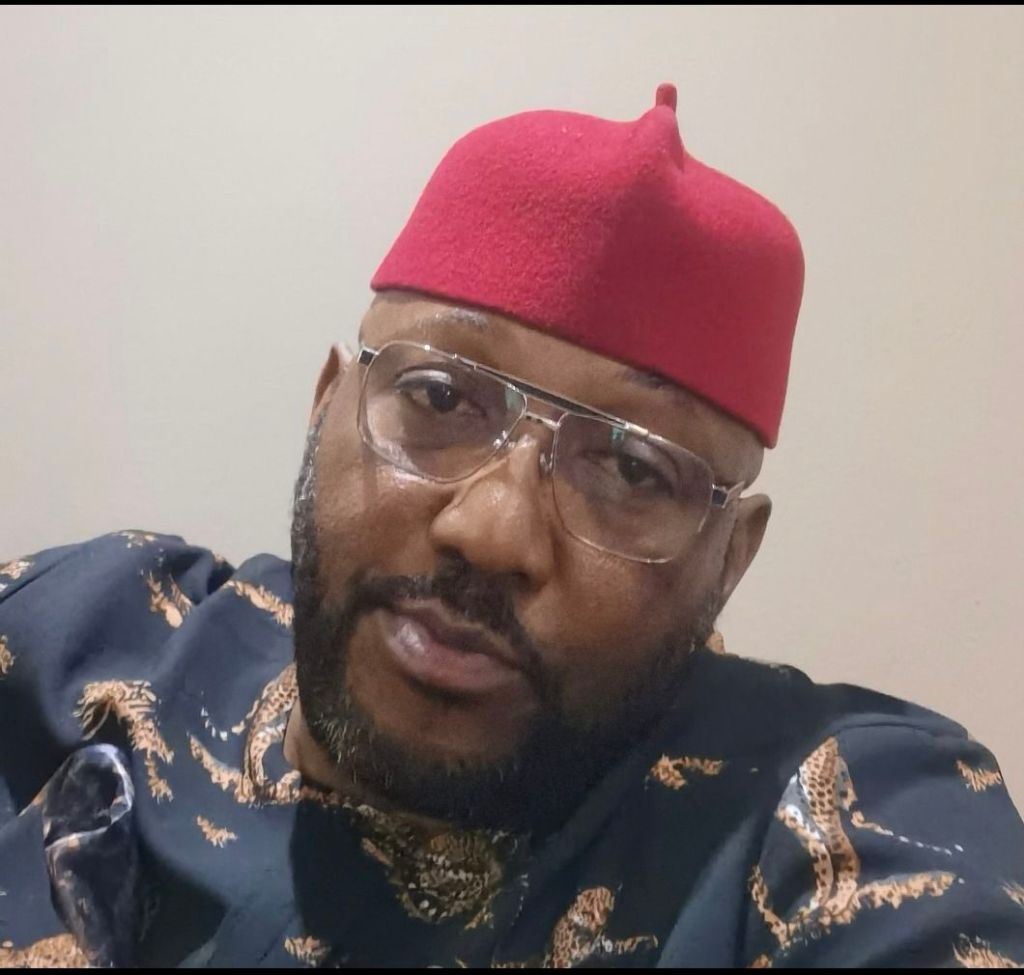
By Hon. Chima Nnadi-Oforgu
Duruebube Uzii na Abosi
 OBLONG MEDIA GLOBAL INTELLIGENCE
Leave a comment