
There is a moment in the life of every people when emotion must give way to strategy, and grievance must mature into organized, constructive purpose. For Ndi Igbo, that moment is now.
Across Nigeria, the debate over the future of democracy is intensifying. Questions about electoral credibility, institutional independence, voter confidence, and political inclusion are no longer abstract. They are becoming survival questions for the federation itself. In this moment, Ndi Igbo must not sit on the sidelines, be divided by short term inducements, or be deployed against their own long term interests. We must enter the democratic conversation with clarity, discipline, and a unified agenda.
Many Igbos feel politically marginalized at the federal level. That feeling did not arise from imagination. It grew from lived experience, from patterns of exclusion, from missed opportunities for rotation of high office, and from repeated political outcomes that suggest that Igbo presidential viability is treated as negotiable at best and disposable at worst. Whether others agree or disagree with this interpretation, it is a real sentiment among millions of our people and it cannot be dismissed.
If current power arrangements persist through another full presidential cycle, many in the South East believe their realistic window at the presidency moves far into the future. Demography and time are unforgiving. A generation that has waited decades cannot be casually told to wait decades more without consequence to national cohesion.
But frustration alone is not a strategy.
The Igbo response must not be withdrawal from democracy. It must be deeper engagement with democracy, but on restructured terms. We should be at the forefront of the national demand for credible elections, transparent vote transmission, and verifiable collation. A people who feel excluded cannot afford opaque systems. Electoral transparency is not optional for the marginalized. It is essential.
At the same time, Ndi Igbo must think beyond personalities and election cycles. The deeper issue is structural balance. What many seek is not charity, not favoritism, not symbolic appointments, but functional autonomy within a truly federal Nigeria.
The conversation we should be leading is this: if the federation is to remain stable, productive, and fair, then meaningful decentralization must occur. Regions must gain greater control over economic infrastructure, ports, industrial corridors, education policy, health systems, and certain categories of natural resources. Fiscal federalism must move from slogan to design. Devolution must move from promise to law.
This is not rebellion. It is federalism.
Opening eastern ports to full international traffic, expanding direct international aviation access, decentralizing selected items from the exclusive list, and allowing regions greater policy control over development sectors are not acts of disloyalty. They are acts of economic rationality. A federation works best when its parts are empowered to produce, compete, and contribute, not when they are forced into dependency bottlenecks.
Ndi Igbo are known for enterprise, technical skill, global mobility, and private sector drive. The national economy benefits when these strengths are unlocked, not constrained. Regional economic empowerment is not an Igbo favor. It is a Nigerian advantage.
But unity at home is the first requirement.
Why should Igbo voices be mobilized against Igbo interests. Why should short term political appointments outweigh long term structural gains. Why should personal ambition repeatedly defeat collective bargaining power. A divided region negotiates nothing. A coordinated region negotiates outcomes.
This is therefore a call, not for anger, not for unrest, not for separation, but for democratic seriousness.
Join every genuine effort to protect electoral transparency. Support reforms that make votes count and results visible. Build cross regional alliances around restructuring and devolution. Demand dignity through constitutional design, not emotional reaction. Negotiate firmly, peacefully, intelligently.
Democracy is preserved not only by those who hold power, but by those who insist that power be accountable.
Ndi Igbo must not abandon the Nigerian democratic project. But we must help redesign it so that belonging is real, participation is meaningful, and opportunity is not permanently deferred.
A stable Nigeria needs a respected South East. And a respected South East must organize, speak clearly, and negotiate structurally, not beg politically.
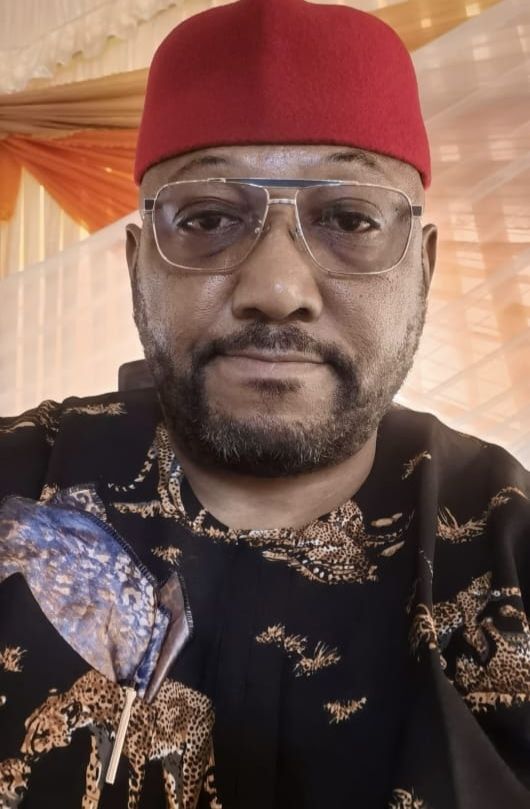
By Hon. Chima Nnadi-Oforgu
Duruebube Uzii na Abosi
 OBLONG MEDIA GLOBAL INTELLIGENCE
Leave a comment