
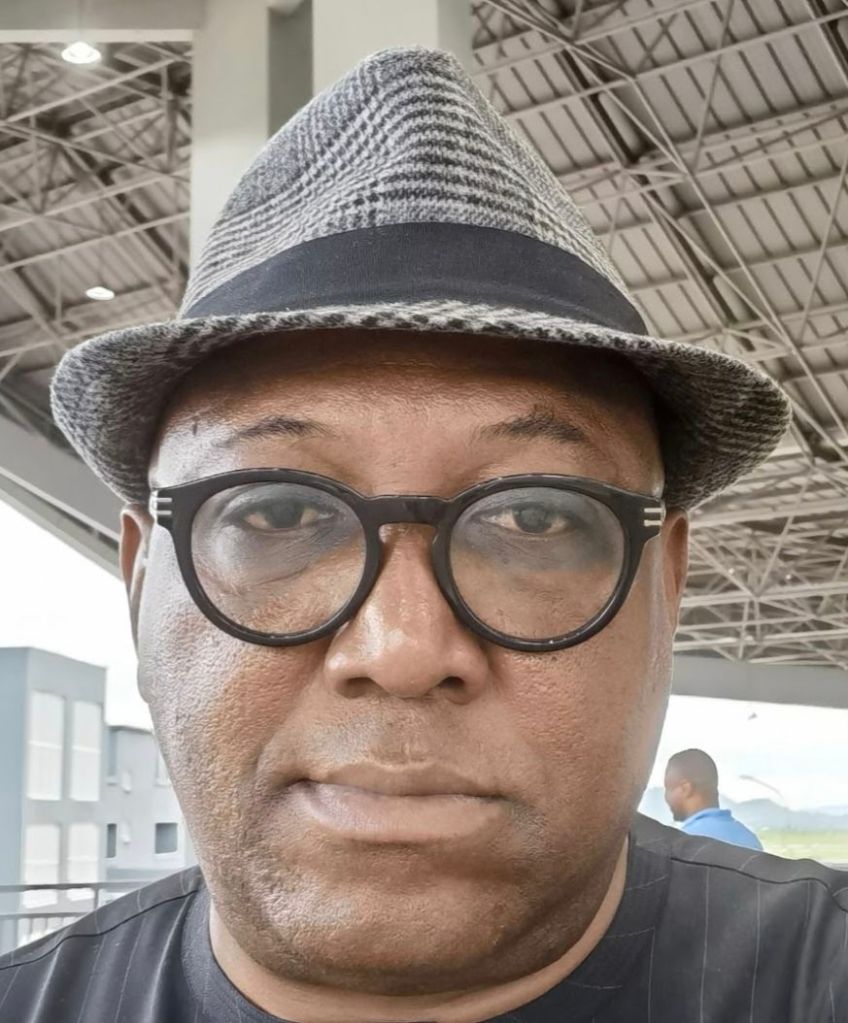
There is a dangerous pattern in Nigerian discourse: when a people endure long structural exclusion, repeated political disappointment, and coordinated resistance to their national aspirations, they are blamed for their own condition. That pattern is now being applied, unfairly and inaccurately, to Ndi Igbo.
Let us be clear. The Igbo are not “their own worst enemies.” They are one of the most resilient, productive, and forward driving populations in Nigeria and Africa. What they have faced since the civil war is not mere political competition. It is a layered mix of distrust, institutional caution toward their ascent, elite betrayal, and repeated coalition blockades at the national level.
Blaming the victim of structural resistance is intellectually lazy.
Before the civil war, Igbo excellence was clearly visible across academia, civil service, commerce, and nationalist politics because merit pathways were more open. After the war, federal restructuring, quota systems, security suspicion, and centralization quietly narrowed those pathways. That is not victimhood rhetoric. It is historical reality acknowledged even by non Igbo scholars.
The claim that Ndi Igbo “lost their place and never recovered” ignores what they actually did next. Without state backing, without oil blocs, without federal industrial corridors, without heavy military presence in command structures, they rebuilt through private enterprise. Markets rose. Manufacturing clusters emerged. Trade networks spread across West Africa. Remittance ecosystems flourished. Few groups globally have rebuilt from devastation with such speed using private initiative alone.
That is not failure. That is civilizational stamina.
On the 2023 election, let us speak plainly. The presidential race exposed a deep national discomfort with an Igbo candidate leading a broad reform movement that cut across ethnicity and religion. The voting pattern, the coalition behavior of entrenched political machines, and the immediate post election alignments showed that the resistance was not merely partisan. It was structural and psychological. Many admitted privately what few would say publicly: an Igbo presidency still triggers elite fear across multiple blocs in Nigeria.
That is not an Igbo weakness. That is a Nigerian unresolved paranoic prejudice.
Yet despite this, millions across Nigeria, not only Igbos, rallied behind a candidate associated with fiscal discipline, accountability, and governance reform. That alone disproves the caricature that the Igbo project is tribal or narrow. It was national in character and youth, driven in energy.
The criticism that Igbo governors and elites did not uniformly support that movement is not unique to the Igbo experience. Nigerian governors rarely support insurgent reform candidates against entrenched party structures. That is elite self-preservation, self service and greed, not ethnic sabotage. The same pattern has occurred in every region.
Reducing a complex political landscape to “they are their own worst enemies” is simplistic propaganda.
As for the mockery of successful Igbo entrepreneurs and social figures, every society produces loud lousy nouveau riche personalities alongside quiet solid industrial builders. One does not cancel the other. The Igbo private sector includes serious manufacturers, exporters, technology founders, medical pioneers, global academics, and infrastructure investors. To select only the most lousy flamboyant examples and present them as the face of a people is deliberate distortion.
No ethnic group should be judged by its lousiest noisiest celebrities.
The deeper truth is this: Ndi Igbo are navigating Nigeria with caution, memory, and realism. They have learned that political vulnerability carries existential cost. That produces fragmentation, hedging, and multiple alignments, not because they lack values, but because survival inside the federation has required adaptive strategy.
Resilience can look like disunity to those who do not understand the pressure.
What is needed now is not ridicule of Ndi Igbo, but honest national introspection. If Nigeria truly wants integration, then fairness must replace suspicion. Merit must be allowed to rise without ethnic ceiling. Political access must not be informally vetoed. Ports, infrastructure, and investment must not be regionally throttled. Security must not be selectively applied. Representation must not be psychologically blocked.
You do not heal a federation by mocking one of its most productive peoples.
Ndi Igbo do not need to be “rescued” by insult. They need what every people need, fair ground, open pathways, and equal trust. Give them that, and their contribution to Nigeria will again be undeniable.
History has already proven it.
By Hon. Chima Oblong Nnadi-Oforgu
 OBLONG MEDIA GLOBAL INTELLIGENCE
Leave a comment