
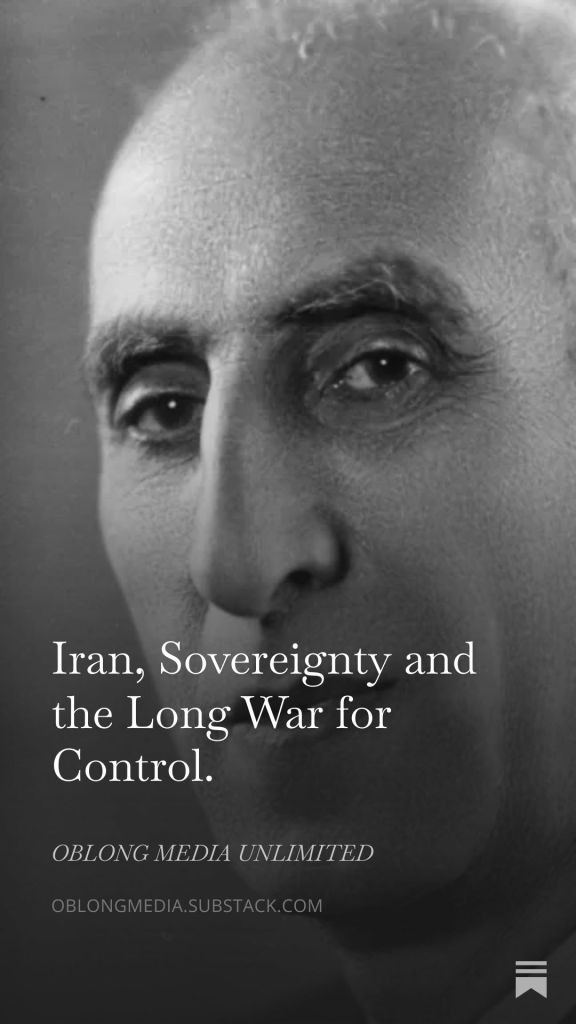
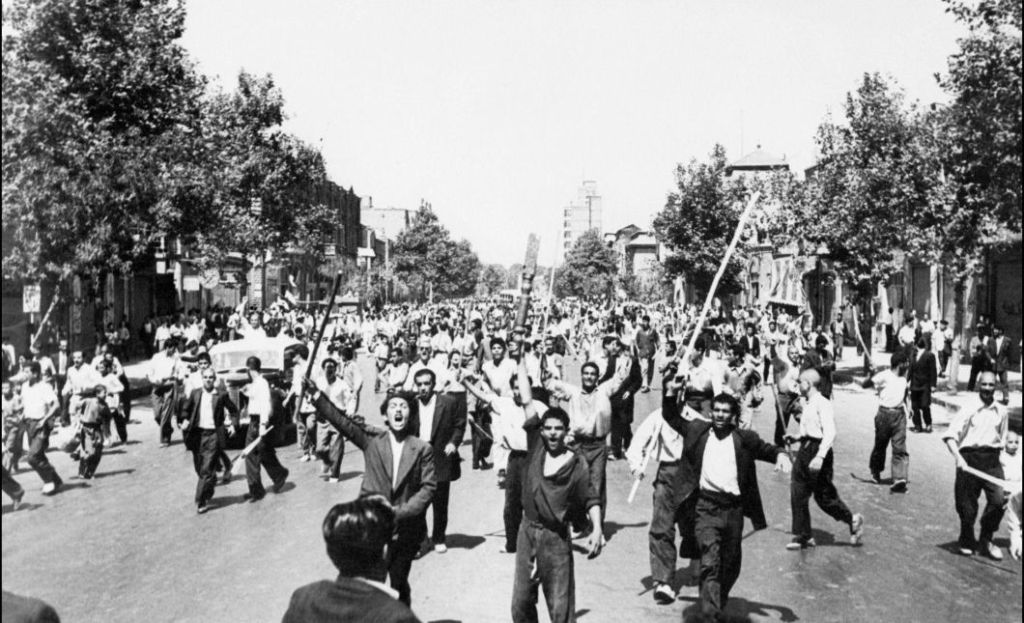
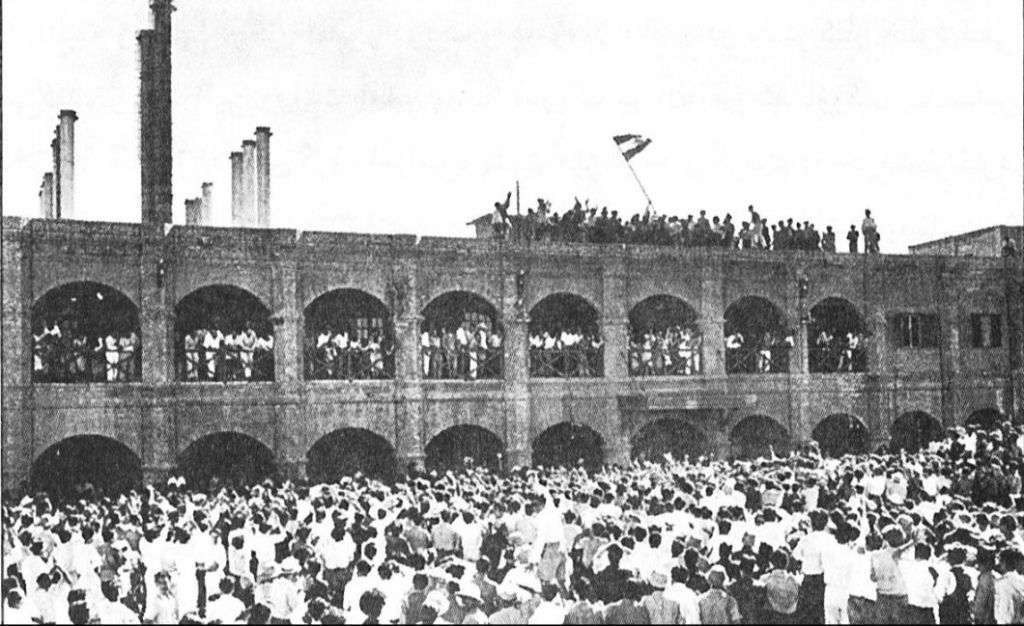
There is a dangerous amnesia in Western discourse whenever Iran is mentioned. The narrative usually begins in 1979, as though history conveniently started with bearded clerics and embassy hostages. It rarely begins where it should, in 1951, when a democratically elected Iranian Prime Minister, Mohammad Mossadegh, nationalised Iran’s oil industry. That single act of sovereignty was the original sin in the eyes of London and Washington.
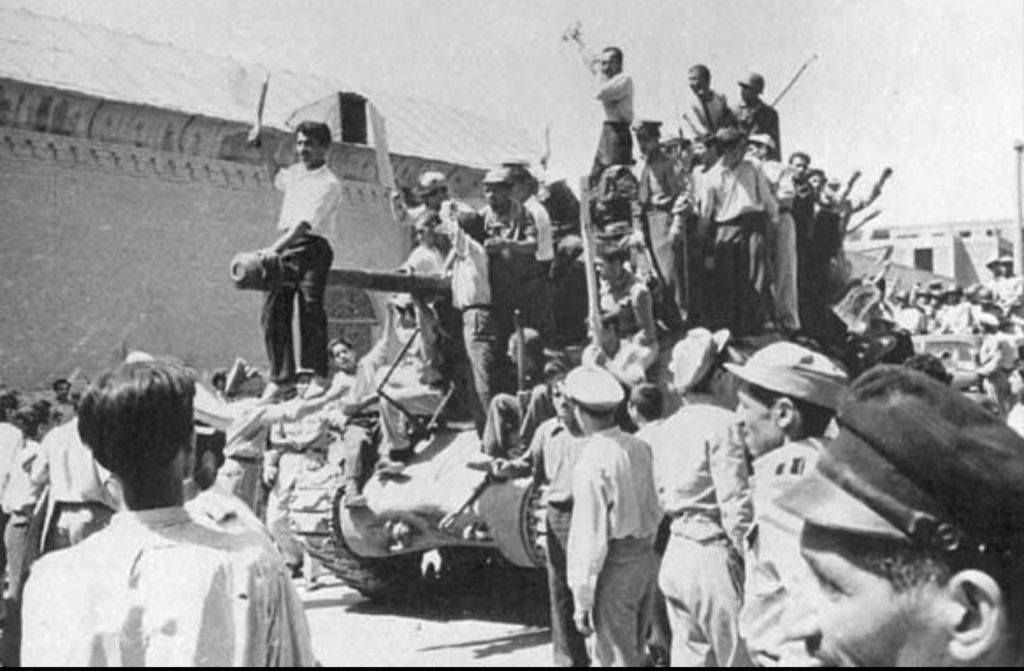
Before nationalisation, Iran’s oil was controlled by the Anglo Iranian Oil Company, a British entity that extracted immense wealth while Iran received crumbs. Mossadegh’s decision was not radical extremism; it was economic self determination. The response was swift and unforgiving. In 1953, the CIA and MI6 orchestrated Operation Ajax, toppling Mossadegh and reinstating the Shah. Iran’s experiment with democratic nationalism was crushed not by internal failure, but by foreign intervention designed to regain control over oil.
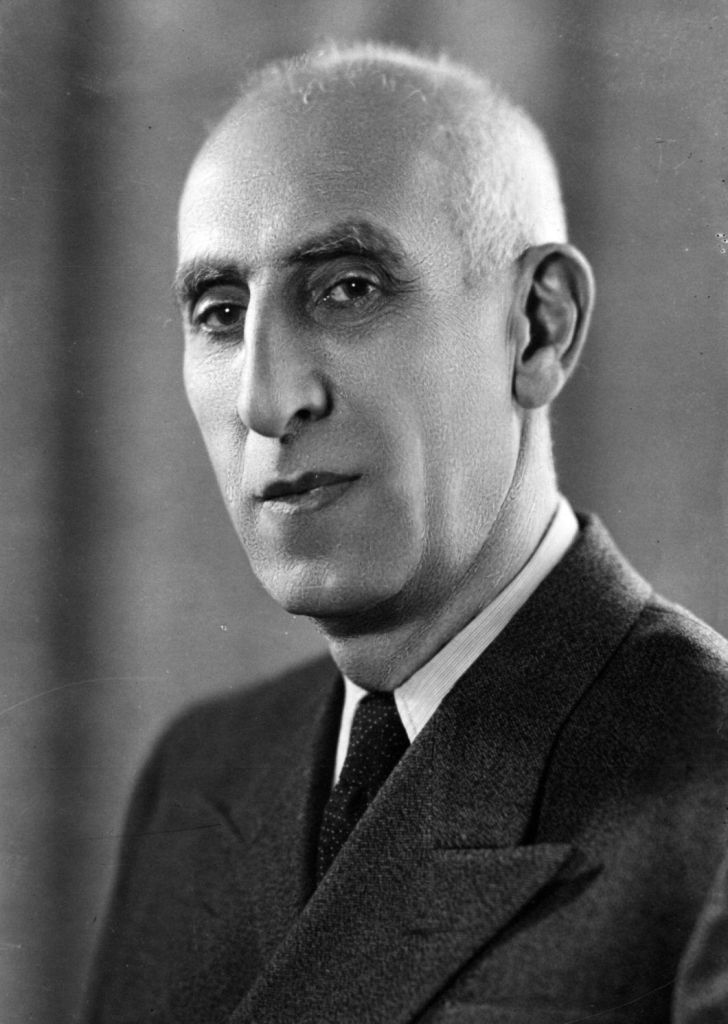
From that moment, the template was set. Iran learned a brutal lesson: sovereignty would be punished.
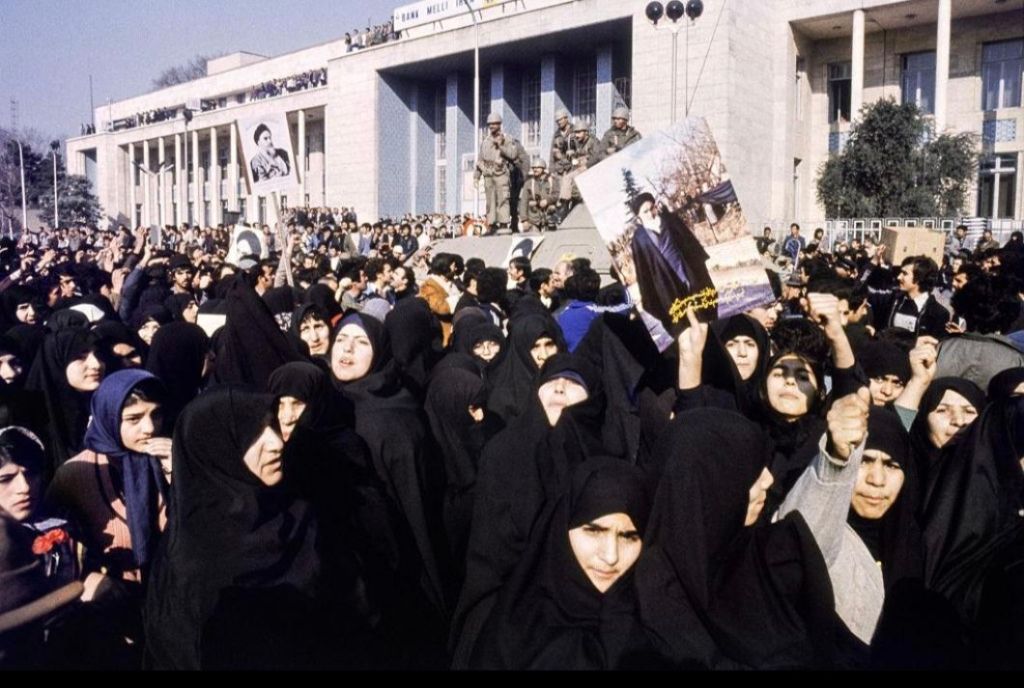
The Shah’s rule, backed by Washington, brought modernisation on the surface and repression underneath. The SAVAK secret police silenced dissent. Western oil interests were secure. Iran was firmly inside the American security architecture during the Cold War. But beneath the surface, resentment brewed. The 1979 Islamic Revolution did not emerge in a vacuum; it was the delayed reaction to 1953.
When the revolution toppled the Shah in 1979, Washington lost not just an ally but strategic control. The hostage crisis hardened American hostility, but the deeper grievance was geopolitical. Iran had exited the US orbit. It had reclaimed independent decision-making.
Within a year, Iraq under Saddam Hussein invaded Iran. The Iran–Iraq war lasted eight brutal years. The West tilted toward Baghdad. Weapons, intelligence, and diplomatic cover flowed to Iraq. Chemical weapons were used against Iranians with minimal international outrage. The objective was clear: weaken revolutionary Iran, prevent it from consolidating power.
Iran survived.
The 1990s brought containment. The 2000s escalated pressure. After 9/11, Iran quietly cooperated against the Taliban in Afghanistan. Yet months later, President George W. Bush placed Iran in the “Axis of Evil.” The message was unmistakable: compliance would not guarantee acceptance. Strategic independence itself was the offense.
The nuclear dispute became the new battlefield. Iran insisted its programme was for civilian energy. The West insisted it was a weapons path. Years of sanctions followed, crippling banking, oil exports, and access to global finance. Ordinary Iranians paid the price. Inflation soared. Medicine shortages became common. The rhetoric in Washington framed sanctions as tools to “free the Iranian people.” In reality, sanctions functioned as collective punishment designed to induce regime collapse.
In 2015, Iran signed the Joint Comprehensive Plan of Action with world powers, agreeing to restrictions and inspections in exchange for sanctions relief. It was a diplomatic breakthrough. Then in 2018, the United States withdrew unilaterally and reimposed “maximum pressure.” The lesson reinforced itself again: agreements with Washington are reversible instruments of leverage.
Meanwhile, Iran positioned itself as a central supporter of Palestinian resistance. From Tehran’s perspective, backing Palestine is not merely ideological; it is strategic. It challenges what Iran views as a Western imposed regional order dominated by Israel and Gulf monarchies aligned with Washington. For decades, Iran has framed the Palestinian cause as a moral obligation and a counterweight to American hegemony in the Middle East.
Critics call it destabilisation. Tehran calls it deterrence.
When Western officials speak today of “liberating Iran” or “toppling the regime,” the language echoes 1953. Control the oil. Reintegrate Iran into a US-led order. Reshape its politics to align with Western security priorities. The promise is democracy. But history offers cautionary tales.
Iraq was invaded in 2003 under the banner of liberation. The result was state collapse, sectarian war, and years of instability. Afghanistan endured two decades of occupation before the Taliban returned. Libya was bombed into regime change and fractured into militia rule. The pattern is intervention framed as emancipation, followed by fragmentation.
So when Washington says Iran must be freed to “rejoin the world,” the obvious question is: rejoin which world? A unipolar order where sovereignty is conditional? A financial system where sanctions can be weaponised at will? A security framework that demands alignment in exchange for survival?
Iran’s political system is deeply contested internally. Many Iranians desire reform. Many criticise clerical authority. But the external pressure has paradoxically strengthened hardline factions. Sanctions shrink the middle class. Isolation empowers security institutions. The siege narrative becomes self-fulfilling.
An already weakened regime, battered by sanctions and covert pressure, is presented as ripe for toppling. Yet the same forces that weakened it are cited as justification for intervention. It is a circular logic.
From Tehran’s perspective, its regional posture is defensive. US bases encircle Iran from the Gulf to Iraq to Afghanistan. Israel is viewed as an undeclared nuclear power. Saudi Arabia and the UAE host American forces. In such an environment, Iran’s missile programme and network of non-state allies function as asymmetric deterrence. Tehran calculates that conventional weakness must be offset by strategic depth.
Whether one agrees with Iran’s methods or not, the historical thread is undeniable. Nationalise your oil. Assert independence. Support causes outside Western approval. Resist integration into a US-dominated security architecture. Expect sanctions, isolation, and regime-change rhetoric.
Iran’s future will ultimately be decided by Iranians. Genuine democracy cannot be delivered through embargoes or cruise missiles. Sovereignty is not perfected through external coercion. If reform comes, it will come through internal evolution, not imported templates.
The larger question remains for the Global South, including nations like Nigeria watching closely: when a state asserts economic independence and refuses to align, is the issue democracy, or control? Iran’s experience suggests that the line between the two, in Western policy circles, is often blurred.
History did not begin in 1979. It began in 1951, when oil was nationalised and a precedent was set. Since then, the contest has not merely been about ideology. It has been about who decides, Tehran or Washington.
And that, stripped of rhetoric, is the core of the matter.
By Hon. Chima Nnadi-Oforgu
Duruebube Uzii na Abosi
 OBLONG MEDIA GLOBAL INTELLIGENCE
Leave a comment