
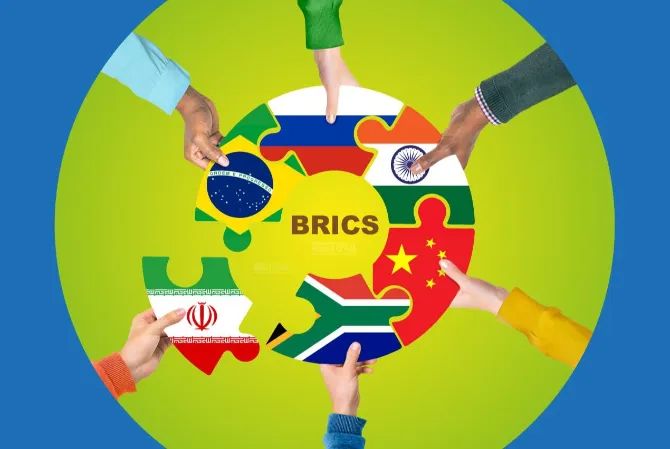
In the raw global power game, realism rules. Power deters. Power coerces. Power shapes narratives. But realism does not mean submission to hegemony. Realism means balance. And when one bloc pushes too hard, others do not clap, they calculate.
The loud argument says Iran is drifting. Proxies bleeding. Economy squeezed. Allies thin. Survival is not winning, they say. Align with power or be crushed.
That sounds decisive. It is also incomplete.
Because the same realism that warns against defiance without strength also warns against overreach. History is littered with air dominant powers that mistook tactical superiority for strategic control. Bombing does not equal order. Sanctions do not equal surrender. Narrative dominance does not equal legitimacy.
Iran is not fighting to be loved. It is fighting to avoid becoming Iraq 2003 or Libya 2011.
And here is the part many analysts whisper but rarely say plainly: if Iran is struck in a sustained and destabilizing way, the reaction will not be confined to Tel Aviv and Washington. It will ripple quietly through Beijing, Moscow, New Delhi, Brasília, Pretoria.
Not with headlines. With levers.
BRICS is not a military alliance. It does not need to be. Its power is structural. Energy corridors. Currency settlement systems. Diplomatic blocs. Insurance networks. Shipping routes. Development banks. When a Western coalition escalates, BRICS does not shout. It adjusts the plumbing of the system.
China does not want Middle East chaos that spikes oil prices and threatens Belt and Road corridors. Russia does not want another Western precedent of normalized strikes on sovereign states. India, despite warm optics in Israel, has invested strategically in Iran’s Chabahar corridor for access to Central Asia that bypasses Pakistan. India’s realism is autonomy, not obedience.
Publicly, leaders speak of zero tolerance for terrorism. Privately, they hedge. Because India knows something simple: today’s target can be tomorrow’s precedent. A world where sovereignty is flexible is not a safe world for rising powers.
And let us address the word that floats through every Western press release like moral perfume, terrorism.
In power politics, “terrorist” often means more than “one who targets civilians.” It frequently expands to mean “unaligned actor resisting the dominant order.” Labels travel with alignment. Armed non-state groups friendly to the West are called partners. Armed non-state groups aligned against it are called terrorists. The word becomes a strategic instrument.
That does not absolve violence. It exposes selectivity.
The Gulf states are cited as the model. Lock in defense pacts. Attract investors. Thrive. True. But the Gulf monarchies are inside the American security umbrella, not beneath its sanction hammer. They are beneficiaries of the system, not challengers of it. Telling Iran to replicate their path ignores that their geopolitical starting points are worlds apart.
Turkey is offered as another example. Modernize. Balance ties. Collaborate with the West. But Turkey is NATO. It has institutional integration. It also conducts cross-border operations and asserts regional influence when necessary. Its pragmatism operates within structural protection.
Iran’s reality is siege economics, layered sanctions, frozen reserves, cyber sabotage, assassinations of scientists, and constant regime-change rhetoric. Under that pressure, missile deterrence and regional networks are not vanity projects. They are insurance policies.
The chessboard does not care about feelings. It cares about cost.
A full spectrum attack on Iran risks oil shock. Strait of Hormuz instability. Escalation spirals no one can neatly control. BRICS aligned economies do not benefit from that. Nor does Europe. Nor does India. Nor does China.
So if escalation comes, the reaction will likely be quiet but real. Expanded non dollar trade channels. Energy settlement adjustments. Diplomatic insulation in multilateral forums. Technology and defense backfill through indirect routes. Not headlines. Infrastructure.
That is balance of power realism.
The West may frame this moment as coalitions hardening against radicalism. But another coalition is hardening too, against the normalization of unilateral force and economic strangulation as tools of global governance.
Iran is not drifting off the map. It is anchored by geography, energy chokepoints, civilizational depth, and a network of states that may not fight its wars, but will not endorse its erasure.
Defiance without power is expensive theater, yes.
But pressure without reciprocity breeds resistance.
The coming years will not be defined by who shouts loudest about terrorism. They will be defined by who quietly rewires the system.
And that wiring is already underway.
Duruebube Uzii na Abosi
 OBLONG MEDIA GLOBAL INTELLIGENCE
Leave a comment