
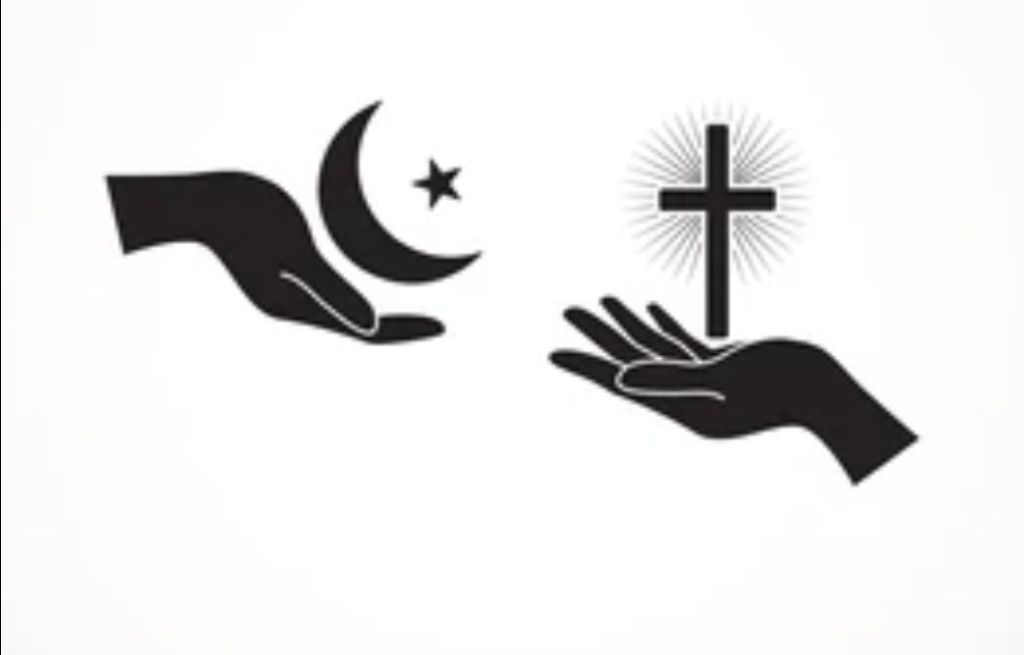
For decades, the global narrative machine has been hard at work crafting a dangerous caricature. A vast and diverse civilization of nearly two billion Muslims has been steadily reduced to a single image: the violent extremist. Turn on Western news channels, scan geopolitical commentary, or listen to certain political speeches, and the same theme repeats endlessly. Islam is portrayed not as a religion, not as a civilization, but as a threat.
This narrative is not merely dishonest. It is reckless.
Because when a faith followed by almost a quarter of humanity is persistently demonised, when its resistance movements are automatically branded as terrorism while other forms of violence are rationalised as security, the world edges dangerously close to a civilizational confrontation that no one can control.
The roots of the current tensions are not theological. They are geopolitical.
To understand the anger simmering across much of the Middle East and the wider Muslim world, one must first confront the long arc of history that shaped it. Long before modern headlines began speaking about “Islamic extremism,” the region had already experienced centuries of Western intervention, conquest, and manipulation.
The Crusades remain one of the earliest and most vivid historical memories of religious aggression directed toward the Muslim world. When Crusader armies captured Jerusalem in 1099, contemporary chronicles described massacres so brutal that blood reportedly flowed through the streets of the holy city. Men, women, and children were slaughtered in the name of Christian redemption.
Nearly a century later, when the Muslim commander Salahuddin, known in the West as Saladin, recaptured Jerusalem in 1187, the outcome was starkly different. The city did not witness a comparable bloodbath. Instead, negotiations were conducted, prisoners were ransomed, and safe passage was granted to many inhabitants. Even European chroniclers acknowledged the contrast.
The lesson is simple but uncomfortable: brutality in the name of faith was never exclusive to one religion. Yet modern narratives conveniently erase this historical symmetry.
Fast forward several centuries and the same region became the playground of imperial ambitions.
At the end of the First World War, Britain and France carved up the Middle East through secret arrangements such as the Sykes-Picot Agreement. Borders were drawn with rulers and pencils in European offices, slicing through ethnic groups, tribal territories, and historic communities. Entire nations were created overnight under foreign mandates.
These borders were never about stability or self-determination. They were about control.
Control of trade routes.
Control of strategic geography.
And above all, control of oil.
The discovery of vast petroleum reserves beneath the deserts of the Middle East transformed the region from an imperial curiosity into the epicenter of global energy politics. From that moment onward, Western powers and later the United States would repeatedly intervene to ensure that friendly regimes remained in place and that access to these resources remained secure.
Perhaps the clearest example came in Iran.
In 1951, Iran’s democratically elected Prime Minister Mohammad Mossadegh moved to nationalise the country’s oil industry, which had long been dominated by foreign interests. The reaction from Western capitals was swift. In 1953, a covert operation orchestrated by the CIA and British intelligence removed Mossadegh from power and reinstated the Shah.
For many Iranians, that moment shattered any illusion that Western talk of democracy applied equally to everyone.
The Islamic Revolution that erupted in 1979 did not emerge in a vacuum. It grew from decades of resentment against foreign interference, economic exploitation, and a monarchy widely seen as a Western client regime. Religion became the language of sovereignty because the language of secular politics had been repeatedly sabotaged.
Iran was not unique.
Across the region, similar patterns unfolded. Secular nationalist movements were undermined, authoritarian allies were supported, and local populations were often left to bear the consequences of geopolitical maneuvering.
Then came Palestine.
Few issues have shaped Muslim political consciousness in the modern era more profoundly than the Palestinian question. The establishment of Israel in 1948, the displacement of hundreds of thousands of Palestinians, and decades of military occupation have created a wound that continues to define the politics of the region.
To much of the Muslim world, Palestinian resistance is viewed not as terrorism but as a struggle against dispossession and occupation.
Yet Western discourse frequently frames the situation through a very different lens. Violence by Palestinians is labelled terrorism. Violence by Israel is framed as security.
The double standard is glaring.
And it is precisely this imbalance that fuels anger and feeds the narrative that the global order operates on selective morality.
This is where the danger lies.
When Western leaders use sweeping rhetoric that portrays Islamic resistance movements as manifestations of religious fanaticism, they are not merely criticising armed groups. They are inadvertently, or sometimes deliberately, casting suspicion on an entire faith tradition.
Such language does not isolate extremists.
It radicalises perceptions.
It transforms geopolitical disputes into religious confrontations.
And once conflicts are framed in civilizational or religious terms, they become infinitely harder to resolve.
The world has already seen how quickly narratives can spiral out of control. Wars that begin as territorial disputes can easily morph into ideological crusades once religion is invoked. When politicians speak carelessly about Islam as a threat while simultaneously pursuing strategic dominance over oil resources and regional influence, the contradiction becomes impossible to ignore.
It creates the perception that faith itself is under siege.
History teaches that when communities begin to believe their religion is being targeted rather than merely their governments or armed factions, resistance intensifies and compromise evaporates.
This is the road the world must avoid.
Demonising Islam while defending every action of allied states is not a strategy for stability. It is a recipe for perpetual conflict.
Muslim societies are not monolithic. They contain reformers, conservatives, liberals, secularists, mystics, scholars, activists, and ordinary believers navigating the same modern pressures faced everywhere else. Reducing this complexity to a single narrative of extremism is intellectually lazy and politically dangerous.
Equally dangerous is the refusal to acknowledge legitimate grievances.
The Middle East did not become unstable because of theology alone. It became unstable through a century of colonial partitions, external interventions, proxy wars, economic sanctions, and unresolved territorial disputes.
Religion became the banner under which resistance was organized because other political avenues had been repeatedly closed.
That reality does not justify every act committed in the name of Islam. But it explains why the language of faith continues to mobilize millions who feel their sovereignty and dignity have been denied.
The greatest danger now is escalation through rhetoric.
If Western leaders continue to frame geopolitical struggles as battles against Islamic extremism while ignoring the political roots of those struggles, they risk transforming regional conflicts into something far more volatile: a perceived war between civilizations.
Such a confrontation would not remain confined to the Middle East. It would ripple across Europe, Asia, and Africa, inflaming tensions among communities that have lived side by side for generations.
No oil field is worth that price.
No geopolitical ambition justifies pushing the world toward a religious confrontation that could spiral beyond anyone’s control.
The lesson of history is clear. Empires rise and fall. Alliances shift. Borders change.
But once faith becomes the battlefield, the consequences echo for centuries.
The responsible path forward is not the demonisation of Islam or the glorification of any state’s violence. It is the recognition that peace in the Middle East requires honesty about history, balance in diplomacy, and respect for the dignity and aspirations of all peoples involved.
Anything less risks lighting a fuse that the world may not be able to extinguish.
By Hon. Chima Nnadi-Oforgu
Duruebube Ndukaku III of Ihiagwa ófó asato
 OBLONG MEDIA GLOBAL INTELLIGENCE
Leave a comment