
Military Power, Strategic Dependency and the Crisis of Legitimacy in the International System.
A War That Reveals the Structure of Global Power.
Empires almost never collapse in a sudden crash. They begin by waging wars they present as necessary.
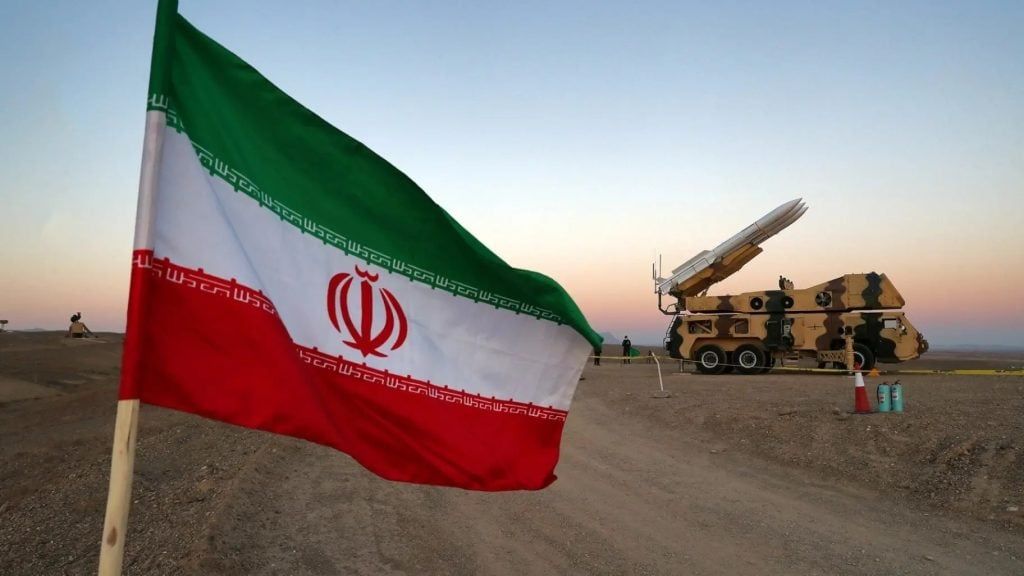
The war launched on February 28, 2026 against Iran by the United States and Israel may belong to that category of events which, at the moment they occur, appear to be merely another regional crisis — but which, in retrospect, reveal themselves as turning points in the architecture of the international system.
Behind the airstrikes and diplomatic communiqués lies a far larger question: the capacity of the contemporary world order to maintain its coherence in the face of accelerating rivalry between major powers.
The targeted elimination of Iranian Supreme Leader Ali Khamenei followed a now-classical military doctrine: strategic decapitation. The logic is simple — neutralize the decision-making center of a regime in order to trigger the rapid disintegration of its entire political and military apparatus.
But this assumption presupposes pre-existing institutional fragility. Iran is neither a young state nor a politically isolated regime. It is embedded in a deep historical and institutional continuum that endows its political system with a capacity to absorb shocks rarely observed in contemporary states.
Iran’s response — swift and multidirectional — immediately transformed a bilateral confrontation into a major regional crisis. This trajectory illuminates a deeper reality: the international system remains structured by a hierarchy of power dominated by the Washington–Tel Aviv axis, yet that structure today appears more brittle than it did in the immediate aftermath of the Cold War.
The Gulf: Security Architecture and Strategic Vulnerability
For several decades, the security of the Gulf monarchies has rested on a simple equation: energy resources in exchange for American military protection. This model was consolidated through the installation of U.S. military bases across the region and the progressive integration of Gulf economies into global financial circuits.
The Abraham Accords added a further dimension to this architecture by normalizing relations between several Arab states and Israel — implicitly aiming to build a strategic bloc capable of containing Iranian influence.
The current war has exposed the limits of this system. American military infrastructure, energy installations and financial centers across the Gulf have now become direct strategic targets.
By striking installations in the United Arab Emirates, Qatar and Kuwait, Iran sent an unambiguous signal: states that host the instruments of American military projection can no longer claim genuine neutrality in a regional conflict. The very infrastructures that enabled the region’s economic rise have become points of exposure in a context of open military confrontation.
The Strait of Hormuz: Geography as Power
At the heart of this crisis lies a geographical space whose significance extends far beyond the region: the Strait of Hormuz. This narrow maritime passage — barely 50 kilometers wide at its most constricted point and 212 kilometers long — constitutes the world economy’s primary energy transit chokepoint.

The Strait of Hormuz. (Public Domain)
In 2024, approximately 20 million barrels of crude oil transited the strait daily according to the U.S. Energy Information Administration (EIA) — representing nearly 20% of global liquid petroleum consumption and one-fifth of world trade in liquefied natural gas. More than 80% of these volumes were destined for Asian markets.[1]
The vulnerability of this corridor is compounded by the near-absence of viable alternatives. Saudi and Emirati bypass pipelines have a maximum combined capacity of approximately 2.6 million barrels per day — a fraction of normal throughput. In the event of a full blockade, the net loss to global markets would be in the range of 8 to 10 million barrels per day, according to analysts at Rystad Energy.
For decades, Iranian strategic doctrine has treated the strait as an instrument of asymmetric deterrence. The logic is stark: if Iran’s national security is directly threatened, disruption of maritime traffic becomes a legitimate strategic option. On February 28, 2026, the Islamic Revolutionary Guard Corps broadcast radio warnings barring vessels from transiting the strait. Tanker traffic fell by 40 to 50 percent. The world’s two largest shipping companies, Maersk and MSC, suspended operations in the zone. Crude oil prices surged more than 13 percent at market opening.
In an economic system dependent on uninterrupted energy flows, geography thus acquires a strategic value comparable to that of conventional military capabilities. Former U.S. Secretary of State Cyrus Vance once described the strait as “the jugular vein of the West” — a characterization that has never been more apt.
Historical Precedents
Systemic crises in the international order often find illuminating historical parallels.
The Suez Crisis of 1956 is one such precedent. The Franco-British attempt to retake the canal following its nationalization by Gamal Abdel Nasser ended in a humiliating withdrawal under international pressure — from both Washington and Moscow — symbolically marking the end of European imperial influence and the emergence of a bipolar world order. What appeared to be a controlled military operation ultimately revealed the limits of a power that still believed itself sovereign.
The Vietnam War illustrated a comparable phenomenon in a different form. Despite overwhelming military superiority — over 500,000 troops deployed at its peak and staggering war expenditure — the United States failed to impose a lasting political settlement. The Church Committee Report (1975) subsequently revealed the full extent of covert operations conducted in parallel, exposing a decision-making architecture that functioned well outside official democratic frameworks.
The Iraq War of 2003 offers a third and more recent precedent. Fabricated intelligence presented before the UN Security Council provided the legal pretext for an intervention whose consequences — the destabilization of the entire Middle East, the rise of ISIS, the entrenchment of Iranian influence in Iraq — were the precise opposite of its stated objectives.
These precedents affirm a strategic constant: military superiority does not guarantee the political stability of an international order, and every war presented as necessary carries within it the seed of a new realignment.
Europe: Economic Power, Strategic Dependency
The European Union’s position in the current crisis exposes a striking geopolitical paradox. Europe represents one of the world’s foremost economic poles. Yet its capacity for autonomous strategic action remains profoundly constrained.
The military decisions that led to the strikes against Iran were made without genuine European consultation. European capitals now find themselves facing a conflict whose origins they did not shape, but whose economic consequences they will bear directly — beginning with the energy price shock and the disruption of supply chains.
This situation gives concrete meaning to an observation formulated by Algerian diplomat and intellectual Ahmed Taleb El Ibrahimi:
“Political independence only truly exists when it rests upon strategic independence.”
In the European case, the former exists formally. The latter remains incomplete. And it is precisely this incompleteness that transforms Europe into an active bystander of a crisis it neither anticipated nor oriented — bound to its ally by military architecture (NATO), financial dependency (the dollar system) and technological subordination, yet formally sovereign.
Networks of Influence and the Opacity of Power
Understanding the dynamics of war-making requires confronting a reality often underestimated by classical geopolitical analysis: the existence of influence networks that operate at the margins of official institutions and that shape the strategic choices of major powers in ways largely invisible to the public.
Image source

The Jeffrey Epstein scandal brought to light the existence of informal networks connecting senior political figures, economic leaders and intelligence-world actors across multiple countries. The significance of this affair extends well beyond its criminal dimension. It reveals a mode of power — grounded in compromise, privileged access and discreet reciprocity — that escapes any framework of democratic oversight. The partial disclosure in U.S. courts in 2024 of lists of names associated with this network illustrated the density of interconnections between political, financial and media spheres in Western democracies.
This is not an isolated phenomenon. The diplomatic cables released by WikiLeaks showed, with documentary precision, that many international decisions — including decisions to go to war — are made in frameworks largely invisible to the public, sometimes in direct contradiction with the official justifications subsequently advanced.
These networks do not mechanically determine foreign policy. But they constitute an informal substrate of power whose recognition is indispensable to any serious analysis of international decision-making. To ignore this dimension is to condemn oneself to explaining wars only by their official pretexts.
Civilizations and Legitimacy
The Algerian thinker Malek Bennabi proposed an analytical framework of particular relevance for understanding these historical transformations. In his works on civilizational cycles — notably The Problem of Ideas in the Muslim World (1970) — he argued that the material power of a civilization does not guarantee its durability if it loses the intellectual and moral coherence that sustains it.
This observation carries obvious contemporary relevance. An international order can retain formidable instruments of power — military arsenals, financial dominance, media influence — while experiencing the progressive erosion of its political legitimacy in the eyes of populations that no longer recognize themselves within it.
This is precisely what Bennabi called the moment when a civilization, having exhausted its moral resources, continues to act out of inertia rather than conviction. Power without legitimacy is no longer an order. It is an occupation.
Conclusion: The Fracturing of the World Order
The great transformations of international history rarely appear as such at the moment they unfold. They most often take the form of a succession of events that, taken individually, seem circumstantial. It is only afterward, once the balances have shifted, that we designate retrospectively the moment when everything began to change.
The war against Iran may be one such moment. It reveals an international system in which American military power remains central, but in which the political, economic and strategic equilibria are becoming increasingly contested — by state actors such as Iran, Russia and China, but also by publics increasingly resistant to the authority of an order whose contradictions they perceive with growing clarity.
The fracture at issue here is not merely military. It is a fracture of legitimacy. A system that presents wars as necessities while sheltering opaque networks of power; that invokes international law for some and ignores it for others; that proclaims freedom of navigation while concentrating control over chokepoints — such a system produces, by its own logic, the conditions of its contestation.
In the contemporary international order, the rule is not the law — it is the power that decides when the law applies.
The question may no longer be who will win the current war. The question is whether the international system that made it possible can survive the world it has itself contributed to creating. And whether the civilizations that have long endured its rules will have, this time, the intellectual coherence and political will to propose something else.
Notes
1. U.S. Energy Information Administration (EIA), “Strait of Hormuz,” 2024 data; International Energy Agency (IEA), World Energy Outlook, 2024.
2. Rystad Energy, analysis cited by Franceinfo, March 1, 2026.
3. Marine Traffic, real-time tracking data, February 28 – March 2, 2026.
4. Malek Bennabi, The Problem of Ideas in the Muslim World (Le Problème des idées dans le monde musulman), Algiers, 1970.
5. Ahmed Taleb El Ibrahimi, diplomatic writings and speeches, Algerian archives.
6. Church Committee (U.S. Senate Select Committee to Study Governmental Operations with Respect to Intelligence Activities), Final Report, 1975.
Laala Bechetoula is an Algerian journalist and writer, author of “The Book of Gaza Hashem: A Testament Written in Olive Wood and Ash”.
 OBLONG MEDIA GLOBAL INTELLIGENCE
Leave a comment