
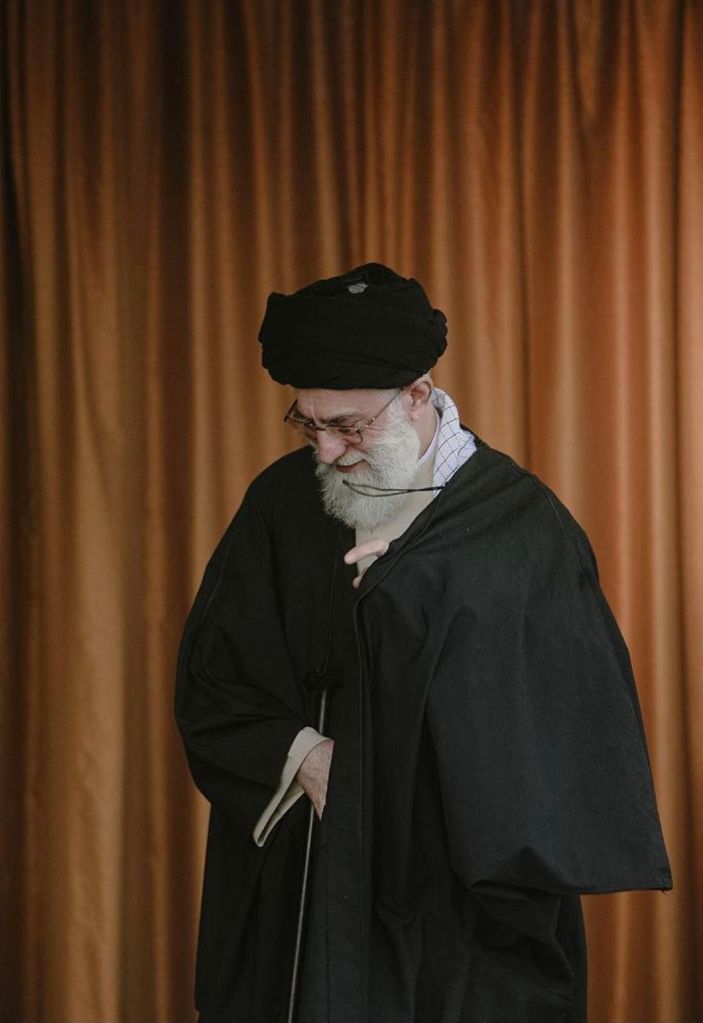
History is full of moments when the world believed one thing, only to discover later that the reality was very different.
The global media landscape today is saturated with reports that Ali Khamenei was killed during the opening strikes of the U.S.–Israeli military campaign against Iran. Several outlets have reported his death and the killing of senior Iranian officials during the initial assault.
But wars are not only fought with missiles.
They are also fought with narratives.
And that raises a provocative question: what if the story everyone believes is not the whole story?
The Fog of War
In modern warfare, information is often weaponized as aggressively as military hardware. Governments have long used psychological operations to confuse opponents, manipulate public perception, and shape battlefield outcomes.
Even in the current conflict, early reports acknowledged uncertainty about Khamenei’s fate before later confirmations appeared.
That uncertainty is not unusual. In conflicts from Iraq to Ukraine, premature claims about the deaths of leaders or generals have surfaced repeatedly before being corrected.
So the question becomes an intriguing strategic exercise.
What if the Ayatollah is still alive, and simply allowing the world to believe otherwise?
Scenario One: Strategic Deception
One possibility is deliberate strategic deception.
If Iran’s leadership believed its communications and locations were being tracked, allowing adversaries to think the command structure had been eliminated could create a powerful tactical advantage.
Enemies relax their vigilance. Intelligence services shift focus. Military planners assume leadership paralysis.
Meanwhile the real command structure continues operating from secure locations.
Iran has long prepared for wartime survival through underground facilities and decentralized command systems designed specifically for this scenario.
Scenario Two: Psychological Warfare
Another possibility is psychological warfare.
If adversaries publicly celebrate the death of a leader who later reappears alive, the credibility of their intelligence services and governments would suffer a devastating blow.
It would also strengthen domestic unity inside Iran.
Few things mobilize a population more effectively than believing their leader survived what the world thought was a fatal attack.
Scenario Three: Strategic Patience
There is also a deeper geopolitical possibility.
Iran may simply allow the narrative to circulate while preparing its response.
In war, time can be a weapon. Allowing adversaries to assume victory prematurely can encourage strategic overconfidence, often the precursor to major miscalculations.
Scenario Four: Internal Power Transition
Of course, the opposite possibility may also be true.
Reports indicate Iranian authorities have already begun discussing succession arrangements and funeral logistics, suggesting that the leadership transition process may already be underway.
But even in that scenario, the delay in public ceremonies and conflicting information highlights how opaque wartime information flows can become.
The Real Question
Whether the Ayatollah is alive or dead may ultimately be less important than what the situation reveals about modern warfare.
Information itself has become a battlefield.
Narratives move faster than missiles. Perception shapes strategy. And in a world of instant media, the first story people hear often becomes the truth they believe, even if later evidence contradicts it.
The Bigger Implication
If the Ayatollah were to suddenly appear alive after the world had been told he was dead, the geopolitical shockwaves would be enormous.
It would expose the vulnerability of modern intelligence systems. It would undermine confidence in wartime reporting. And it would demonstrate that psychological warfare remains one of the most powerful tools in international conflict.
History has taught us one consistent lesson.
During war, certainty is usually the first casualty.
And sometimes the story everyone believes… is precisely the story someone wants them to believe.
By Hon. Chima Nnadi-Oforgu
Duruebube Uzii na Abosi
 OBLONG MEDIA GLOBAL INTELLIGENCE
Leave a comment