
An Oblong Media Economic Analysis.
Nigeria seems to be quietly taking steps toward a long discussed economic shift, moving beyond crude oil and tapping into the country’s vast solid mineral resources.
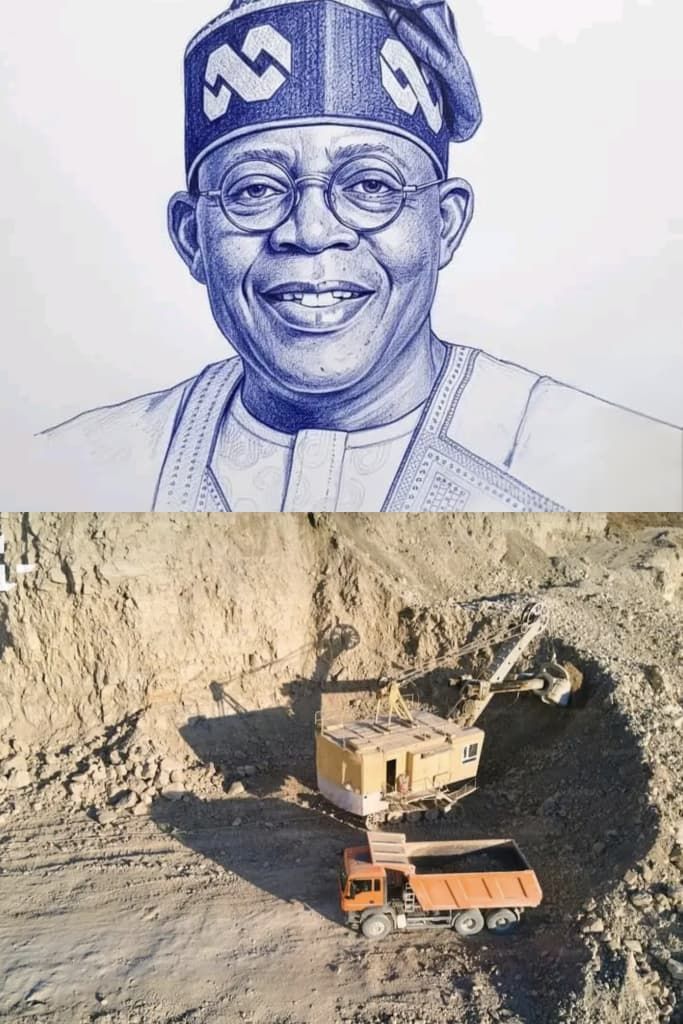
The administration of Bola Ahmed Tinubu has recently backed a $1.3 billion private sector investment to develop an alumina refinery, a project that could significantly expand Nigeria’s presence in the global minerals value chain.
Unlike the country’s traditional focus on oil and gas, the refinery will process bauxite into alumina, a key industrial material used in the production of aluminum, one of the most widely used metals in construction, transportation, electronics, and renewable energy infrastructure.
A Major Processing Facility
According to project details released by the Federal Government, the refinery is expected to process approximately one million tonnes of bauxite annually and operate for an estimated 20 year lifespan.
If the projections hold, the project could contribute roughly $1–$1.2 billion annually to Nigeria’s gross domestic product, while generating billions of dollars in foreign exchange earnings over its operational life. Estimates circulating within industry circles suggest the refinery could generate up to $8 billion in foreign exchange earnings over two decades, with a broader economic value that could reach tens of billions of dollars when multiplier effects are included.
Officials describe the project as one of the largest private investments ever made in Nigeria’s mining sector.
Nigeria’s Push to Process Minerals Locally
The alumina refinery forms part of a wider strategy to develop downstream processing capacity for Nigeria’s mineral resources.
For decades, Nigeria, like many resource-rich developing nations, has exported raw materials while importing finished or semi-processed products at significantly higher prices. The new policy direction seeks to reverse that pattern by encouraging local refining and processing.
In addition to the alumina project, Nigeria has already commissioned the Kian Smith Gold Refinery in Lagos, one of the first gold refineries in West Africa designed to process locally mined gold.
The country is also witnessing rapid development in the lithium processing sector, with a multi-hundred-million-dollar lithium processing plant in Nasarawa State nearing commissioning, alongside several other mineral processing facilities being developed across the country.
These investments signal a growing recognition that value addition, not just extraction, is where real economic power lies.
Strategic Minerals in a Changing Global Economy
The timing of Nigeria’s push into mineral processing is significant.
Minerals such as lithium, gold, bauxite, and rare earth elements have become central to the global economy, particularly as countries race to secure materials needed for batteries, renewable energy systems, electronics, and modern infrastructure.
Global competition for these resources has intensified, with major economies increasingly seeking to secure stable supply chains for strategic minerals.
Nigeria, which possesses over 40 commercially viable mineral deposits, has long been viewed as an underdeveloped mining frontier. Industry experts estimate that the country’s solid minerals sector contributes less than 1% to national GDP, far below its potential.
Diversifying the Economy
For decades, Nigeria’s economy has depended heavily on oil exports. Volatility in global oil prices and declining production levels have repeatedly exposed the risks of relying on a single commodity.
Successive governments have spoken about economic diversification, but progress has often been slow.
Recent developments in the mining sector suggest that diversification may finally be gathering momentum, albeit gradually.
If projects like the alumina refinery and lithium processing plants succeed, they could help reposition Nigeria as a major supplier of processed mineral products rather than just raw materials.
A Long Road Ahead
However, significant challenges remain.
Nigeria’s mining sector still faces issues related to infrastructure deficits, regulatory uncertainty, illegal mining, security concerns, and limited geological data. Large scale investments will require sustained policy consistency and improved governance to fully unlock the sector’s potential.
Nevertheless, the emerging wave of mineral processing projects suggests that Nigeria may be entering a new phase in its economic development strategy.
While public debate often centers on fuel prices and short-term economic pressures, a quieter transformation could be unfolding beneath the surface.
And if Nigeria succeeds in building a strong domestic mineral processing industry, the country could gradually evolve into one of Africa’s most important players in the global strategic minerals market.
For a nation long defined by crude oil, that would represent a significant economic shift.
By Hon. Chimazuru Nnadi-Oforgu
Duruebube Uzii na Abosi
 OBLONG MEDIA GLOBAL INTELLIGENCE
Leave a comment