
Archival Reference
Original Publication: Daily Times
Section: Politics
Article Title: Senatorial Politics in Imo State
Author: Emeka Nwosu
Date: Monday, June 13, 1991
Page: Page 7
In the early years of Nigeria’s return to structured democratic politics under the “new breed” political experiment of the early 1990s, Imo State became one of the most politically vibrant arenas in the country. The contest for representation in the National Assembly generated enormous interest across the state, particularly in the Owerri Senatorial Zone.
As Nigeria prepared for National Assembly elections scheduled to take place within weeks at the time, political alignments, party rivalries and regional loyalties were already shaping what observers described as one of the most competitive senatorial contests in the state.
Across the three senatorial zones of Imo State, the political atmosphere was intense. However, the Owerri Senatorial race quickly emerged as the centre of attention due to the personalities involved, the influence of powerful political figures, and the demographic realities of the zone.
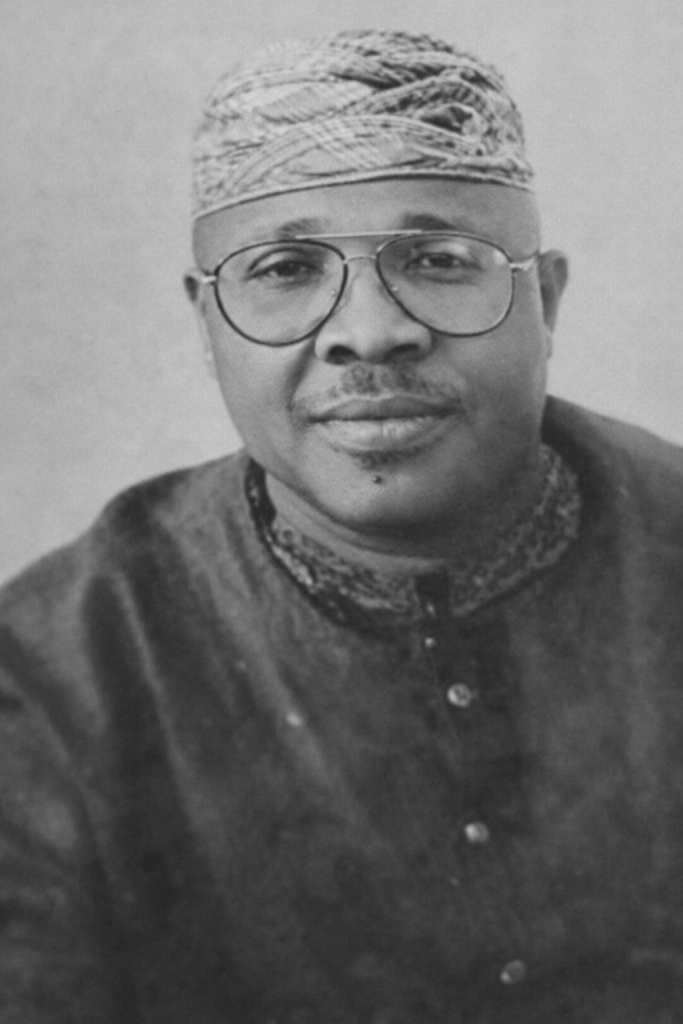
At the heart of the contest were two prominent figures within the National Republican Convention (NRC). Businessman Chief Martin Agbaso emerged as a major contender after securing the party’s senatorial ticket. His opponent within the party structure was Chief Desmond Iwuagwu, a businessman known for his involvement in the aviation sector.
Within the shifting alliances that defined the contest, the political calculations surrounding the Owerri Senatorial race became even more complex. Chief Emmanuel Iwuanyanwu had earlier backed both Professor Osuji and Dr. Alex Obi in their unsuccessful bids for the Imo State governorship under the platform of the Social Democratic Party (SDP). In the aftermath of those contests, political attention turned to the Senate race, where the Mbaise political bloc appeared determined to secure representation for the Owerri zone. Many observers believed that the community would rally overwhelmingly behind their son, Abii.
However, Martin Agbaso entered the race with significant momentum of his own. Benefiting from the backing of influential figures within the National Republican Convention (NRC), his candidacy gathered strength as the campaign intensified across the zone. Several structural factors appeared to tilt the political terrain in his favour, particularly the numerical advantage of local government areas believed to be sympathetic to his candidacy. While Abii was said to command notable support in some of the non-Mbaise communities, the depth and reliability of that support remained uncertain. Agbaso, for his part, anchored his campaign on a broader political message, arguing that the people of Owerri zone must assert their voice in Nigerian politics by electing capable leadership. At the core of his campaign message was a simple democratic principle: that the electorate should be free to choose their representatives without undue interference or manipulation.
Political observers at the time described the race as one that would be determined not only by popularity but also by the complex political geography of Owerri Zone.
The zone itself was made up of several local government areas whose population strength and political alliances could determine the final outcome of the election. Areas such as Mbaise and Ahiazu Mbaise, known for their dense populations, were expected to play a decisive role in shaping the voting pattern.
Other important local government areas within the zone included Owerri, Ngor-Okpala, Mbaitoli and Ikeduru, each possessing significant voting strength and political influence.
Another factor that made the race particularly intriguing was the involvement of powerful political actors in the background. The senatorial zone was the political base of prominent businessman and political figure Chief Emmanuel Iwuanyanwu, whose influence within the political landscape of Imo State was widely acknowledged.
Both Iwuanyanwu and Iwuagwu hailed from Ikeduru Local Government Area, and political watchers believed that the alignments emerging from that area would significantly influence the direction of the contest.
Reports at the time suggested that influential political figures were quietly mobilising support for candidates within their networks, reinforcing the high stakes attached to the Owerri Senate seat.
Meanwhile, the broader political environment in the state was also evolving. The emergence of Chief Sam Mbakwe, the respected former governor of old Imo State, as a major political voice in the state added another layer of influence to the unfolding contest.
His moral authority and enduring popularity across the region meant that any perceived endorsement or political leaning from him carried weight among voters and party supporters alike.
Within this environment, Martin Agbaso’s campaign positioned itself around themes of development, industrialisation and youth empowerment. During campaign engagements, he emphasised the need for Owerri Zone to strengthen its economic base and ensure that the region attracted federal development projects.
He also proposed the establishment of a well-equipped constituency office that would serve as a bridge between the people of the zone and the federal government in Abuja.
At just 35 years old at the time, Agbaso represented what many described as the rising generation of Nigerian politicians emerging during the era of the “new breed” political experiment.
As campaign activities intensified across the zone, political analysts noted that the race was becoming increasingly competitive. Local alliances, community loyalties and strategic endorsements were beginning to shape the calculations of voters.
What remained clear, however, was that the Owerri Senatorial race had become a defining political contest for the zone.
The outcome would not only determine who represented the region in the National Assembly but would also shape the future political direction of Owerri Zone within the broader politics of Imo State.
Looking back decades later, this contest stands as an important historical marker in the evolution of senatorial politics in the state, illustrating how local dynamics, influential personalities and community interests converged to shape democratic competition in the early years of Nigeria’s political transition.
 OBLONG MEDIA GLOBAL INTELLIGENCE
Leave a comment