
MANY PEOPLE STILL FAIL TO UNDERSTAND A FUNDAMENTAL REALITY OF INTERNATIONAL POLITICS:
I woke up this morning to a post on the wall of Emeka Apopo, advocating for the US to arm IPOB to fight for the creation of Biafra. Not only was I alarmed that anyone could think like this, but completely upset with the shallow mindedness of many of our people. Let me do my best to educate those ready to tap from my knowledge of Geopolitics.
The major powers of the Western world have never wanted the creation of a Biafran state. This is not an emotional argument, but is a matter of geopolitical and economic interest.
The roots of this position go back to the events that led to the Nigerian Civil War. Prior to the war, the old Eastern Region was widely regarded as the fastest growing region in Africa, and one of the fastest growing regions in the world. Under the leadership of Michael Okpara, the region experienced rapid expansion in agriculture, industry, education, and infrastructure. Industrial estates were being built, farm settlements were producing export crops, and universities were expanding. The pace of development made the region an emerging economic powerhouse.
It was in this context that the political crisis of the mid-1960s unfolded, which eventually culminated in the Nigerian civil war. It is my strong belief that this war was instigated and supported by the British to disrupt the growth of the Eastern region. If not, why did they quietly advise the North that originally wanted to secede to stay put?
When the military government of Yakubu Gowon moved to restructure Nigeria in 1967, the Eastern Region was broken into smaller units. Two of the most important parts of the Eastern region became new states Rivers State and Cross River State, effectively trying to landlock the Igbos. This was not by accident, but a deliberate British design to contain the Igbos, who had not only been an adversary, but were at the forefront of fighting for Nigerian Independence.
It is therefore quite clear that this decision did not emerge in isolation. The British government, Nigeria’s former colonial ruler played a decisive advisory role. Britain had enormous economic and strategic interests in Nigeria, particularly in the oil resources of the Niger Delta. Fragmenting the Eastern Region weakened the political and economic base of the secessionist movement led by Chukwuemeka Odumegwu Ojukwu, who had declared the independent state of Biafra.
The international response to the war made the global balance of power very clear. Britain supplied arms and diplomatic support to the Nigerian federal government. The Soviet Union also backed Nigeria with military equipment. Most Western countries and major global powers recognized and supported the Nigerian state. The overwhelming weight of the United Nations and the broader international community aligned behind Nigeria. Only a few countries showed sympathy for Biafra. Among Western powers. France was the most notable exception. France’s position was influenced partly by geopolitical rivalry with Britain and by tensions dating back to disputes over territories in Cameroon, including the aftermath of the 1961 British Cameroons referendum. But French support was limited and could not overcome the united front that backed Nigeria.
The reason for this alignment was simple. Global powers did not want the emergence of a powerful new state in the heart of West Africa that could fundamentally alter the economic balance of the region. A successful Biafran state, driven by the entrepreneurial energy of the Igbo people, would have become an industrial and commercial hub, what I describe as a “mini Japan” in Africa. Such a state would have transformed regional trade, strengthened Africa’s economic independence, and reduced the ability of external powers to extract raw materials on the cheap.
The Igbo people, have been known as an African wonder, and have demonstrated extraordinary entrepreneurial ability across Nigeria and the African continent. Markets, manufacturing clusters, and trading networks built by Igbo businessmen exist in almost every major Nigerian city and in many African countries. The prospect of such energy being concentrated within a highly organized and independent state would inevitably alter global economic relationships. Even in modern Nigerian politics, international perception continues to shape outcomes. During the 2023 presidential campaign, both Peter Obi and Bola Ahmed Tinubu spoke at the influential London think tank Chatham House. One acted and spoke like a mugu, while the other spoke like a technocrat and sounded presidential. Their presentations were widely analysed because global institutions watch Nigerian leadership closely. Nigeria is too important economically and strategically for the international community to ignore. Eventually guess who won? And even when it was quite clear that the election was far from fair, and the winner had tremendous baggage, the international community did not bat an eyelid.
For this reason, I argue that an Igbo presidency in Nigeria will remain extremely difficult unless the international system identifies a leader who is willing to operate fully within the expectations of global power structures. An efulefu, ready to sell Nigeria out for pennies.
The history of post civil war Nigeria shows how carefully the political balance of power has been managed. A good example is the sudden political shift that occurred during the 2015 Nigerian presidential election, when Goodluck Jonathan lost power. Many Nigerians believe this was simply about domestic politics. I disagree. Jonathan’s push for stronger local content laws in the oil and gas sector directly affected the interests of major Western energy companies from the United Kingdom and the United States. Policies that attempt to increase national control over natural resources often create friction with powerful international economic interests. This is why I believe the fundamental challenge facing Ndigbo is not the Yoruba, the Hausa, or the Fulani. The deeper struggle lies within the global power structure that prefers a certain type of political and economic arrangement in Africa.
Some of you here accuse me of supporting terrorism because I express sympathy for countries such as Iran when they resist pressure from powerful Western states. That accusation misunderstands my position completely. My stance is not about supporting Iran as a country; it is about opposing what I see as global systems of domination and oppression.
When I see nations resisting powerful geopolitical pressure, I see echoes of the historical experience of Biafra. The suffering endured by civilians during the civil war, particularly the starvation and humanitarian catastrophe that shocked the world, and remains one of the most tragic episodes in African history. The same emotional reaction occurs when I watch the suffering of civilians in places like the Gaza Strip. When almost 100,000 innocent women and children die in conflicts involving Eastern European converts to Judaism (Zionists) and Palestines, who welcomed them into their territories, as refugees.
I instinctively stand with those I believe are oppressed. For me, the principle is simple: the struggle against oppression anywhere resonates with those who have experienced it themselves.
Many observers reduce global conflicts to simplistic explanations, religion, terrorism, nuclear weapons, or ideological rivalries. In reality, international politics is driven by power, resources, influence, and strategic interests.
Understanding how the world truly works requires looking beyond slogans and narratives. It requires examining who benefits economically, who controls resources, and how global alliances are formed.
Until people understand these dynamics, they will continue to misunderstand the deeper forces that shaped the past and continue to shape the future of Nigeria, Biafra, and the wider world.
I am and resolutely remain
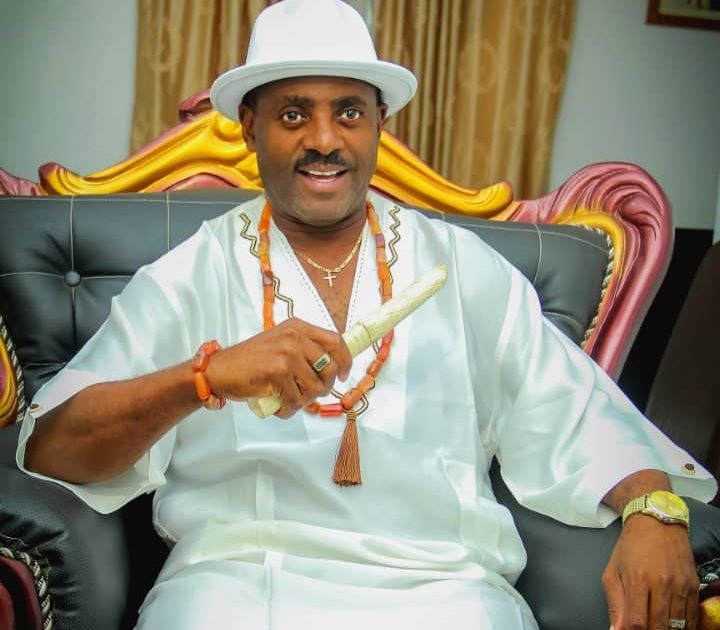
Hon Chief Joseph Chukwuma Ikunna
16/03/26
 OBLONG MEDIA GLOBAL INTELLIGENCE
Leave a comment