

Governor Alex Otti has ignited a conversation that goes far beyond Abia State. Speaking at the South East Vision 2050 Stakeholders Forum, his call to expand the Geometric Power model across the South East is not just a proposal, it is a declaration that the region is ready to take its destiny into its own hands.
But beneath that statement lies a deeper truth. The South East is no longer waiting. It is already moving.
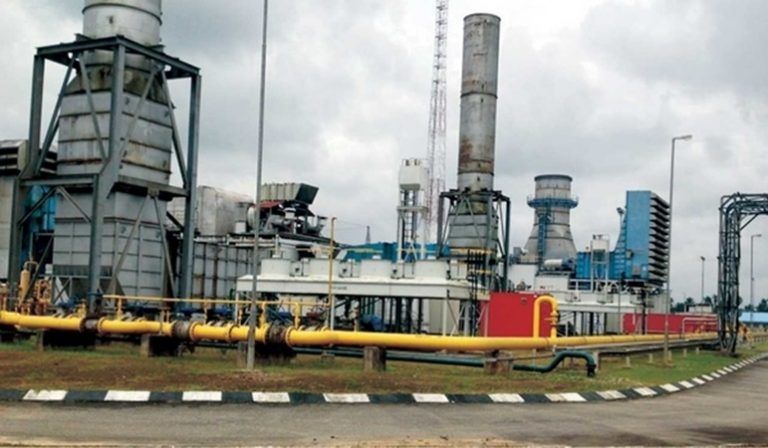
Otti’s argument is simple but profound. If Geometric Power took nearly two decades to come alive, then the rest of the region must not repeat that painful incubation cycle. The lesson has been learned. The template has been built. What remains is replication, expansion, and acceleration.
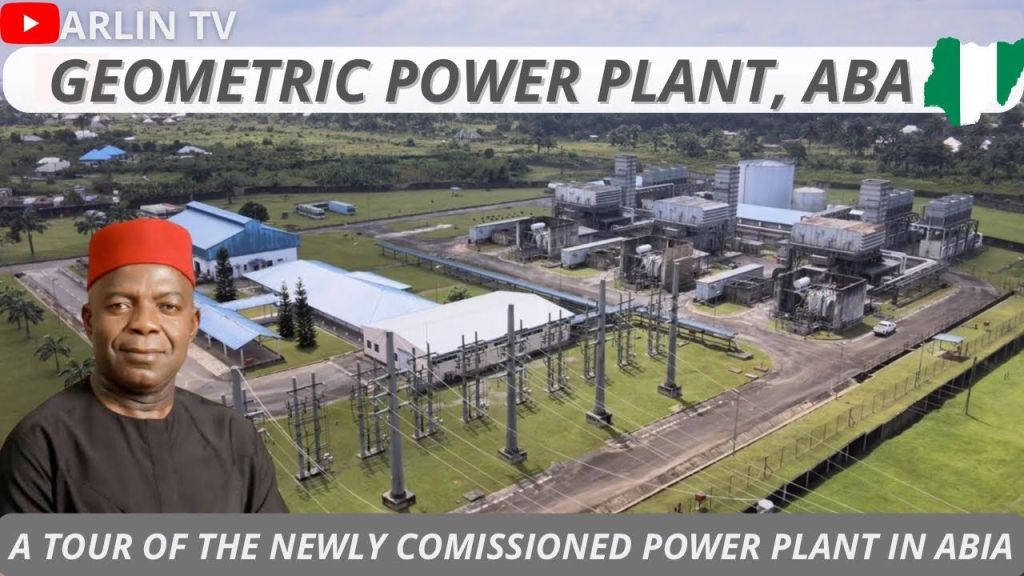
Aba today stands as living proof. A city once crippled by erratic electricity has been reborn into a hub of industrial revival, powered by stable, independent energy. Businesses are reopening. Production lines are humming again. Confidence has returned. Not because of rhetoric, but because of power, constant, predictable, reliable power.
And that is the real currency of industrialisation.
Yet, while much of the spotlight remains on Aba, a quieter but equally strategic transformation has been unfolding next door in Imo State, one that many are yet to fully grasp.
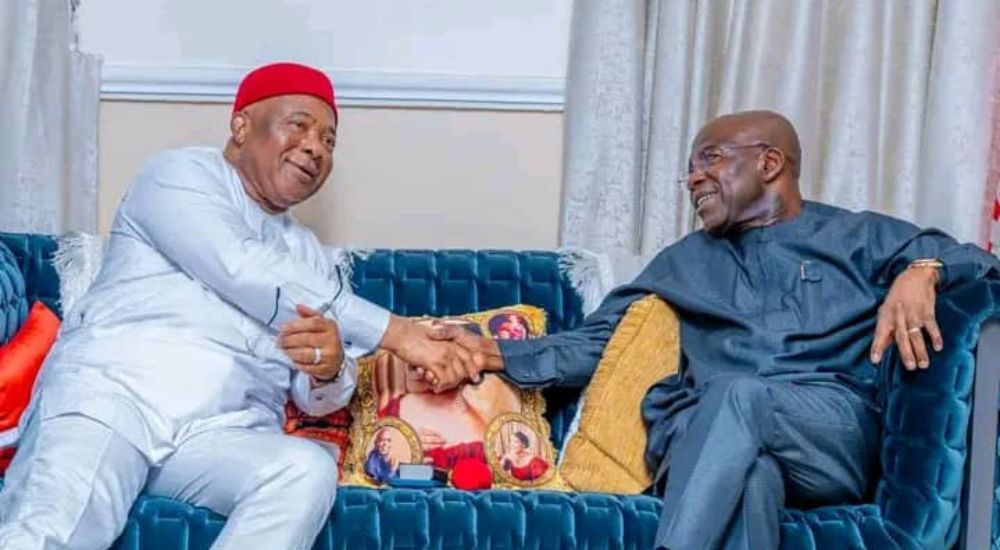
Through the Imo State owned Orashi Electricity Company, Governor Hope Uzodinma has been laying the groundwork for a parallel energy revolution anchored on gas powered generation and regional distribution. Unlike the old dependency model tied to the fragile national grid, Orashi represents a deliberate shift toward energy sovereignty at the subnational level.
The Orashi power initiative is not just conceptual, it is structural.
It is built around the Ohaji/Egbema gas belt, one of the most resource rich corridors in Nigeria, strategically positioned to feed gas directly into power generation infrastructure. This proximity eliminates one of the biggest constraints in Nigeria’s power sector, gas supply logistics, and creates the foundation for scalable, cost efficient electricity production.
The vision is clear and layered.
First, to establish independent power generation capacity that can serve Owerri, the industrial corridors of Nekede, Ihiagwa, Obinze, Oguta, Orlu, Nkwerre, Mbaise, Okigwe and beyond, ensuring that key economic zones are no longer at the mercy of national grid instability.
Second, to develop a dedicated transmission and distribution framework that allows Imo to wheel power internally and, in time, export excess capacity to neighbouring South East states, effectively positioning Imo as an energy hub within the regional ecosystem.
Third, to catalyse industrial clusters around guaranteed power supply, particularly in manufacturing, agro-processing, and technology parks, mirroring, and potentially scaling beyond, what Aba is currently experiencing.
This is where the convergence becomes powerful.
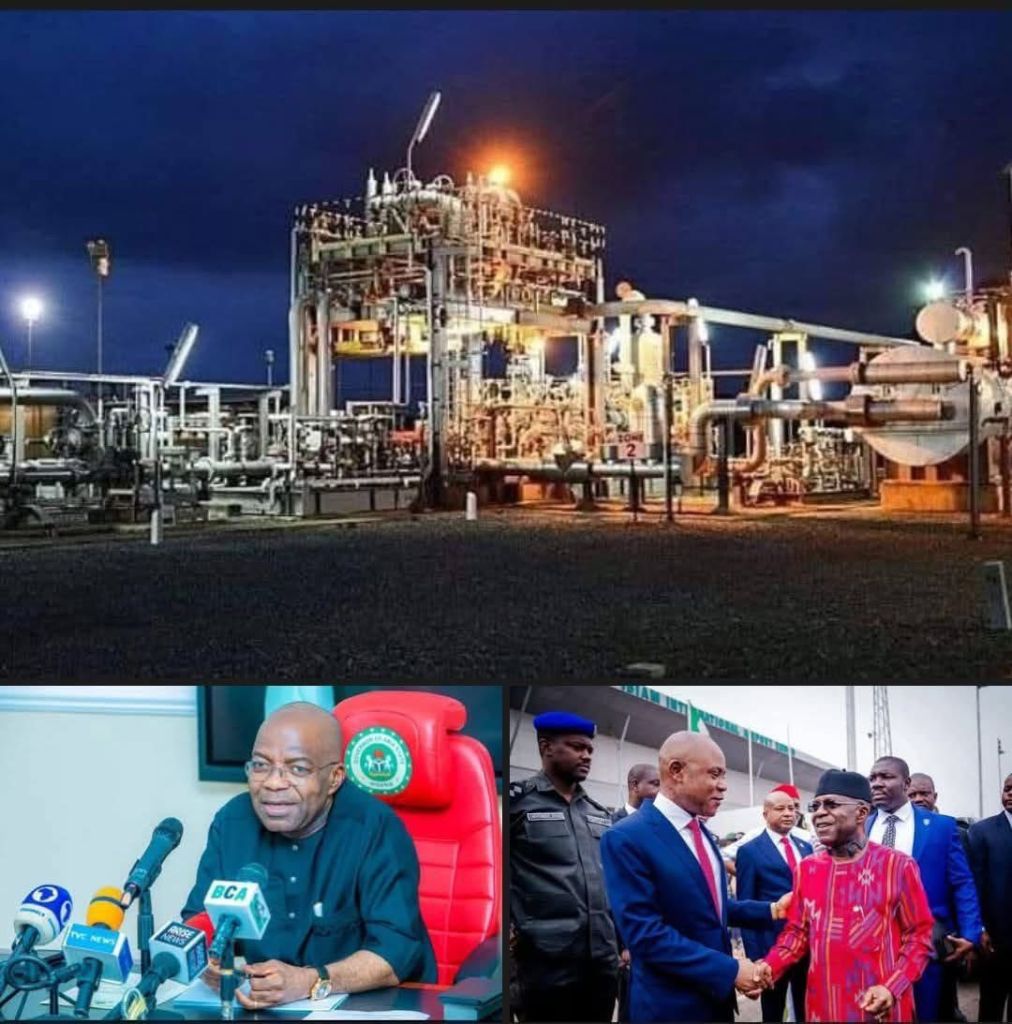
Abia, through Geometric Power, has demonstrated what is possible when electricity becomes reliable.
Imo, through Orashi Electricity, is building the infrastructure to scale that possibility across a wider geography.
Together, they represent the early architecture of a South East regional grid, decentralised, resilient, and economically transformative.
Governor Otti was therefore not merely advocating expansion; he was pointing toward inevitability.
Energy is not just a sector. It is the foundation upon which all other ambitions rest. Without it, industrialisation is theory. With it, development becomes inevitable.
His emphasis on the Electricity Act 2023 Nigeria is equally significant. For the first time in decades, states now have the legal backing to generate, regulate, and distribute power independently. Otti has then moved swiftly with the establishment of Abia regulatory authority, while Uzodinma is aligning Imo’s institutional framework to complement its Orashi infrastructure push.
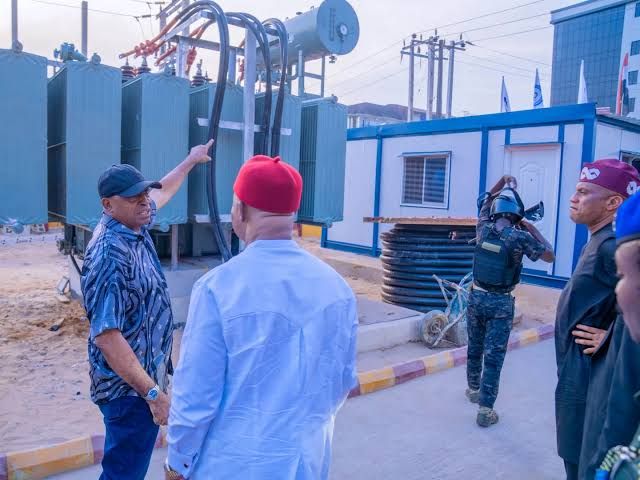
What we are witnessing is a shift from dependency to autonomy.
And beyond policy, there is a growing recognition that the South East is sitting on a wealth of untapped energy resources, crude oil in Abia, Anambra, and Imo; vast gas reserves in Imo’s Ohaji/Egbema axis; coal in Enugu and Ebonyi. The region does not lack resources. It has lacked coordination.
That is now changing.
Otti’s call for collaboration over competition is perhaps the most strategic takeaway. No single state can achieve energy dominance in isolation, but together, the South East can build an integrated power network capable of driving regional self sufficiency.
The recent improvements in regional security and the return of vibrant commercial activities during festive periods are signals of what is possible when alignment replaces fragmentation.
The same philosophy must now be applied to energy.
Because when power is solved, everything else follows, industry, jobs, investment, innovation, and ultimately, prosperity.
What is emerging before our eyes is not just an energy strategy. It is a quiet economic revolution.
And if properly harnessed, the axis of Abia and Imo, powered by Geometric and Orashi, may well become the ignition point of a broader South East renaissance.
A renaissance not driven by slogans, but by electrons.
A renaissance where factories do not sleep.
A renaissance where the phrase “grid collapse” becomes obsolete.
A renaissance where the South East stops waiting, and starts leading.
Biafra of the mind will not be declared. It will be built, megawatt by megawatt, state by state, beginning with Abia and Imo.
By Hon. Chima Nnadi-Oforgu
Duruebube Uzii na Abosi
Powering the South East: Beyond Geometric: Why Abia and Imo Are Quietly Redefining Nigeria’s Energy Future.
Governor Alex Otti has ignited a conversation that goes far beyond Abia State. Speaking at the South East Vision 2050 Stakeholders Forum, his call to expand the Geometric Power model across the South East is not just a proposal, it is a declaration that the region is ready to take its destiny into its own hands.
But beneath that statement lies a deeper truth. The South East is no longer waiting. It is already moving.
Otti’s argument is simple but profound. If Geometric Power took nearly two decades to come alive, then the rest of the region must not repeat that painful incubation cycle. The lesson has been learned. The template has been built. What remains is replication, expansion, and acceleration.
Aba today stands as living proof. A city once crippled by erratic electricity has been reborn into a hub of industrial revival, powered by stable, independent energy. Businesses are reopening. Production lines are humming again. Confidence has returned. Not because of rhetoric, but because of power, constant, predictable, reliable power.
And that is the real currency of industrialisation.
Yet, while much of the spotlight remains on Aba, a quieter but equally strategic transformation has been unfolding next door in Imo State, one that many are yet to fully grasp.
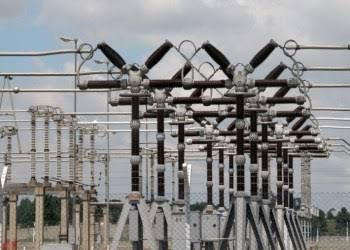
Through the Imo State owned Orashi Electricity Company, the state has been laying the groundwork for a parallel energy revolution anchored on gas powered generation and regional distribution. Unlike the old dependency model tied to the fragile national grid, Orashi represents a deliberate shift toward energy sovereignty at the subnational level.
The Orashi power initiative is not just conceptual, it is structural.
It is built around the Ohaji/Egbema gas belt, one of the most resource rich corridors in Nigeria, strategically positioned to feed gas directly into power generation infrastructure. This proximity eliminates one of the biggest constraints in Nigeria’s power sector, gas supply logistics, and creates the foundation for scalable, cost efficient electricity production.
The vision is clear and layered.
First, to establish independent power generation capacity that can serve Owerri, the industrial corridors of Nekede, Ihiagwa, Obinze, Oguta, Orlu, Nkwerre, Mbaise, Okigwe and beyond, ensuring that key economic zones are no longer at the mercy of national grid instability.
Second, to develop a dedicated transmission and distribution framework that allows Imo to wheel power internally and, in time, export excess capacity to neighbouring South East states, effectively positioning Imo as an energy hub within the regional ecosystem.
Third, to catalyse industrial clusters around guaranteed power supply, particularly in manufacturing, agro-processing, and technology parks, mirroring, and potentially scaling beyond, what Aba is currently experiencing.
This is where the convergence becomes powerful.
Abia, through Geometric Power, has demonstrated what is possible when electricity becomes reliable.
Imo, through Orashi Electricity, is building the infrastructure to scale that possibility across a wider geography.
Together, they represent the early architecture of a South East regional grid, decentralised, resilient, and economically transformative.
Governor Otti was therefore not merely advocating expansion; he was pointing toward inevitability.
Energy is not just a sector. It is the foundation upon which all other ambitions rest. Without it, industrialisation is theory. With it, development becomes inevitable.
His emphasis on the Electricity Act 2023 Nigeria is equally significant. For the first time in decades, states now have the legal backing to generate, regulate, and distribute power independently. Abia has moved swiftly with the establishment of its regulatory authority. Imo is aligning its institutional framework to complement its Orashi infrastructure push.
What we are witnessing is a shift from dependency to autonomy.
And beyond policy, there is a growing recognition that the South East is sitting on a wealth of untapped energy resources, crude oil in Abia, Anambra, and Imo; vast gas reserves in Imo’s Ohaji/Egbema axis; coal in Enugu and Ebonyi. The region does not lack resources. It has lacked coordination.
That is now changing.
Otti’s call for collaboration over competition is perhaps the most strategic takeaway. No single state can achieve energy dominance in isolation, but together, the South East can build an integrated power network capable of driving regional self sufficiency.
The recent improvements in regional security and the return of vibrant commercial activities during festive periods are signals of what is possible when alignment replaces fragmentation.
The same philosophy must now be applied to energy.
Because when power is solved, everything else follows, industry, jobs, investment, innovation, and ultimately, prosperity.
What is emerging before our eyes is not just an energy strategy. It is a quiet economic revolution.
And if properly harnessed, the axis of Abia and Imo, powered by Geometric and Orashi, may well become the ignition point of a broader South East renaissance.
A renaissance not driven by slogans, but by electrons.
A renaissance where factories do not sleep.
A renaissance where the phrase “grid collapse” becomes obsolete.
A renaissance where the South East stops waiting, and starts leading.
Biafra of the mind will not be declared. It will be built, megawatt by megawatt, state by state, beginning with Abia and Imo.
By Hon. Chima Nnadi-Oforgu
Duruebube Uzii na Abosi

 OBLONG MEDIA GLOBAL INTELLIGENCE
Leave a comment