
An Oblong Media analysis
There is an old truth in history that powerful nations repeatedly fail to learn: victory in war does not always belong to the side with the bigger arsenal, the newer technology, or the louder threats. Quite often, it belongs to the side that can endure more pain, absorb more punishment, and still remain standing.
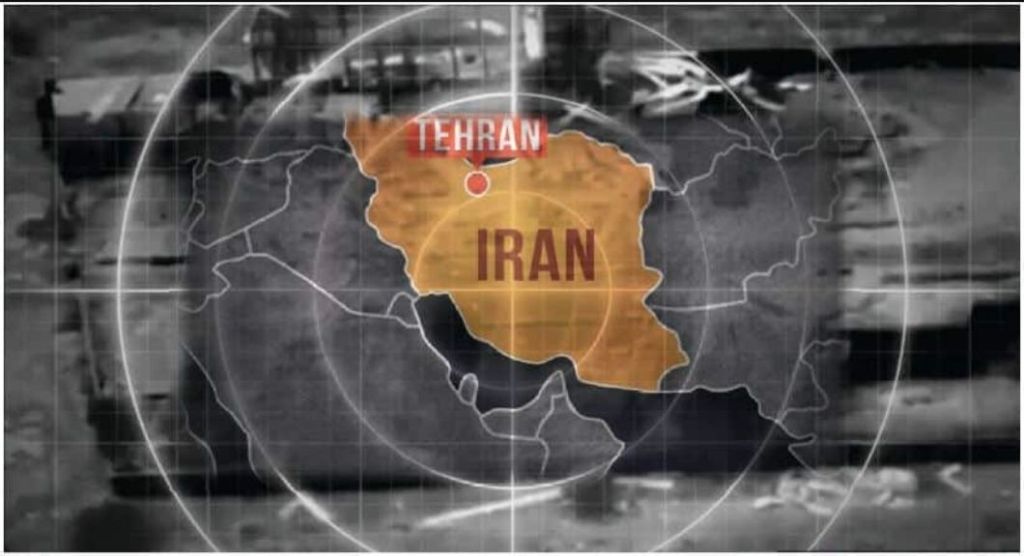
That is the uncomfortable lesson emerging from the war on Iran.
Washington and Tel Aviv appeared to believe that overwhelming force would produce a rapid collapse. The calculation seemed simple enough. Launch a devastating wave of strikes, eliminate top leadership, cripple command centers, damage military assets, hit nuclear facilities, and create enough shock to trigger regime breakdown from within. It was meant to be swift, decisive, and psychologically crushing. Donald Trump reportedly predicted it would be over in days.
Yet weeks later, Iran, bruised and bloodied, remains standing. Its political system is still functioning. Its military response has not vanished. The Strait of Hormuz remains central to the crisis. Oil prices have surged. Global supply chains are rattled. And the same power that launched the war now appears trapped in strategic confusion, issuing ultimatums, delaying its own threats, and floating claims of talks that Tehran openly denies.
That contradiction is the real story.
To understand why Iran has not folded, one must first understand that Iran is not merely a modern state in the narrow bureaucratic sense. It is an ancient civilization with thousands of years of historical memory. Long before the United States existed, Persia had already built empires, shaped legal traditions, produced scholars, poets, and scientists, and survived cycles of conquest that would have erased weaker societies. From Cyrus the Great to the intellectual achievements of Avicenna, Al-Biruni, Omar Khayyam, Hafez, and Rumi, the civilizational inheritance of Iran runs far deeper than contemporary Western strategic analysis is willing to admit.
That matters in war.
A society with only a few centuries of national history experiences destruction differently from a civilization that has already survived invasion, dynastic collapse, foreign coups, imposed wars, sanctions, and attempted subjugation. Persia endured Alexander. It endured Mongol devastation. Modern Iran endured the 1953 Anglo-American coup against Mosaddegh. It endured the long Iran-Iraq war, backed and enabled by outside powers. It endured decades of sanctions meant to suffocate it economically and politically. So when bombs fall today, Iran does not read the event as a completely new civilizational rupture. It reads it as another chapter in a very long struggle with empire.
That does not lessen the human tragedy. It deepens it.
The cost of this war in Iranian lives has been immense. Civilians have died in large numbers. Children have been killed. Homes, schools, and neighborhoods have been destroyed. Residential units have been hit. Fear, smoke, displacement, and trauma have become part of daily existence. Some of the testimonies coming from inside Iran are especially striking because they resist the simplistic categories imposed by outside propaganda. There are Iranians who oppose the Islamic Republic and yet reject foreign bombardment. There are citizens who have suffered under their own system and still recoil when foreign warplanes turn their cities into fire zones. That complexity is precisely what propaganda hates. It prefers the lie that people under attack must either cheer the bombs or cheer the state. Real life is more human than that.
And more revealing.
For decades, sanctions were supposed to break Iran. Instead, they hardened it. What began in 1979 as an asset freeze evolved into one of the longest and most expansive sanctions regimes in modern history. Over successive American administrations, the restrictions grew broader and more punitive. Trade was cut. banking access was severed. oil exports were targeted. foreign firms were penalized. financial institutions dealing with Iran were punished. The country was pushed into inflation, currency collapse, shortages, and industrial pressure.
But sanctions often produce the opposite of what imperial planners expect. Rather than guaranteeing submission, they can force innovation. Denied easy access to spare parts, technology, and foreign inputs, Iran learned to improvise, reverse-engineer, localize production, and build military systems under siege conditions. In that crucible emerged the kind of relatively cheap, mass-producible drone warfare that now exposes a fatal weakness in the military economy of the West.
That weakness is arithmetic.
The modern Western war machine depends heavily on high-cost defensive systems: Patriot interceptors, THAAD batteries, ship-based missile defense, and expensive precision response platforms. Iran’s asymmetric answer has been cheaper swarm weapons, especially drones whose cost can be a tiny fraction of the missiles needed to stop them. A drone costing tens of thousands can force the expenditure of interceptors costing millions. Scale that up over days and weeks, and the imbalance becomes strategically dangerous. Factories cannot replenish advanced interceptors overnight. Production lines are slow. Stockpiles shrink. Budgets burn.
In that sense, the war is not only being fought in the sky. It is being fought in spreadsheets, assembly lines, insurance markets, and logistical timeframes.
And geography is doing the rest.
The Strait of Hormuz remains one of the most consequential chokepoints in the global economy. A vast share of the world’s petroleum and liquefied natural gas passes through it. Fertilizer trade, shipping routes, aviation patterns, and industrial expectations are all tied to its stability. Iran does not need a conventional naval victory to weaponize Hormuz. Risk itself becomes a weapon. Mines, missile threats, drone activity, and uncertainty are enough to make insurers nervous, shippers cautious, and markets volatile. Once underwriters fear war conditions, commerce slows even without a dramatic naval showdown.
Then there is the second vulnerability, far more frightening and less discussed: water.
The Gulf monarchies are deeply dependent on desalination. In several of these states, drinking water relies overwhelmingly on a relatively small number of fixed, energy-intensive desalination plants. These are not abstract infrastructure assets. They are lifelines. A major war that seriously targets such systems would create not just market disruption but humanitarian peril on an enormous scale. That is why the mere possibility hangs over the region as a silent deterrent. The Gulf states know it. Washington knows it. Tehran knows it.
This is why the fantasy of a clean, limited war collapses under scrutiny. The region’s energy arteries, water infrastructure, shipping lanes, and political balances are too interlinked for easy escalation.
Meanwhile, the original theory of victory appears to be failing. Killing leaders, even senior ones, does not automatically dissolve a state. Systems built around ideological cohesion, distributed command, and historical siege consciousness often adapt rather than disintegrate. Remove the apex, and lower-level cadres reorganize laterally. In some cases they become even harder, more radical, and less restrained. History is full of examples where aerial destruction produced tactical damage but strategic failure: Vietnam, Iraq, Libya, Afghanistan. In each case, assumptions about fragility proved disastrously wrong.
Iran now appears to be demonstrating a similar principle in real time.
There is another variable Western analysis struggles to grasp: faith.
Shia Islam is not merely a private spirituality within Iran. It is also a reservoir of historical symbolism, sacrifice, and endurance. The memory of Karbala, of standing against overwhelming force and accepting martyrdom rather than surrender to illegitimate power, remains central. This does not mean every Iranian acts from theology alone. It means that the strategic culture of endurance in Iran cannot be separated from the moral and historical grammar through which suffering is interpreted. A society that reads sacrifice as witness, not merely as loss, will not respond to bombing the same way as a consumer society trained to equate hardship with political collapse.
No missile system can intercept that.
The deeper irony is that classical strategy would have warned against this entire path. Any serious reading of Sun Tzu would emphasize knowing the enemy, preferring victory without battle, defining the political objective before fighting, and never entering war without clarity about what success looks like. By those standards, Washington and Tel Aviv appear to have violated every major principle. They seem to have underestimated Iran’s civilizational depth, discarded a diplomatic opening that may have been within reach, launched force without a coherent end state, shifted public war aims repeatedly, and weakened the credibility of their own threats by failing to follow through on rigid ultimatums.
Iran, by contrast, appears to have entered the confrontation with a simpler and clearer objective: survive, retaliate selectively, stretch the enemy economically, keep the strategic pressure on global markets, and let the world observe that even the most heavily armed alliance cannot easily impose submission on a determined non-Western state.
That observation is not being lost on the Global South.
From Caracas to Algiers, from Pyongyang to Harare, from Moscow to Beijing, states and movements outside the Western security architecture are watching closely. What they are seeing is not necessarily an Iranian victory in the conventional sense. What they are seeing is something perhaps more important: that American military primacy no longer guarantees quick submission. Cheap asymmetric systems, civilizational cohesion, strategic geography, and endurance can now impose costs that imperial planners struggle to absorb. The age of uncontested Western omnipotence is no longer as unquestioned as it once was.
And there is yet another beneficiary standing quietly in the background: China.
As the United States diverts attention, missile defense assets, and political capital back into the Middle East, Beijing gains strategic breathing room in the Indo-Pacific. Russia also benefits from higher energy prices and greater Western distraction. In trying to discipline Iran, Washington may be accelerating the very multipolar shift it claims to resist.
That is the ultimate irony of empire. Sometimes its wars do not display its strength. They expose its exhaustion.
In the end, this conflict is not only about Iran’s uranium, Israel’s security language, or Trump’s rhetoric. It is about the old imperial delusion that technological superiority automatically translates into political mastery. It is about the belief that memory can be bombed out of a people, that sanctions can engineer obedience, that pain always breaks rather than hardens.
But history says otherwise.
Empires often have more weapons. Civilizations often have more memory. And memory, when fused with endurance, identity, faith, and historical experience, can become a strategic asset no air campaign can easily erase.
That is why Iran still stands.
And that is why this war, however it is dressed up in the language of deterrence or order, may one day be remembered not as the moment empire reasserted control, but as another moment when its limits were laid bare before the world.
By Hon. Chima Nnadi-Oforgu
Duruebube Uzii na Abosi
 OBLONG MEDIA GLOBAL INTELLIGENCE
Leave a comment