
The greatest question facing humanity today is no longer hidden in philosophy books or diplomatic speeches. It is staring the world in the face with brutal clarity. Do we want a world ruled by order, peace, stability, and shared prosperity, or one hijacked by war, coercion, destruction, and permanent instability?
That is the real choice before the international community. Sadly, the direction of travel today suggests that the world is being dragged ever deeper into disorder by powerful states that speak the language of peace while practicing the politics of force.
The global system established after the Second World War was meant to save mankind from another descent into barbarism. Institutions were created, treaties were signed, and lofty principles were proclaimed in the hope that no single nation would again possess the arrogance to impose its will on the rest of the world without restraint. But what has happened over time is that the very structure created to preserve peace has also been turned into a shield for impunity.
At the heart of this contradiction lies the United Nations Security Council veto. That power, reserved for the five permanent members, has become one of the most glaring weaknesses in the architecture of world order. In principle, the United Nations Charter forbids aggression and upholds the sovereignty and territorial integrity of nations. In practice, however, a powerful state or its ally can violate those principles and still avoid meaningful consequences if protected by veto politics.
What this means is simple. International law exists, but it does not apply equally. It binds the weak and bends before the strong. It condemns some aggressors while excusing others. It speaks of rules, but too often submits to raw power. That is not justice. That is hierarchy disguised as law.
The consequence is the dangerous global atmosphere we see today. Instead of a rules-based order, the world is increasingly trapped in a selective order. Instead of diplomacy, we see threats. Instead of mutual respect, we see bullying. Instead of peacebuilding, we see escalation. The result is a planet living on edge, where conflicts can expand rapidly and where one reckless decision by a powerful actor can set entire regions ablaze.
Nothing illustrates this danger more clearly than the current pattern of military adventurism involving the United States and Israel in relation to Iran and the wider Middle East. Once again, the world is being pushed toward a wider confrontation by actors who behave as though military force is the first language of statecraft rather than the last resort of desperate necessity. This is how major disasters begin. They begin with arrogance. They begin with the illusion that violence can be neatly controlled. They begin with the fantasy that bombs can solve political problems.
History says otherwise. War rarely remains where it starts. It spreads through retaliation, economic disruption, proxy entanglements, mass displacement, extremism, and generational trauma. Those who ignite conflict do not always determine its endpoint. In fact, history is full of examples where the aggressor opened a door it could not later close.
The tragedy is not only moral. It is economic and civilizational. Modern wars do not merely destroy buildings and lives in the immediate zone of conflict. They destabilize energy markets, disrupt supply chains, increase insurance and transport costs, trigger inflation, weaken currencies, rattle investor confidence, and push fragile economies closer to collapse. A missile strike in one country can drive up food and fuel costs on another continent. A naval escalation in one strategic corridor can affect the daily survival of millions far removed from the battlefield.
That is why peace is not some abstract ideal for dreamers. Peace is practical. Peace is economic common sense. Peace is the foundation upon which businesses function, nations plan, families survive, and societies develop. The cost of war is never paid only by those who order it. It is paid by workers, by mothers, by pensioners, by children, by small businesses, by ordinary citizens who suddenly find themselves financing elite recklessness through inflation, unemployment, insecurity, and grief.
And yet the world continues to be subjected to leaders whose political instincts are shaped not by wisdom, prudence, and historical depth, but by ego, impulse, and domination. Donald Trump remains one of the most glaring embodiments of this crisis of leadership. His politics have always been built on provocation, spectacle, division, and the glorification of personal power. What some once mistook for anti-establishment boldness has revealed itself more fully as something far more dangerous: a style of rule that feeds on chaos and treats institutions as obstacles to be mocked or broken.
Such a man does not see governance as stewardship. He sees it as conquest. He does not approach diplomacy with sobriety but with bravado. He does not strengthen institutions but undermines them. He does not calm tensions but inflames them. He thrives in confusion because confusion allows him to posture as the only force capable of imposing order, even when he himself helped create the disorder.
This is the hallmark of destructive leadership. It first destabilizes the political environment, then markets itself as the cure for the instability it has helped unleash.
Trump’s political record has long shown a pattern of contempt for restraint, reverence for personal power, hostility toward legal and constitutional boundaries, and an appetite for threats both at home and abroad. He represents a model of power that treats truth as disposable, law as negotiable, and public office as a vehicle for self-magnification. That kind of leadership is dangerous enough within one country. In the hands of the leader of a global superpower, it becomes a threat to international equilibrium itself.
The wider problem, however, goes beyond one personality. The real indictment is against the political culture and global order that repeatedly allow such figures to rise, consolidate influence, and evade accountability. When institutions grow timid, when political parties become cults of convenience, when truth is fragmented into partisan narratives, and when sections of the public confuse vulgarity with authenticity, dangerous leaders find fertile ground.
That is how democracies become distorted from within. Not always by tanks in the streets, but by the gradual normalization of abuse, deceit, intimidation, and institutional erosion.
The same applies internationally. The world order is in trouble not only because of one president or one alliance, but because too many powerful actors have grown comfortable with double standards. They denounce aggression when it is committed by their adversaries and excuse it when carried out by their friends. They demand respect for sovereignty in one theatre and violate it in another. They preach human rights while funding destruction. They invoke law while shielding lawbreakers.
This hypocrisy is not a side issue. It is central to the crisis. It destroys trust in international institutions. It fuels cynicism. It drives smaller nations to conclude that there is no moral consistency in the system, only geopolitical calculation. Once enough countries reach that conclusion, the credibility of the entire international order begins to collapse.
And that is precisely the danger before us. If law becomes merely a weapon used selectively, if global institutions are reduced to theatre, and if major powers continue to behave as though they are exempt from the standards they impose on others, then the world will drift further into a volatile era of fragmentation, resentment, arms buildup, and recurring conflict.
This is why reform is no longer optional. A credible international system cannot survive indefinitely on the basis of permanent-member privilege and selective enforcement. The world must begin to confront the hard truth that peace cannot be guaranteed by institutions that can be paralysed whenever the most powerful states decide to act in bad faith. No sustainable order can be built on such a contradiction.
What the world urgently needs is not more military coalitions, more pretexts for intervention, more sanctions regimes, or more moral lectures from powers that have repeatedly destabilized regions in the name of saving them. It needs a return to first principles. Respect for sovereignty. Equality before international law. Serious diplomacy. Restraint in the use of force. Accountability for war crimes no matter who commits them. A genuine commitment to multilateralism that is not merely invoked when convenient.
The world also needs to understand that prosperity does not emerge from domination. It emerges from peace, infrastructure, trade, innovation, energy security, and fair engagement among nations. Destruction may enrich arms manufacturers and speculators, but it impoverishes humanity. Every bomb dropped in arrogance is a confession of political failure. Every war sold as liberation but delivered as catastrophe is a warning that empire has learned nothing.
This is the crossroads at which civilization now stands. One road leads to further militarization, perpetual proxy wars, energy shocks, collapsing trust, authoritarian drift, and deepening human misery. The other leads, however imperfectly, toward negotiated order, lawful conduct, mutual security, and sustainable prosperity.
The choice should not be difficult. A rational world would choose peace. A just world would choose accountability. A wise world would reject leaders who gamble with human lives for political theatre, ideological obsession, or imperial vanity.
But wisdom is not automatic. It must be insisted upon. Citizens must demand it. Legislatures must assert it. Institutions must recover the courage to defend it. Nations must stop pretending that chaos imposed by powerful states is somehow compatible with global order.
War is not strength. Destruction is not leadership. Bullying is not diplomacy. And chaos is not a strategy for civilization.
The world deserves better than this permanent state of fear and manufactured instability. It deserves a future in which law is not hostage to power, in which peace is not sacrificed to ambition, and in which prosperity is not constantly endangered by reckless men intoxicated by force.
Humanity must now decide whether it wishes to continue living under the shadow of imperial disorder or begin the hard but necessary work of reclaiming peace.
The answer should be obvious. The world does not need more chaos. It needs sanity, justice, restraint, and peace.
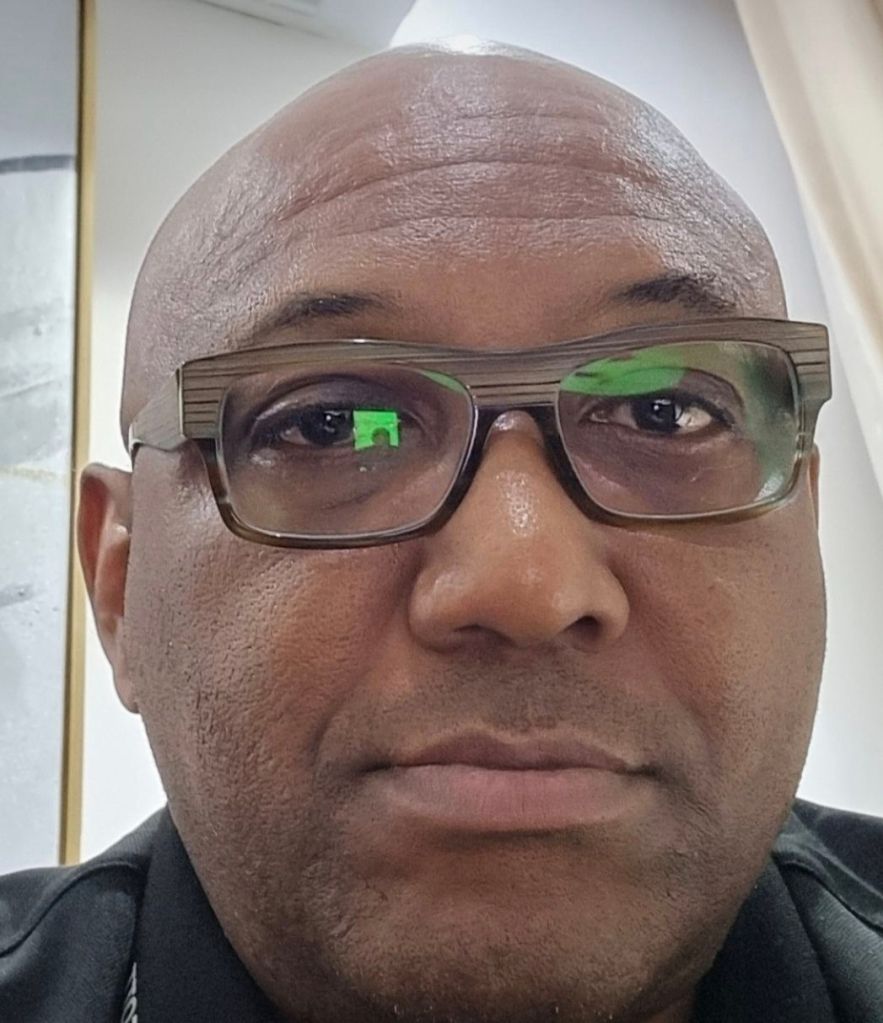
By Hon. Chima Nnadi-Oforgu
Duruebube Uzii na Abosi
 OBLONG MEDIA GLOBAL INTELLIGENCE
Leave a comment