

When Faith Is Turned Into Fuel for Slaughter.
There is something especially depraved about war when it no longer bothers to hide behind strategy, security, or diplomacy, but begins to wrap itself openly in the language of God. That is the dangerous threshold the world is now approaching. Religion is once again being weaponized, not to save souls, but to prepare consciences for slaughter.
What we are witnessing is the return of an old and bloody formula. First, an enemy is stripped of humanity. Then that enemy is branded wicked, godless, savage, or terrorist. After that, bombs become righteous, massacres become regrettable necessities, and genocide is laundered through the language of divine duty. That is how cold-blooded murder acquires moral camouflage.
The latest signals from Washington are deeply disturbing. Defense Secretary Pete Hegseth has drawn scrutiny for publicly fusing Christian rhetoric with wartime policy, including Pentagon worship services and a prayer calling for “overwhelming violence of action against those who deserve no mercy.” Reporting has also documented complaints from service members who said commanders framed deployment to Iran as part of “God’s plan,” while watchdog groups and legal critics warned that this kind of sectarian militarization corrodes military neutrality and inflames religious warfare narratives.
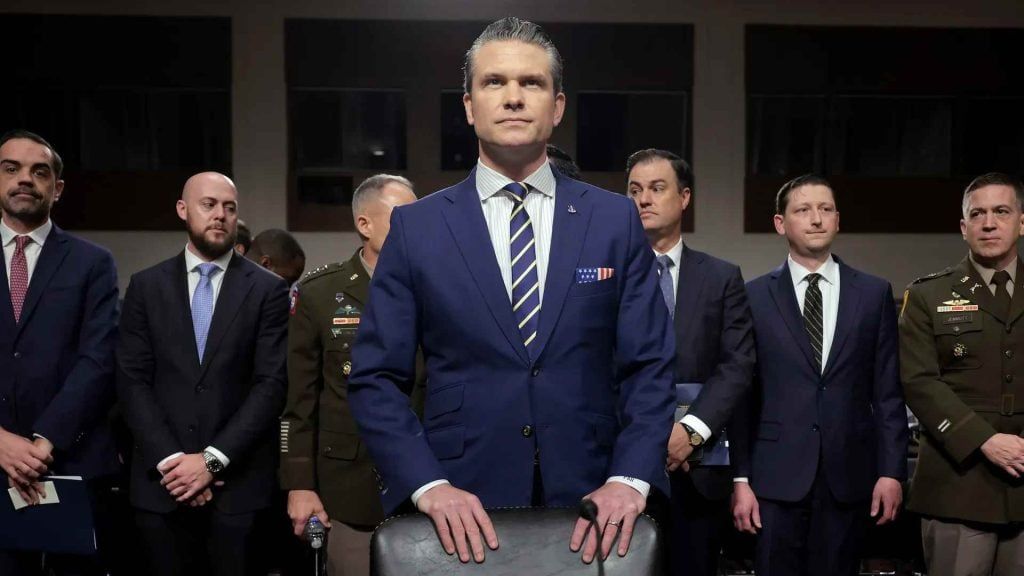
This is where the danger lies. Once war is recast as holy obligation, restraint is treated as weakness, mercy becomes betrayal, and dissent becomes heresy. The battlefield is no longer merely geopolitical. It is transformed into an altar on which entire peoples can be sacrificed.
That is why I and so many people across the world are beginning to ask a chilling question: are we looking at a modern military campaign, or the ideological resurrection of the Crusades in updated language? The targets are familiar enough. Palestine is persistently reduced to a “terror problem,” as though an occupied and pulverized people have no political grievance, no historical claim, and no human rights. Iran is cast not merely as a rival state but as a civilizational enemy, a force to be broken, isolated, and, if possible, destroyed. In that framing, Muslim identity itself becomes suspicious, while violence carried out by Western powers and their allies is presented as regrettable but noble.
Israel’s role in this wider structure is impossible to ignore. It continues to present its wars as defensive necessity, even when the scale, intensity, and impunity of the violence provoke growing global outrage. At the same time, the United States supplies the diplomatic shield, the military umbrella, and the language of legitimacy. Critics increasingly argue that Washington is not merely backing Israel but allowing itself to be drawn ever deeper into Israel’s regional logic of confrontation, particularly with Iran. Recent reporting on the U.S.-Israel war posture toward Iran, combined with leadership upheaval inside the Pentagon during active operations, has only sharpened those concerns.
This leads to the most explosive question of all: is Israel using American power to eliminate the one regional state still capable of seriously resisting total Israeli military and strategic domination in the Middle East? That is an inference, not a settled fact, but it is plainly the question driving global suspicion. Iran is seen by many in the region not as innocent or blameless, but as the principal state-level obstacle to unchallenged Israeli supremacy. And when that obstacle is targeted with openly apocalyptic religious language, the line between strategic war and ideological crusade becomes dangerously thin.
Then there is the silence, complicity, or commercial opportunism of the Gulf monarchies. While Palestinian blood is shed and Iran is cast as the next great enemy, several Arab ruling establishments appear more comfortable with business corridors, investment alignments, security partnerships, and regime survival than with any serious moral confrontation over genocide, siege, or regional subjugation. It is one of the great disgraces of this era that some of the loudest rhetoric about faith comes not from those defending the oppressed, but from those laundering power politics through religion while others count profits.
This is how fanaticism works in modern empire. It does not always come dressed like a medieval zealot. Sometimes it arrives in a suit, in a briefing room, under flags, beside generals, behind pulpits, or through television studios. It speaks of civilization while normalizing extermination. It invokes God while blessing missiles. It condemns terrorism while practicing state terror on an industrial scale.
The deepest obscenity is not only that religion is being misused. It is that millions are being asked to see mass death as moral necessity. Children become collateral. Cities become targets. Civilizations are divided into chosen and disposable. And because the victims are Muslim, Palestinian, or Iranian, too many in the West are conditioned to accept the bloodletting as part of some larger redemptive project.
That is not faith. That is idolatry of power.
When any political order begins to suggest that God endorses overwhelming violence against a demonized people, humanity should hear alarm bells. That is the language from which inquisitions, crusades, colonialisms, ethnic cleansings, and genocides have always drawn strength.
The world must reject this with moral clarity. No scripture can sanctify apartheid. No prayer can cleanse genocide. No invocation of civilization can excuse the mass killing of civilians. And no alliance of Zionist militarism, Christian extremism, and Gulf commercial cynicism can turn injustice into righteousness.
The crusading spirit is back, clothed in modern weapons and media narratives. And unless it is confronted for what it is, even greater horrors may yet be justified in the name of God.
By. Hon. Chima Nnadi-Oforgu
Duruebube Ihiagwa ófó asato
 OBLONG MEDIA GLOBAL INTELLIGENCE
Leave a comment