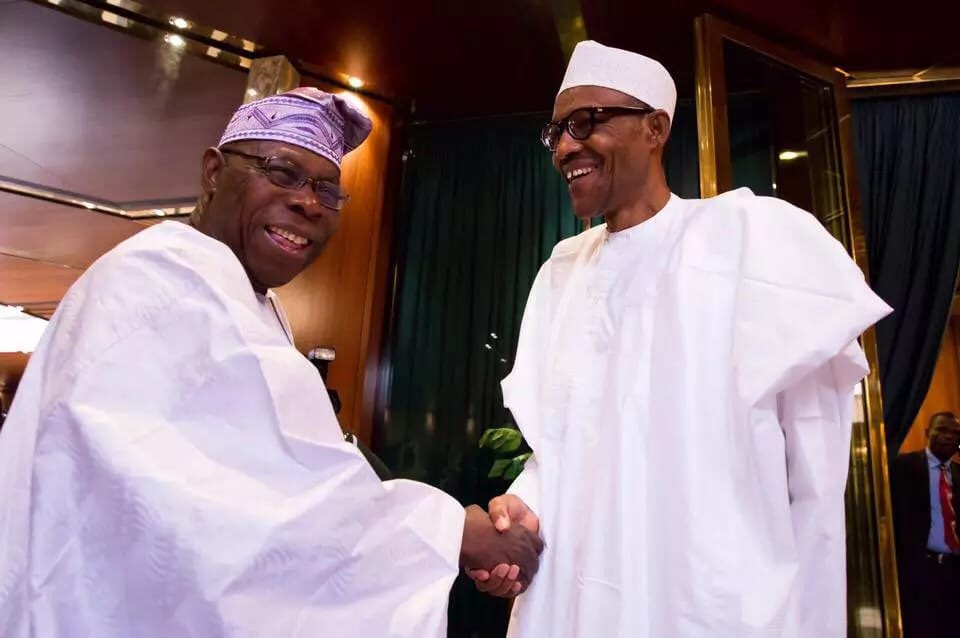
President Muhammadu Buhari has faced serious criticism following what a lot of people termed a lopsided method of appointment in his administration. In this opinion by Majeed Dahiru, he points out that this method of appointment will likely stir corruption and make people perceive him as a sectional leader.

A more divided Nigeria

Nigeria has never been more divided than it is today. The various fault lines of our geo-political space have been deepened and become more manifest in the various agitations from different segments of our society. The collective hope and euphoria that greeted the change in leadership from Goodluck Jonathan of PDP to Muhammadu Buhari of APC may have given way to hopelessness and possibly, regret. The continuous existence of the Nigerian state has never been this threatened, as a result of deep feelings of mutual suspicion between the various groups that make up Nigeria. The leadership class appears never to learn much from history – even that of the recent past. One major reason for this unfortunate situation is the inability of our leaders at all levels to be statesmen rather than ordinary politicians. 

Goodluck Jonathan lost the 2015 presidential election largely because of his political miseducation, despite his remarkably impressive economic performance. He never really understood Nigeria and Nigerians very well. He was learning on the job even as a president. However recent happenings in the polity have propped up some questions which need answers urgently. If Jonathan was sectional in key appointments in favour of his ethno-geographic zone, why Buhari? If Jonathan stubbornly defended and shielded his close allies on corruption charges, why Buhari? If Jonathan used anti-graft agencies to persecute his opponents, why Buhari? If Jonathan did not show much concern towards the Boko Haram insurgency in the North, why is Buhari seemingly showing less concern towards the Fulani herdsmen scourge in the South? The answer may not be far-fetched. Both men have some things in common. They are alike in different ways – as isotopes of the same element. This sad realisation has led to hopelessness and widespread dissatisfaction, with consequent agitations from different quarters. 

Nigerians rejected Jonathan and accepted Buhari because he promised change, but sadly nothing has really changed. 

 President Buhari has not shown enough sensitivity to Nigeria’s diversity. If Jonathan was sectional, Buhari has taken sectionalism to a scandalous level. A close look at both men’s trajectory to power will show why. Both men are the only individuals in the history of Nigeria to have come to the presidency with the massive support of their ethnicities, states, geo-political zones and members of their respective religious groups. Both were actually sectional candidates who got elected purely on the exigencies of the time. But the political miseducation of both men lay in the fact that they attribute their electoral successes on the support they received from their own sections of the country. What they fail to realise is that it equally takes so much from other sections to make the difference and guarantee victory. No section alone can guarantee victory for its own. The president’s failure in national integration is most manifest in the South-South and South-East regions. These regions have largely been treated like conquered territories. Their only sin being voting overwhelmingly against the president in the last election. The obvious marginalisation of these regions, has led to serious separatist agitations, which are threatening our corporate existence as a nation. It is expected of the president to take deliberate steps to warm himself into their hearts and embrace them with a fatherly arm. 
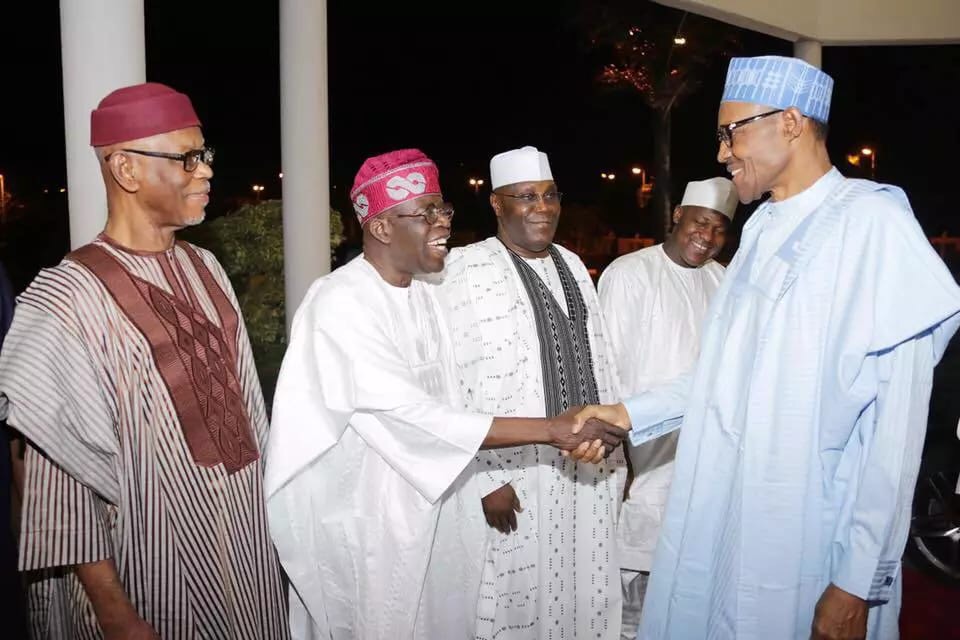
 Some of the president’s supporters have said that his appointments are based on loyalty, trust and merit. But this argument falls flat on logic and sound reasoning. It is an indictment on the president to claim to trust more people of his ethnic group, region or religious leaning. It simply shows a man who is not broad minded enough to accommodate people of diverse backgrounds. There are so many Nigerians of Southern origin who supported the president against their own and who deserve his trust and confidence. The issue of merit is also devoid of logic and common sense. A region which is classified as educationally disadvantaged, whose students are given admission into higher institutions by lowering national standards and not on merit, but quota system, so that they can catch up with their Southern counterparts, cannot also benefit most from key appointments based on merit. The president’s actions have substantially reversed the gains made in the last sixteen years at national integration and unity. 

Lesson from Obasanjo In 1999, when former President Obasanjo, a Southerner was elected, he distributed the positions in his kitchen cabinet in such a way that did not favour his state, region or ethnic group. And this has distinguished him as a true statesman, who has moral authority in any part of Nigeria. He appointed Ufot Ekaette from South-South as the Secretary to the Government of the Federation. His National Security Adviser was Gen. Aliyu Mohammed Gusau from the North-West. His Chief of Staff was Gen. Abdullahi Ahmed from the North-Central. His ADC was Col. Giwa Amu from the South-South. He appointed Andy Uba from South-East as his special assistant on domestic matters. Gen. T.Y Danjuma from the North-East was minister of Defence, Admiral Ibrahim Ogohi from the North-Central was chief of Defence Staff, Gen. Victor Malu from North-Central was Chief of Army Staff, Air Marshal Isaac Alfa from North-Central was Chief of Air staff, Musiliu Smith from South-West was the Inspector General of Police and Col. Sunday Are was Director-General of the Department of State Services. 

Compare this with President Buhari’s appointments: NSA, Gen Babagana Mungono, North-East; Chief of Staff, Abba Kyari, North-East, SGF Babachir David Lawal, North-East; ADC, Lt. Col Muhammed Lawal Abubakar, North-West; CSO, Abubakar Usman, North-West; DG DSS, Lawal Daura, North-West; Minister of Defence, Gen. Mansur Mohammed, North-West; CDS, Gen. Abayomi Olonisakin, South-West; Chief of Army Staff, Gen. Tukur Buratai, North-East; Chief of Air Staff, Air Marshal Saddique Abubakar, North-East, Chief of Naval Staff, Vice Admiral Ibok-Ete Ekwe Ibas, South-South; IGP, Ibrahim Idris, North-Central. Buhari, a Northerner, has given more appointments to the North in contrast with Obasanjo – a Southerner, who gave more appointments to the North, and this is not statesmanlike enough. 

It is time for the president to be more of a statesman than a politician. At 73, Buhari has an obligation to unite the country, heal our fault lines and not exacerbate them. Nigeria has given him enormous opportunities to be what he has become and the only gift he can give back is to leave Nigeria more united than he met it. Our most pressing need now is unity and peace and the best way to start the process of healing is to give every section of our country a sense of belonging, by evenly re-distributing sensitive positions, to reflect fairness and justice. Sectionalism breeds corruption because it is characterised by unmerited favouritism, nepotism and cronyism, which eventually lead to financial crimes and embezzlements of public funds. Therefore, the president’s sectionalism puts a doubt on his credibility and integrity Interestingly the Northern region is not going to benefit from these skewed appointments, because it will only benefit the individuals concerned. 

The president should rather concentrate on policies and programmes that will develop the North and make it more self-sufficient economically and depend less on oil mineral revenues from the South. This will restore pride to the North and Northerners and forge mutual respect and love among Nigerians. The structure of Nigeria favours the Northern region more than the other three original regions of the Western, Midwestern and Eastern. The North has 19 states out of 36 and 419 local governments out of 774. With federal character and quota system, the North has a fair share of the national resources and positions. Any attempt to alienate other regions further is gross injustice, which is a worse form of corruption. I am a Northerner and Muslim. I love the North, I love my country, I love my president but I love the truth more. 

3 responses to “Opinion: Buhari’s sectionalism may breed corruption, by Majeed Dahiru”

  1. Bassey Roland Avatar
    Bassey Roland

    What happened to my post?

    Like

  2. God bless you brother. We can only hope he listens. And that you’re not threatened.

    Like

  3. Simon Kolawole: Buhari Didn’t Inherit A Healthy Economy From Jonathan. Let’s Get That Straight
    JULY 24, 2016 BY EDITOR
    http://www.africanliberty.org/simon-kolawole-buhari-didnt-inherit-a-healthy-economy-from-jonathan-lets-get-that-straight/
    If you were a lover of reggae music in the 1970s, you would certainly know “Time Hard”, a hit song by The Pioneers, the Jamaican three-man band. “Everyday,” they sang, sonorously, “things are getting worse.” That song was released in 1972. At the time, Nigeria was producing two million barrels of crude oil per day and selling at an average price of $1.8 per barrel. We were not yet oil-dependent, so the revenue was basically a bonus. By 1974, oil was selling for $11, six times the 1972 price, and our stomach ballooned. We became helplessly hooked on petrodollars. The only song Nigerians could be singing was: “Things are getting better.” The Pioneers would not sell.
    But their song still became very relevant in the early 1980s. Average oil price fell from $34 in 1981 to $32 in 1982 and $29 in 1983, meaning serious trouble. Oil boom had sent us into an expenditure overdrive and overkill. We had taken on massive projects, importing recklessly and accumulating debts like medals. Our foreign reserves began to sink as we struggled to import basic food items, such as rice and milk. President Shehu Shagari tried to stay afloat through a “stabilisation plan” that cut spending, reduced imports and hiked duties. After the 1983 elections, the government could no longer pretend. The economy went berserk. Things fell apart.
    This is 2016 and the symptoms persist. In fact, our economy has been on a downward spiral since late 2014 when oil prices started plunging. It became more pronounced in 2015, and it appears we are now breaking records as we wake up everyday. Are The Pioneers singing in the background? The naira is officially at its worst since it replaced the pound as national currency in 1973; oil production has plunged from 2.2mbpd to probably its lowest in 10 years; FX reserves are going south; inflation has gone wild; and we are just awaiting figures from the National Bureau of Statistics (NBS) to confirm that we’re officially in a recession — first since 1987.
    There are four points I would like to highlight as we discuss the state of the nation this morning. One, we cannot deny the fact that the crash in the price of crude oil is what got us into our current gridlock. We classically got carried away by the recent oil boom and failed to learn our lessons. Now history is mercilessly repeating itself. Two, Buhari did not inherit a healthy economy, contrary to whatever the critics say. Three, Buhari may not have been quick enough with his response to the economic crises since he assumed office, but there are no easy answers. Four, and this is the one that scares me silly, we may be in for a prolonged drought.
    Here we go. My first point. If Buhari inherited crude oil price at $80 per barrel, with production levels remaining at over 2mbpd, the story would certainly be different. We have to face that fact without sentiments. The exchange rate, both official and parallel, could still be below N200/$1; our reserves would still be fairly healthy because of the war chest; and — with subsidy — petrol would still be less than N100 per litre. Prices would stabilise. Foreign investors would likely remain attracted to us and the stock market would be bubbling. In other words, the relative growth we have enjoyed over the years owed largely to high oil prices.
    Indeed, President Goodluck Jonathan was unable to build robust reserves in the time of boom — and this is very significant. Under President Olusegun Obasanjo, the highest price oil sold for was $60, and production was less than 2mbpd for the most part. He parted with $12 billion to settle foreign debts, and still left FX reserves of $43 billion, out of which $9 billion was excess crude savings. Under President Umaru Musa Yar’Adua, oil went up and down, hitting $147 per barrel at some point, and sinking to $31 at its lowest. With that, Yar’Adua raised FX reserves to $62 billion by September 2008 — the highest in our history.
    This is where the Jonathan team loses the argument. Oil sold for between $70 and $120 during his first four years in power (2010-2014) before the downward slide to $50 in 2015, when he left office. If our reserve management was anything like what we had under Obasanjo and Yar’Adua (when, by the way, Professor Chukwuma Soludo was the CBN governor), Jonathan could have left at least $100 billion in the reserves. If Buhari had inherited such a hefty kitty, the naira would not be gasping for breath today. Clearly, our failure to build an FX war chest in the time of plenty exposed us to the infectious diseases we are battling with today.
    Why couldn’t Jonathan build robust reserves? One, Dr. Ngozi Okonjo-Iweala, former finance minister, kept crying that Nigeria was bleeding from oil theft. Nobody listened. Over 400,000 barrels were being stolen daily. Two, NNPC failed to remit billions of dollars to CBN coffers. The man formerly known as Malam Sanusi Lamido Sanusi, then CBN governor, raised the alarm. We didn’t listen. Three, governors opposed crude oil savings, saying it is unconstitutional. Four, we maintained an artificial value for the naira for long, insisting we had “robust reserves”, but our appetite for imports was more robust. We failed to curtail the appetite because we were awash with dollars.
    Our aggressive spending during the last oil boom is coming back to bite us. Instead of spending the oil wealth to deepen and regenerate the economy, we ran amok, bloating the civil service and turning political appointments to a sub-sector. The governors were hiring jets every minute to attend political meetings. Nigerians were buying jets like pure water. How many people were sending their children to foreign schools in 1999 compared to, say, 2014? We believed we had all the forex to buy the world. We totally savaged the economy. This is not about Jonathan alone — it was a national pastime: from councils and states to the colossal federal government.
    My third point. Though Buhari did not inherit a wonderful economy, his ideological hangovers prevented him from acting on time to stem the tide. It’s like cancer. If you leave cancer stage one untreated, it gets bigger, and moves to stage two. Untreated, it gets worse and moves to stage three. And, finally, it gets to stage four where it has spread to other organs. The economy was probably at stage two when Buhari took over, but he felt chemotherapy would be too painful for the masses that elected him into office. Now the cancer is spreading and killing jobs and shredding the naira and shrinking the economy. That is the consequence of delayed adjustment.
    My fourth and final point. Since we are still hopelessly sold to oil, and production is getting smaller by the day as a result of militant activities, I think The Pioneers will have to do a remix of “Time Hard”. Things will get even worse before they get better. You don’t transit from oil economy to industrial/service overnight. If we couldn’t do it in 40 years, I don’t expect us to do it in one year. Or even four years. Except oil recovers miraculously, this carnage will continue. Sadly, the bad situation is worsening because of socio-political tensions: the herdsmen, the Niger Delta militants and Biafra. Meanwhile, APC, the ruling party, is enmeshed in a civil war.
    Where do we go from here? I honestly pity President Buhari. Despite shifting ideological grounds on the exchange rate and fuel price, the economy is still nowhere near recovering. The truth is that we are in a bad place and there are no easy ways out. It is a peculiar mess. The tasks he must face squarely now are critical. One, how do we first stabilise the economy and stop this bleeding? Two, where is the recovery road map so that the average Nigerian can hope for light at the end of the suffocating tunnel? Three, how do we ensure that if there is another oil boom, we will utilise it intelligently and finally escape from what I call the “petropathetic” syndrome?
    It is very easy to point accusing fingers at Jonathan for mismanaging the economy or Buhari for not finding a quick fix, but maybe we should begin to look at the mirror as well. With oil boom, we were living false lives, holidaying in Las Vegas and holding weddings in Dubai with unearned or dubiously earned income, pretending to be rich when it was all a bubble. Now the bubble has burst. We can see clearly now. As Buhari seeks to reform the economy, we too must discipline our appetite and endure the inescapable pains of adjustment. Without another oil boom, recovery is going to be slow and painful. But in due season we shall reap — if we faint not.
    Simon Kolawole is a writer and journalist and Founder/CEO of The Cable

    Like

Leave a reply to Bassey Roland Cancel reply

Trending