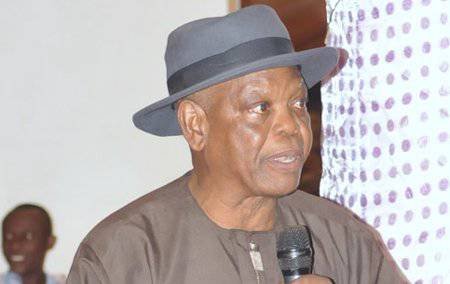
I emphasize that the recent advancement for Igbos doesn’t merely stem from the internet’s arrival; it’s the social media element empowering independent thinkers to challenge historical inaccuracies. Through social media, scholars are debunking false narratives perpetuated by the Yoruba press, often biased against Igbos, rewriting Nigeria’s history to favor themselves. The skewed narrative wrongly attributes post-independence successes to Awolowo and blames Azikiwe, Ojukwu, and the Igbos for Nigeria’s problems. However, the truth is slowly surfacing, gradually vindicating the Igbo people. This masterpiece by Professor Tekena Tamuno, a historian and former Vice-Chancellor of the University of Ibadan, provides valuable insight. It’s important to note that Tamuno isn’t Igbo.

“Igbos: Makers of Modern Nigeria”

Skewed history misinforms: Kayode Esho, a jurist; Akunne Oputa, the “Socrates” of the Supreme Court; Enahoro, a young editor—Azikiwe played pivotal roles in shaping their careers. The myth of Awolowo’s numerous firsts contradicts documented economic history. Eastern Nigeria, between 1954 and 1964, had the world’s fastest-growing economy. Awolowo’s “free education” claim lacks evidence in surviving school buildings. Conversely, Eastern Nigeria built numerous quality schools using grants, despite having the poorest revenue resources. Eastern Nigeria also led in education investment, medical services, and road networks.

“Contributions of Azikiwe to Modern Development”

Azikiwe’s contributions surpass mere prestige projects. He established Eastern Outlook, the first government newspaper in Nigeria, significantly impacting literacy. Azikiwe’s endeavors included building the Onitsha Modern Market, the first Nigerian University at Nsukka with various schools, libraries, and innovative educational systems. Azikiwe’s initiatives influenced the cry of “Igbo domination.” His efforts reflect significant contributions to modern Nigeria, often overshadowed.

“The Call for Balanced Narratives”

Tekena Tamuno asserted that Igbos are key contributors to Nigeria’s modern development; neglecting this led to Nigeria’s collapse. Highlighting these facts, especially to Igbo children, as Achebe advocated for a balanced narrative, is crucial. Challenging revisionist narratives, such as Babarinsa’s Guardian essay, remains essential, even when seemingly innocuous.

“Challenging Misconceptions”

Correcting misconceptions is vital. For instance, attributing the founding of Ibadan and Lagos Universities to Awolowo neglects Azikiwe’s influential role. Azikiwe’s pressures led to the establishment of University College, Ibadan, and influenced Nsukka and University of Lagos. This factual representation is often overlooked or downplayed.

In essence, these facts must be vehemently communicated. Until each ethnic group tells its story, the hunter will always dominate the hunt’s narrative.

One response to ““The Impact of Igbos in Modern Nigeria” by Professor Tekena Tamuno”

  1. Splendid article!

    Summary:

    Professor Tekena Tamuno passionately highlights the pivotal role of social media in challenging the skewed historical narratives that have misrepresented the Igbo people within the Nigerian context. He emphasizes that while the advent of the internet has played a significant part, it’s the emergence of social media that enables critical thinkers to dismantle and confront the historical falsehoods perpetuated, especially by the Yoruba press, in collaboration with a historical bias from the Northern region against the Igbo community.

    Tamuno points out that these false historical narratives, if believed, paint a distorted picture of Nigeria’s history, attributing every success post-independence to Awolowo while blaming Azikiwe, Ojukwu, and the Igbo for every national problem. He contends that the truth, albeit reluctantly emerging, is gradually vindicating the Igbo people from these misrepresented claims.

    As a respected historian and former Vice-Chancellor of the University of Ibadan, Tamuno delves into specific examples to illustrate the misrepresentation in historical accounts. He contrasts recognized figures like Kayode Esho and Akunne Oputa, highlighting Azikiwe’s role in shaping the latter’s career at the Southern Nigerian Defender in Ibadan. Tamuno challenges popular notions about Awolowo’s attributed achievements against documented economic history.

    He accentuates the remarkable economic growth of Eastern Nigeria between 1954 and 1964, surpassing global standards, and contrasts this against the purported ‘free education’ initiatives credited to Awolowo, presenting the tangible evidence of quality schools built in the East through community efforts and government grants.

    Furthermore, Tamuno emphasizes Azikiwe’s influential contributions in pioneering vital institutions and developments in Eastern Nigeria, such as the Onitsha Modern Market, the first Nigerian University at Nsukka, a robust library system, and the Eastern Outlook newspaper. He highlights the overshadowed accomplishments in the East against the more celebrated achievements in Western Nigeria.

    Tamuno emphasizes the importance of disseminating these historical truths to foster a balanced understanding of Nigeria’s history. He urges the necessity to challenge revisionist narratives, no matter how innocuous they may appear, and advocates for a more comprehensive and inclusive historical education.

    The historian brings attention to instances where the roles of influential figures like Azikiwe in founding educational institutions have been overlooked or inaccurately credited. He asserts that these historical facts need forceful dissemination to prevent one-sided historical perspectives from dominating the narrative.

    In conclusion, Tamuno’s impassioned discourse underscores the significance of presenting a more balanced historical narrative that acknowledges the diverse contributions of Nigeria’s ethnic groups, ultimately advocating for each ethnic group to tell its own story to prevent historical dominance by one perspective.

    Like

Leave a reply to Duruebube Cancel reply

Trending