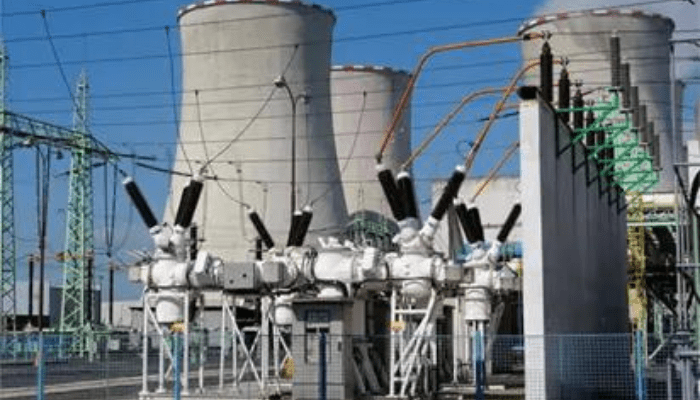
Residents of Eastern Nigeria’s industrial hub of Aba are still jubilating over the 24-hour power supply that Geometric Power will now bring to them after years in which mindless politics threatened to scuttle the country’s first-ever Integrated Power Plant.

Geometric Power, owned by a professor of engineering and former minister of power, Barth Nnaji, had been prevented from keeping its promise of lighting up Aba after vested interests, crony capitalists, an inept bureaucracy putting up barriers to doing business and murky dealings traceable to the very top of Nigeria’s political class combined to delay the 181-megawatt power plant.

The plot to stop Geometric was at the time enabled by a hapless president, a vice president captured by vested interests and a defanged Bureau of Public Enterprises (BPE).

Also playing a starring role in grounding the Aba power project was the National Electricity Regulatory Commission (NERC), where conflicting interests had led to deceit, and a private sector entity – Interstate Electrics, owners of Enugu Disco, whose intent was essentially to kill Geometric.

It was a tale with few heroes but lots of villains who conspired to keep the city of 2.5 million people perpetually in the dark.

Emeka Offor, the chairman of Chrome Group and promoter of Interstate Electrics Limited, who was a close friend of Namadi Sambo, Nigeria’s Vice President at the time, was said to have frustrated the operation of the power plant primed to deliver uninterrupted power supply to Aba, a shoe and garment hub in Africa.

The sheer misanthropy that accompanies Nigeria’s version of barefaced political brigandage and patronage has left households and industries in entrepreneurial Aba, the “Japan of Africa,”  trapped under increasing blackouts.

Households in the Southeast experienced blackouts several times a month.

In 2000, the combined turnover of the shoe and garment industry of Aba, the third-largest commercial city in Nigeria, was $200 million.

Offor, who was blocking the project, had Pius Anyim, secretary to the government of the federation, in his pocket, while Sam Amadi, the chairman and CEO of NERC, was beholden to Anyim.

Benjamin Dikki, director-general of the BPE, and Mohammed Bello Adoke, attorney-general, were also marionettes of the vice president.

Together, they managed to pull the wool over the eyes of former President Goodluck Jonathan, keeping him out of the loop with spurious procedural and legal issues.

Their delay tactics slowed down the take-off of a project financed by a consortium of American investors, local and international banks, as well as the International Finance Corporation (IFC), the World Bank’s private-sector arm.

In 2001, after the successful execution of the 22 megawatts (MW) emergency power station in Abuja to serve a dedicated distribution network within the Federal Capital Territory, Nnaji, founder of Geometric, was inspired to initiate the Aba Integrated Power Project, a distribution project with an embedded generation company.

In 2004, Geometric Power Limited signed a memorandum of understanding with the Federal Government to build a power plant in Aba, and a year later, in April 2005, Geometric signed the Aba concession agreement, also with the Federal Government, which gave it the right to distribute power to Aba.

The government, NEPA, and APL executed a lease agreement on April 28, 2005, for the distribution of power to the ring-fenced residential and commercial consumers at Aba.

By the terms of the agreement, NEPA assigned its right to distribute electric power on the ring-fenced island of Owerrinta, Osisioma, Ogbor Hill, Factory Road, and Port Harcourt Road in Aba, and also leased its distribution facilities within the contract area.

Despite the huge promise it held not only for Aba but for a country where stable power was elusive and officials were scouring for templates to keep the lights on across the country, it appeared as though Geometric Power would never light up Aba as the politically-influential Emeka Offor stood in the way.

Geometric was licenced in 2005 to deliver power supply to Aba and Ariaria business units, just two out of 18 business units in the Enugu Disco licence areas.

However, the Bureau of Public Enterprises (BPE) sold EEDC to Emeka Offor’s Interstate Electrics without excising Aba from the sale thereby causing friction between Interstate Electrics and Geometric.

The backing of then Vice President Namadi Sambo titled the balance in favour of Offor’s Interstate Electrics.

According to knowledgeable sources, the former vice president had vested interests in Interstate Electrics and wanted the company to end up buying Enugu Disco.

The Sambo-led National Council on Privatisation (NCP) bent the rules of the privatisation of the Power Holding Company of Nigeria (PHCN) successor companies, when Interstate Electrics failed to meet the August 21 deadline for the payment of the remaining 75 percent of the bid value.

The company was said to have lobbied the NCP and BPE to get them to grant it an extension to pay for the asset, for which industry analysts said there was no moral justification when similarly some investors were shut out at the preliminary stages in the same circumstances.

Until it got to Interstate Electric’s inability to make any payment at the August 21, 2013 deadline, the NCP and the BPE did not allow any exception. Even when Dangote was a few minutes late in submitting its bid for Geregu and Shiroro, it was disqualified.

In November 2012, the vice president had, through a memo, directed the BPE headed by Bola Onagoruwa to disregard the 2004 Memorandum of Understanding with Geometric Power, and the 2005 and 2006 lease agreements that ring-fenced Aba and Ariaria business units in favour of Geometric, but because she insisted that the contract should be honoured, she was asked to quit ‘with immediate effect’ on November 27, 2013.

Analysts described the development at the time as curious in terms of timing and very disturbing from an investor perspective.

In suit number FHC/ABJ/CS/106/2013, filed at a federal high court in Abuja, Geometric sought to restrain BPE from listing the two business units among government-owned companies slated for privatisation, as selling or privatising the entire Enugu Disco contravenes the existing agreements between the Federal Government and Aba Power Limited and Geometric.

In another suit number, FHC/ABJ/CS/106/2013, Interstate Electrics Limited sought to be joined in the case instituted by Aba Power Limited and Geometric Power Aba Limited against the BPE.

In the understanding that an out-of-court settlement would be the best option for settling the dispute, the National Council on Privatisation (NCP) set up a peace committee.

In its report, obtained by BusinessDay, the NCP committee admitted that “BPE indicated that Aba ring-fence was encumbered, yet it included Aba ring-fence in its bid and that Aba ring-fenced area belongs entirely to Aba Power Ltd. with its generating power responsibilities.”

A report by NERC, after a visit to the Geometric Power infrastructure in Aba, submitted that “it will be a disservice to the country in general and the company (GPAL ad APL) in particular, after investing such a huge amount of money in power infrastructure, to be denied the terms of the tripartite agreement. A disregard of the agreement will cast a bad light on the Federal Government’s privatisation process and send a wrong signal to other prospective investors in the power sector.”.

In February 2014, a team from the Federal Ministry of Power, led by the permanent secretary, after visiting Aba, submitted that “the sanctity of the lease agreement of 2004 and the supplementary agreement of 2006 between the Federal Government and Geometric Power be respected and maintained.”

Several promises by former President Goodluck Jonathan to resolve the matter never materialised, and it was not until 2020 during the Muhammadu Buhari administration that the impasse was resolved.

Described as the biggest investment in the Southeast, Geometric Power has spent some $800 million on its integrated power project, which includes building a 27-kilometre natural gas pipeline from Owaza in Ukwa West LGA in Abia State to the Osisioma Industrial Layout in Aba.

Nnaji disclosed as far back as 2015 that his firm paid $3.5 million monthly as interest on the $500 million borrowed from Diamond Bank and other Nigerian financial institutions.

Geometric Power’s Aba project may be a case of better late than never but its dark side surely leaves more to be desired.

Culled from businessday.ng

http://www.oblongmedia.net

One response to “The dark side of the Aba Geometric power project”

  1. The Day of Glory and Falsehood on Aba Power Project

    Congratulations to Professor Barth Nnaji and his crew for the successful completion of Aba Power project after many years of setbacks. This is a day of jubilation for Aba residents and people of the five southeast states. Governor Alex Otti and his officials deserve praise for their contribution to the completion of the Aba Power project. Aba is the heartland of Igbo industrialization. The prospect of 24 hours power every day in Aba portends good fortunes for the Southeast region. This is evidently a landmark event that elicits joy across the country.

    But, it is sad that some want to turn a day of glory to a day of falsehood. Some with other agenda against others would not allow Barth Nnaji, his team, Governor Otti and the people of Aba to rejoice on this important milestone. There was no need to use the happy occasion of the commission of the Aba Power and Geometry to peddle blatant falsehood about the project and the roles certain persons may have played.

    Many people in Nigeria and outside the country has drawn my attention to an article going viral on social media where my person and character was scandalized in regard to events surrounding Aba Power project. I am sad at false statements published by the BusinessDay newspaper on Tuesday, February 27, 2024. The article written by a certain Lolade Akinmurele and titled “The dark side of the Aba power project” peddles falsehood about my person and my role as Chairman and Chief Executive Officer of the Nigerian Electricity Regulatory Commission (NERC).

    The article chronicles the history of the project and focuses on those the author believes frustrated it. The article narrates how then Vice President, Namadi Sambo, Emeka Offor, DG, BPE, Benjamin Dikki, Mohammed Bello Adoke, the Attorney General of the Federation, and Anyim Pius Anyim allegedly frustrated Bart Nnaji and Aba Power. I am not bothered with the tendentious narration of events. I am angry at the attempt of the author to rope me into the alleged conspiracy. He wrote “Offor, who was blocking the project, has Ayim Pius Anyim, secretary to the government, in his pocket, while Sam Amadi, the Chairman of and CEO of NERC, was beholding to Anyim”.

    Interestingly, the author does not mention any action that I or NERC took or decision that we made that affected Bart Nnaji adversely and benefited Emeka Offor. To show that the inclusion of my name in an alleged conspiracy was a deliberate plot to tarnish my name, in the same article, he mentioned the positive action NERC under my leadership as Chairman and CEO took which was sympathetic to Bart Nnaji. For example, he states as follow: “A report by NERC, after a visit to the Geometry Power infrastructure in Aba, submitted a report that ‘it will be a disservice to the country in general and the company (GPAL and APL) in particular, after investing such a huge amount of money in power infrastructure, to be denied the term of the tripartite agreement. A disregard of the agreement will cast a doubt on the federal government privatization process and send a wrong signal to other prospective investors in the private sector”. How the head of an agency that wrote such a report be accused without any other contrary fact of conniving against the Aba Power project? Of course, the phrase “beholding to Anyim’ in that contest was added to tarnish my reputation. The manner my name was obliquely mentioned as a stooge of Pius Ayim is an effort to paint me as someone who is not as honest as he professes. It is a deliberate effort to stain my integrity and public service records.

    I have always cherished my honest public service record in Nigeria. I have challenged anyone who has any evidence of financial or other improprieties against me during my five years stewardship in NERC to bring it forward. In fact, I have on numerous occasions asked to be thoroughly probed for any financial other improprieties. Since over 8 years I left office, no one has issued me a query for any wrongdoing. I am very proud of my character and reputation, and I will defend it with every ounce of energy and pint of blood. As someone who has built and maintained a character and reputation for truthfulness, honesty and integrity, and who cherishes greatly my record of unstained public service, I bear a responsibility to correct this falsehood and present the truth facts of my role in the Aba Power project saga.

    It is important to note that even by the account of the author, neither NERC nor I played key role in the contract between Bart Nnaji and the federal government and the sale of Enugu Electricity Distribution Company (EEDC). As a regulator, we were very clear that our role is regulatory and not transactional.
    In the foregoing I make the following statements of facts.
    1. The contract between Prof Barth Nnaji and the federal government over the Aba Power project was entered in 2005, five years before I became Chairman of NERC. The contract was a leasehold over some part of the Aba distribution area. The contract requires the federal government to allow Bart Nnaji to operate the two business units in Ariara and Osisioma in Aba, described as the ‘ring-fenced area’. Bart Nnaji also has a power plant to supply power to the ring-fenced area. The contract anticipates privatization and gives Aba Power the right of first refusal over the ring-fenced area whenever the federal government intends to sell the Enugu Distribution Company.
    2. Prof Barth Nnaji was the Minister of Power from 2011 to 2013 when the process for privatization was completed. He was only removed just before the winners of the bid were announced. Throughout the relevant period of the privatization, Professor Barth Nnaji was Minister of Power and had de facto control of the Bureau of Public Enterprises (BPE) that executed the privatization process. He chaired the Presidential Task Force on Power and was key figure in the National Council on Privatization that made key decisions about privatization. The Director General of BPE, Bola Onaguruwa worked closely with him and generally under his control as Minister of Power.
    3. I was appointed chairman of NERC in December 2010 after the federal government through the Ministry of Power and the BPE had rolled out the Presidential Action Plan for Power whose highpoint was privatization of the PHCN successor companies. NERC’s responsibility was to provide regulations to support the privatization. The most important components of regulatory support are the evaluation of the assets of the various companies to be privatized and the preparation of tariffs. The Minister of Power and the DG of BPE asked NERC to evaluate the assets of the 11 distribution companies (DISCOs), including the Enugu Disco. There was no request to separate the ring-fenced areas from Enugu Disco for separate evaluation. The reason being that the Ministry of Power and BPE intended to privatize the entire Enugu distribution area to whoever was the preferred bidder.
    4. To the best of my knowledge, Prof Bart Nnaji as part of his business plan, intended to buy the Enugu Disco. There is nothing wrong about that. He is an entrepreneur whose entry into power sector was first as a private power producer in a deal to supply power to Abuja metropolis. Perhaps, based on the confidence that he would win the bid he neglected or forgot to separate the Aba Ring-Fenced area from the rest of Enugu Disco before he authorized the privatization of the entire Enugu Disco, including the Aba ring-fenced area. Later, when I confronted both DG BPE and Prof Bart Nnaji on why he failed to separate the Aba ‘ring-fenced’ area from Enugu Disco before authorizing privatization, they argued something to the effect that the Vice President opposed them. I have no proof of this fact.
    5. Professor Barth Nnaji organized a Special Purpose Vehicle (SPV) to bid for Enugu Disco, including the Aba ring-fenced area. He set up a special committee of BPE and Ministry of Power officials to evaluate the bids for the discos. After close of bid, his SPV, was adjudged the winner of the ENTIRE Enugu disco, including the Aba ring-fenced area.
    6. At no time did I participate in evaluating or choosing the winner of the bid. A few NERC staff who participated in the evaluation process were mere observers because NERC as a regulator has no responsibility to sell private public enterprises.
    7. After the evaluation and selection of Barth Nnaji’s firm as the preferred bidder, Chief Emeka Offor’s consortium petitioned on the ground of error. The Presidency empaneled a special committee chaired by the Permanent Secretary of the Ministry of Power. The Chairman of NERC, the DG of BPE and BPE consultants were member with a mandate to review the process. After reviewing the process, the committee agreed that Chief Emeka Offor’s consortium ought to win the bid after correcting the error. The NCP approved Chief Emeka Offor’s consortium as the winner of the bid and the preferred bidder.
    8. After the declaration of Chief Emeka Offor’s consortium as the winner, Bola Onagoruwa, the DG of BPE, wrote to NERC to cut off Aba ring-fenced area from Enugu disco area and reevaluate it for Barth Nnaji to purchase. NERC rejected that request because it would violate regulatory due process. You cannot conclude a sale of a territory and after the buyer has fulfilled terms and conditions you alter the sale. While he was the Minister of Power and supervised the privatization, Professor Bart Nnaji had opportunity to demand the performance of the contract he had with federal government to be given the right of first rejection to purchase the Aba ring-fenced area before privatization. He did not do so, since he had reasonable expectations that he would purchase the entire Enugu disco. But unfortunately, he lost to Emeka Offor. NERC took the view that it would be a corrupt and unlawful action to alter the completed transaction to compensate Bart Nnaji in the circumstances in which he participated and lost out in the wholesome sale of Enugu disco.
    9. As a responsible regulator, NERC sent a team of its technical staff to evaluate the work done by Geometry and Aba Power on the ground. The team reported highly of the efforts of Prof Bart Nnaji and his team. Based on this report, I wrote to the CEO of Enugu Distribution Company to implement the contract between the federal government and Bart Nnaji by allowing Aba Power ‘operationalize’ the contract to exercise authority over the Aba ring-fenced area as a lessee.
    10. Bart Nnaji proceeded to court against the federal government for violating the lease agreement. Later Emeka Offor joined the suit. NERC was not part of the suit and had nothing to do with the contest between both parties.
    11. There were many interventions at the presidency to settle the matter. At one of those meeting, President Jonathan asked me as Chairman of NERC to resolve it because I would follow due process. At NERC as a commission resolved to undertake a public hearing on the matter to ensure transparency and give all parties, including customers of the ring-fenced area to express their opinions. NERC advertised a date for a public hearing to conduct due process review of the dispute between Bart Nnaji’s company and Emeka Offor’s EEDC. Before the hearing, we got a letter from the Attorney General of the Federation asking us to hands-off as the matter was before the court.
    12. The next time we had something to do with the matter was at the instance of the Buhari presidency. NERC had a regulatory meeting and issued an expert opinion that restates that Enugu disco should allow Aba Power to ‘operationalize’ the lease but as a lessee of Enugu disco and EEDC as lessor. This means that Aba Power will pay Enugu disco regulated fee for use of its network. Barth Nnaji rejected this view because he claimed he ought to be given full control of ring-fenced area by the federal government.
    13. The last official engagement with the matter before I left office in December 2015 was a special meeting called by the Vice President, Professor Yemi Osinbajo. Chief Olanipekun SAN led Bart Nnaji and Chief Ademola SAN led a director of Enugu disco for Emeka Offor for the meeting. The Vice President endorsed the NERC recommended option as the fair and legal approach to solve the problem.
    14. It is important to note that throughout this period I never had any meeting with either Emeka Offor or Pius Anyim or any of Emeka’s Offor’s proxy in any form on the matter in dispute. There has been no moment in my multiple interactions with Anyim Pius Anyim as Secretary to Government of the Federation that he ever sought my opinion or offer any opinion to me about the dispute over Aba Power. Chief Emeka Offor never met me privately in my office or anywhere to discuss the matter with me.
    15. As a matter of fact, it was Bart Nnaji who had made efforts to discuss the matter privately with me. First, he came to my office to discuss the matter with the highly revered Paschal Dozie. I told Mr. Dozie the truth as I always do that the only solution short of a judicial decision to the benefit of Bart Nnaji is to operationalize the lease so that Aba Power pays lease to Enugu disco and distribute power in the ring-fenced area. Bart Nnaji also came to my house with another of his friend and we had lunch, and I restated my position. So, if there is anyone who has had personal conversation with me over the Aba Power project it is neither Pius Anyim Pius nor Emeka Offor. It is actually Professor Bart Nnaji.

    These are facts which can be crosschecked with records with NERC. I challenge anyone who doubts this narration of facts to trigger a Freedom of Information request and scrutinize the records of proceedings of NERC regulatory and management meetings. As I always state in matter of integrity and due process, if there is any evidence that I ever had a meeting with anyone or anyway took any action contrary to what I stated here I will voluntarily go to prison for any such offence.

    Let me make it clear. One of the accusations against me is that I was fiercely independent as a regulator and did not listen to anyone outside NERC in regulatory decisions. Everyone in the power sector knows that I would rather resign than submit to the dictation of anyone outside NERC. I have said it before that I am personally responsible for any decision I made as NERC Chairman. I had in the past absolved President Jonathan or any other person from any liability for decisions made by NERC. No one pressured or forced me to take any action that is wrong or self-serving. I am proud that nothing has been found against me more than 8 years since I left office as the Chairman of NERC. Since then, I have not done any work for any company in the electricity sector. I removed myself from any benefit from the sector far beyond the 2 years that the Act requires me to recuse myself. I have not received one kobo from any company in the Nigerian electricity industry. I challenge anyone to contradict me on this claim.

    The article tried to stain my reputation by suggesting that I worked on behalf of Anyim and Emeka Offor to delay or deny the completion of Aba Power project. That is an absolute falsehood as the facts above attest. It is an insult to suggest I was beholding to Ayim Pius Ayim in doing my work on Chairman of NERC. As records show, in all circumstances, I acted on my understanding of what the law and facts require of me as a regulator. It is ironic that it was the same Anyim Pius Anyim who once told me that President Jonathn once said ‘Please let everyone allow Sam do his work. For once, let us have a man of courage and integrity who would not succumb to anyone”. I am proud that I maintained that integrity throughout my tenure at NERC. I am sure Prof Bart Nnaji knows me so well. He is not and cannot be part of this blatant lie.

    Whereas I need to correct the false statement against me, it should not obscure the great achievement of the moment. The commissioning of the Aba Power project is a testimony to the commitment and resilience of Prof Bart Nnaji. It is a good fortune for Governor Alex Otti and the people of Abia as they strive to make Aba the industrial heartland of Nigeria as it deserves to be. Nigeria now has an example of how to do it better and faster from the Aba Power project.

    Let us embrace the learning without the falsehood. As for BusinessDay and its writer, they will have their day in court for libel.

    Dr Sam Amadi

    Like

Leave a reply to Duruebube Cancel reply

Trending