
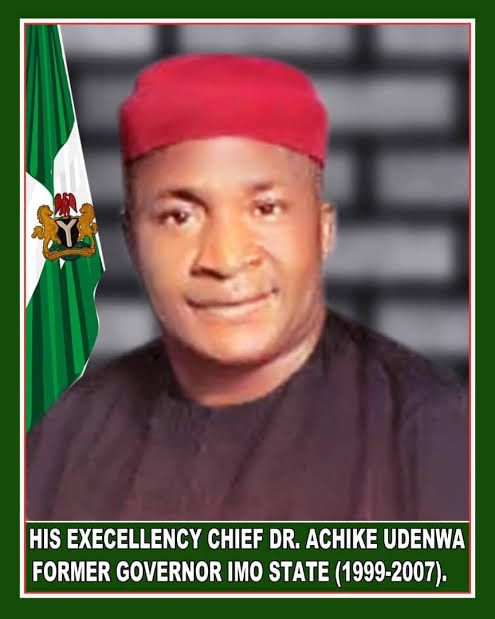
Governor Achike Udenwa (1999–2007): Foundations of Development and Democratic Stability
This article marks the beginning of a five-part brutally frank series exploring the contributions of Imo State governors from 1999 to 2024. Each part will delve deeply into the achievements, challenges, and political landscape that defined each administration and we will be the judge of which administration stands out amongst others. In this first installment, we examine the tenure of Governor Achike Udenwa, the first governor of Imo State in Nigeria’s Fourth Republic, and the foundational work he laid for the state’s development.
The Transition to Democracy
In May 1999, Achike Udenwa was sworn in as governor of Imo State, ushering in a new democratic era after years of military rule. His administration symbolized hope for many, as it represented the return of civilian leadership in a state that had experienced socio-economic stagnation due to prolonged military governance. Udenwa, a member of the People’s Democratic Party (PDP), was faced with the task of rebuilding governance structures, fostering democratic principles, and initiating economic recovery.
The Political Landscape
Udenwa’s administration coincided with a period of political restructuring in Nigeria. The PDP dominated national politics, and Imo State became a key stronghold for the party in the South-East. However, Udenwa faced significant opposition from rival parties such as the All Nigeria Peoples Party (ANPP) and internal party factions. These political dynamics shaped his administration, as he had to manage competing interests while driving his policy agenda.
Achievements: Progress Across Key Sectors
1. Education: A Step Toward Revitalization
Governor Udenwa placed significant emphasis on education, recognizing it as a critical driver of development.
Infrastructure Development: Udenwa’s administration built and renovated classrooms across primary and secondary schools in the state. He also established new technical and vocational schools to cater to the growing need for skill acquisition.
Higher Education: One of his most notable achievements was the establishment of the Faculty of Medicine and Surgery at Imo State University in Orlu. This move not only boosted higher education but also laid the groundwork for improved healthcare delivery in the state.
Challenges: Despite these efforts, challenges such as inadequate funding, overcrowding, and poor remuneration for teachers persisted, limiting the overall impact of his educational reforms.
2. Healthcare: Addressing Critical Needs
Healthcare was another focus area for the Udenwa administration, with efforts aimed at improving access and quality.
Healthcare Infrastructure: His government initiated the construction and rehabilitation of healthcare facilities in rural and urban areas. Notable projects included the renovation of general hospitals in Owerri, Orlu, and Okigwe.
Primary Healthcare: Udenwa’s administration expanded primary healthcare services, targeting rural areas that were previously underserved.
Challenges: Despite progress, the healthcare sector struggled with inadequate staffing, lack of medical supplies, and insufficient funding, leaving many facilities unable to meet the growing demands of the population.
3. Agriculture: Boosting Rural Economies
Agriculture was a key sector in Udenwa’s development agenda, given its importance to the state’s economy and employment.
Agricultural Development Programs (ADPs): The administration implemented programs to support farmers with inputs such as fertilizers, seeds, and equipment. Cooperative societies were also strengthened to enhance access to credit facilities.
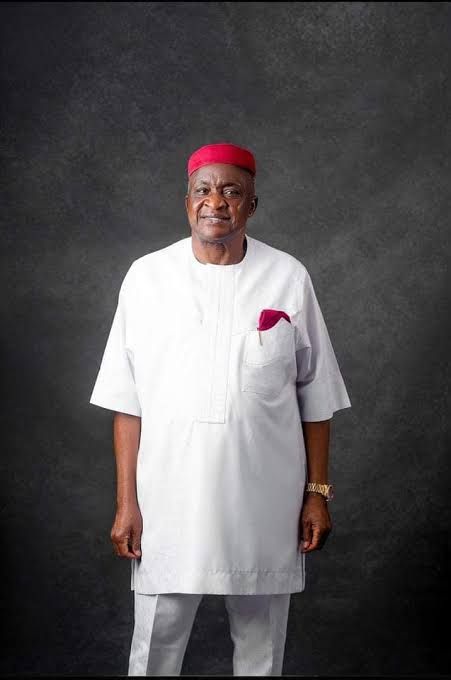
Governor Achike Udenwa’s administration laid the foundation for Imo State’s development in the Fourth Republic. His efforts in education, healthcare, agriculture, and infrastructure provided a starting point for subsequent administrations. However, the limitations in resource allocation, uneven development, and political conflicts highlighted the challenges of governance in a transitioning democracy.
Food Security: Efforts to boost agricultural productivity led to an increase in the cultivation of staple crops such as cassava, yam, and maize.
Challenges: However, the agricultural sector faced issues such as poor rural infrastructure, inadequate mechanization, and limited access to markets, which hindered its potential for growth.
4. Infrastructure: Laying the Foundations
Governor Udenwa’s administration made significant strides in infrastructural development, particularly in road construction.
Road Projects: His government initiated the construction and rehabilitation of major roads, including the Owerri-Orlu road and rural feeder roads. These projects improved connectivity and facilitated economic activities.
Public Utilities: Efforts were also made to improve access to clean water and electricity, although the reach and impact of these initiatives were limited.
Challenges: Critics argue that infrastructural development during his tenure was uneven, with more focus on the Orlu zone, leading to perceptions of neglect in other areas.
5. Economic Development: Striving for Growth
Governor Udenwa sought to stimulate economic growth through industrialization and investment promotion.
Industrialization: His administration supported small and medium-sized enterprises (SMEs) and sought to attract investors to key sectors such as manufacturing and agriculture.
Challenges: Despite these efforts, the business environment was hindered by inadequate infrastructure, policy inconsistencies, and bureaucratic bottlenecks, limiting the state’s economic growth.
Challenges and Criticisms
While Governor Udenwa made notable progress in several areas, his administration was not without challenges:
Financial Constraints: The administration operated within tight budgetary constraints, limiting the scale and impact of its initiatives.
Internal Party Conflicts: Udenwa faced opposition from within the PDP, as rival factions sought to undermine his leadership.
Public Perception: Critics, including successors such as Rochas Okorocha, have described Udenwa’s tenure as underperforming, citing a lack of transformative achievements.
Political Context: Navigating Power Dynamics
Udenwa’s tenure also highlighted the complexities of navigating political power in a nascent democracy. His ability to manage the diverse interests within the PDP, as well as his relationship with the federal government, played a significant role in shaping his administration’s success and challenges. Notably, his exit from office in 2007 set the stage for a fierce political battle within the PDP and the emergence of new political players in the state.
Conclusion: A Mixed Legacy
As we move to the next part of this series, we will explore the tenure of Governor Ikedi Ohakim (2007–2011), examining his contributions, controversies, and the impact of his policies on Imo State.
By Chimazuru Nnadi-Oforgu
Duruebube Uzii na Abosi
 OBLONG MEDIA GLOBAL INTELLIGENCE
Leave a comment