
Introduction.
Among the legacies of colonial rule in Nigeria, few names are more steeped in contradiction than Harold Morday Douglas. Today, the most prominent road in Owerri and the seat of the Imo State Government, Douglas Road and Douglas House, bear his name, yet the man behind these names was far from a hero to the people he governed. For many communities across the old Owerri Province and beyond, Douglas remains a symbol of unchecked colonial brutality, repression, and violence.
This article revisits the chilling exploits of Harold M. Douglas and the long shadow of terror he cast across Eastern Nigeria.
Who Was Harold M. Douglas?
Born in 1874, Harold Morday Douglas joined the British Colonial Service in 1894. By 1897, he had been posted to Nigeria as Acting District Commissioner in Calabar, Eastern Nigeria. Young and zealous, Douglas quickly earned a reputation among colonial authorities as an energetic field officer, while the locals remembered him by a different name: “Black Douglas”, a nickname coined by his fellow European colonists, reflecting both his notoriety and feared presence.
Among the Apani people of Ikwerre, he was known as “Dinglas Nwene Wolongbo”, Douglas, the brother of coral beads, referring mockingly to his white skin. He was the first white man to pass through Apani in December 1898, accompanied by a Hausa military contingent known to locals as “Ele Ogbatabataba” (those who shoot indiscriminately), and a few Igbo interpreters who struggled to mediate the many dialects he encountered.
A Reign of Terror: The Rule of Fear in Owerri Province
Douglas was officially appointed as the first District Commissioner of Owerri Province on May 10, 1902, a position he earned through his vicious participation in the infamous Arochukwu Expedition of 1901–1902. His violence and ruthlessness during that operation earned him praise from Lt. Col. Montanaro, Commander of the Aro Field Force, who described him as “very useful” and “full of energy” during the Obegu raid (CO 520/14).
But to the people of Owerri, Douglas was not a hero, he was a colonial tyrant.
Suppressing Resistance with Savage Brutality
Douglas implemented the worst excesses of colonial imperialism. His methods included:
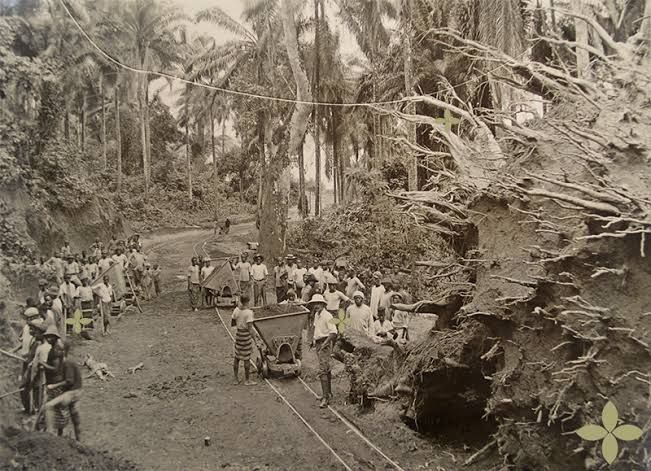
Forced Labor: He was obsessed with road building and used compulsory labor under harsh conditions. Communities were forced to construct roads, courthouses, and rest houses under duress.
Collective Punishment: Under the Collective Punishment Ordinance of 1909, entire communities were punished for the actions of a few. Chiefs and elders were seized and imprisoned or used as hostages to enforce compliance.
Widespread Destruction: When resistance arose, entire villages were razed. Farmlands were burned, properties looted, and civilians, including women and children, slaughtered or buried alive.
Major Atrocities Attributed to Douglas
- Eziama Massacre (March 1904)
When the people of Eziama defied his arbitrary orders, Douglas declared war. In his words, “all compounds of Eziama were destroyed.” Neighboring villages who supported Eziama were also punished.
- War on Norie (April 21, 1905)
After the murder of Chief Nwogu by his own people for overburdening them with forced labor, Douglas responded with unrestrained military action. The conflict, known as “Ogu Nkwo-ala,” led to the destruction of 39 towns and 137 villages in the Ngor court area.
- The Ahiara Massacre (March 1905)
When British medical officer Dr. Stewart was mistaken for Douglas and killed in Ahiara, the retaliation was unprecedented. Entire villages were wiped out in what became one of the most savage campaigns in colonial history. Farms were torched, people were massacred, and some victims were reportedly buried alive by British soldiers.
The justification? Douglas claimed the murder was so horrific that it “called for the most exemplary punishment possible.”
A Symbol of Colonial Sadism
Douglas was not just feared, he was hated. He ruled like a monarch and brooked no dissent. Chiefs who resisted his orders were stripped naked, publicly flogged, and imprisoned. Many who went to prison under his regime never returned.
Even among British colonial officers, he was described as “the most difficult and most cruel” District Commissioner to ever rule in Igboland.
A Lasting Irony: Why Do We Still Celebrate This Name?
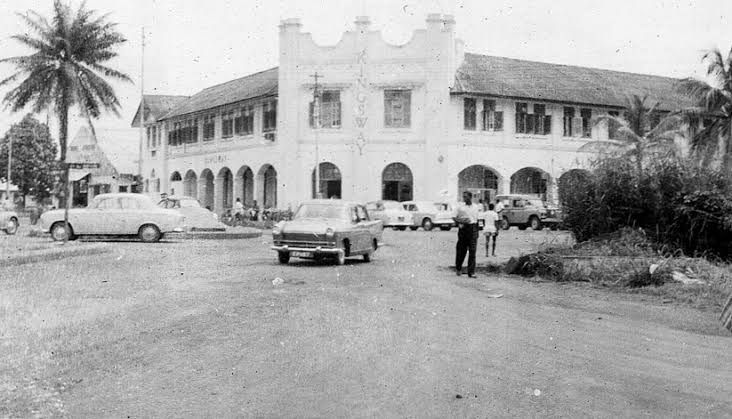
Despite his atrocities, the colonial administration named Owerri’s central administrative complex after him. Today, Douglas House remains the seat of power in Imo State, and Douglas Road is Owerri’s busiest thoroughfare. Many families even bear his name, unknowingly glorifying a man who once unleashed destruction upon their ancestors.
Remembering the Past to Reclaim the Future
It is time for Ndi Igbo and indeed all Nigerians to confront the truth of their colonial past. Harold M. Douglas was not a builder of civilization, but an architect of brutality and systemic oppression. His legacy should be examined, not celebrated.
History must no longer be written by the conquerors alone. The names of our heroes, not our oppressors, should grace our landmarks. Let us begin the process of historical detoxification by questioning what, and whom, we choose to honor.


 OBLONG MEDIA GLOBAL INTELLIGENCE
Leave a reply to Chima Nnadi-Oforgu Cancel reply